
With the conflict in West Asia plunging the world into uncertainty and threatening India immediately with rising oil prices, Indian Railways is offering a ray of hope. The national transporter is very close to achieving its target of being a Net Zero Carbon Emitter by 2030.
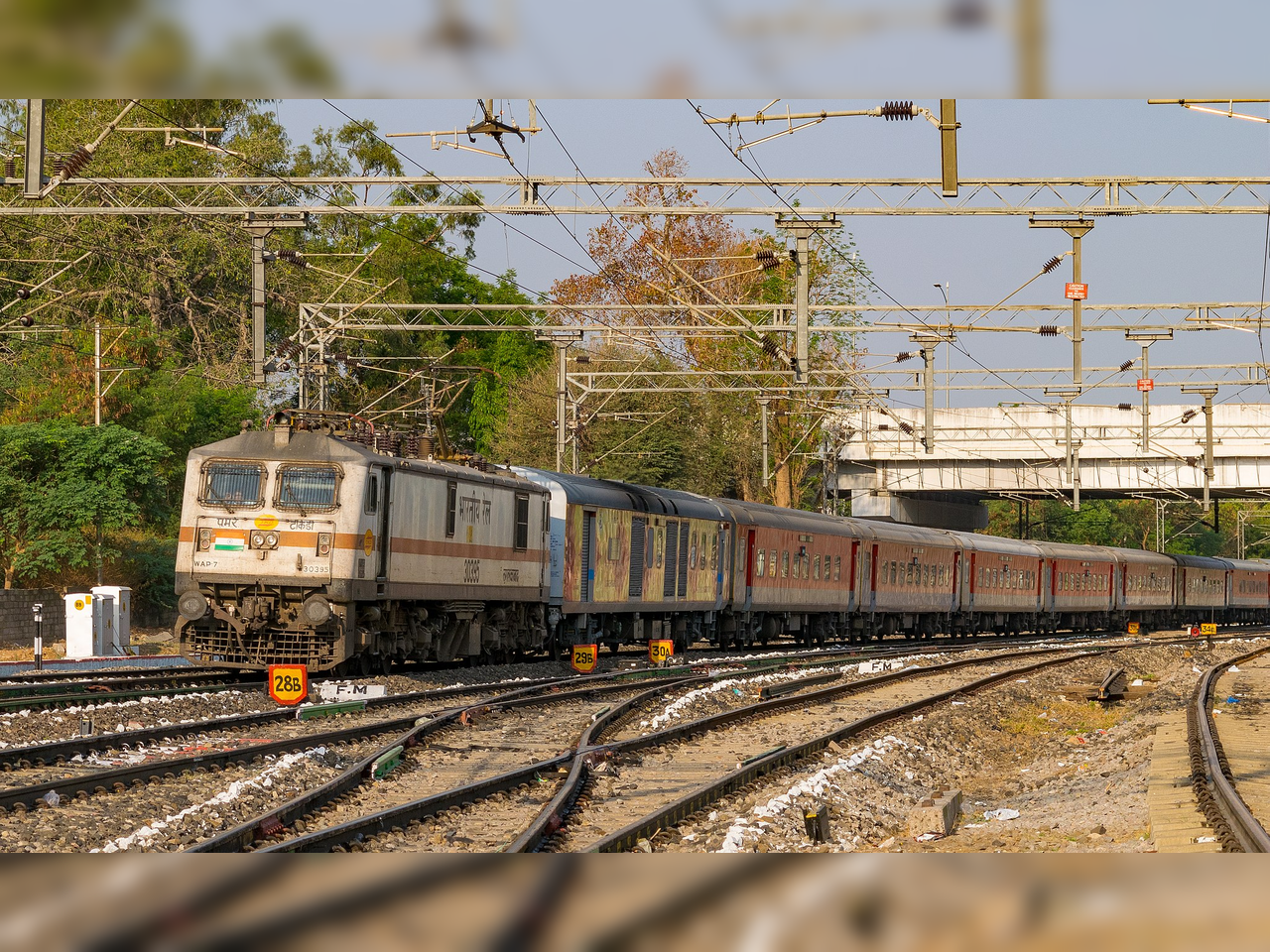
It already has 99.4 per cent of its broad gauge network electrified by January 2026 and aims at achieving full electrification under “Mission 100% Electrification”, according to Riding Sunbeams, a UK-based organisation that works towards electrification of railways. A team from this organisation has been monitoring the progress of Indian Railways for the last four years.
Net Zero before time
The railway ministry had issued a statement in March 2023 stating its goal of achieving Net Zero by 2030, a target well pursued so far that may prove to be a model for other sectors in India, threatened by war impact on oil and gas supply.
The closure of the Strait of Hormuz, through which India imports about 40 per cent of its crude oil and over 20 per cent of its liquefied natural gas (LNG) supplies, is creating a lot of apprehensions int he country. The country, which imports over 85 per cent of its crude oil requirements through several global supply routes, is dependent on the crude oil imports to process its diesel and petrol. Insurance prices of shipping have risen by 50 per cent since the conflict began.
Indian Prime Minister Narendra Modi will chair a Cabinet meeting on Thursday evening, where the railways news may brighten up the grimness a bit.
Diesel cuts big saver
“Electrification of Indian Railways has led to cuts in diesel consumption by 178 crore litres in 2024–25, achieving a 62 per cent reduction since 2016–17,” says the Riding Sunbeams report. “This transformation places India at the forefront of rail electrification worldwide and far ahead of major rail economies, including China and the United Kingdom (UK), in terms of network electrification share,” it adds.
Few countries in the world have achieved fully electrified railways, and Indian Railways’ network is 13 times the size of the next largest, in Switzerland, says the UK company.
The report provides details of the electrification.
Out of 70,001 route km of broad gauge track, 69,427 route km have been electrified. Only small sections in five states require completion. Two thirds of the electrification has been accomplished in the last 10 years.
Boost to India’s energy resilience
The near-complete electrification strengthens India’s energy resilience significantly. “Every sustained rise in global crude prices increases the country’s annual import bill, placing pressure on inflation, public finances and household costs,” notes a Riding Sunbeams press release.
“Electrification has already led to a huge reduction in India’s diesel consumption compared to the mid-2010s baseline, lowering operating costs and insulating rail operations from fossil fuel price shocks,” the company adds. Electric traction, which means trains powered by electricity drawn from overhead lines instead of diesel engines, is approximately 70 per cent more economical than diesel traction. This shift should lead to savings to the public exchequer in the long run and help to keep the passenger fares down.
Integration of solar
Electrification is also helping to accelerate the integration of renewable energy. “Installed solar capacity across the railway network has grown from just 3.68 MW in 2014 to 898 MW by November 2025, with nearly 70 per cent of that capacity directly supporting traction requirements. Solar installations now span over 2,600 railway stations, service buildings and operational facilities, reducing reliance on conventional grid electricity and improving overall energy efficiency,” Riding Sunbeams said.
Indian Railways carry 26 million passengers daily. “The projected energy demand of Indian Railways by the end of the decade is now expected to exceed 10 Gigawatts, with the majority of this to be met through renewable sources,” the company added.
Resilient strategy
Speaking at round-table on long haul freight decarbonisation hosted by Riding Sunbeams and Purpose during fge Delhi Climate Innovation Week in end-February, Rahul Kapoor, executive director finance, railway board and director finance, Dedicated Freight Corridor Corporation of India Ltd, Government of India, had stressed the need for systemic alignment.
“Policy cannot be looked at in isolation. To scale up islands of excellences happening all over India, an overall structured approach that considers technology, policy ecosystem, human resource, economics, livelihoods, and aligns central and various state governments is required. This will help foster not just innovation but affordable innovation,” Kapoor had said.
“Reducing reliance on imported fossil fuels while rapidly expanding home-grown renewable electricity is not only a climate imperative, it is a resilience strategy in an increasingly volatile world,” said Leo Murray, chief executive of Riding Sunbeams.