
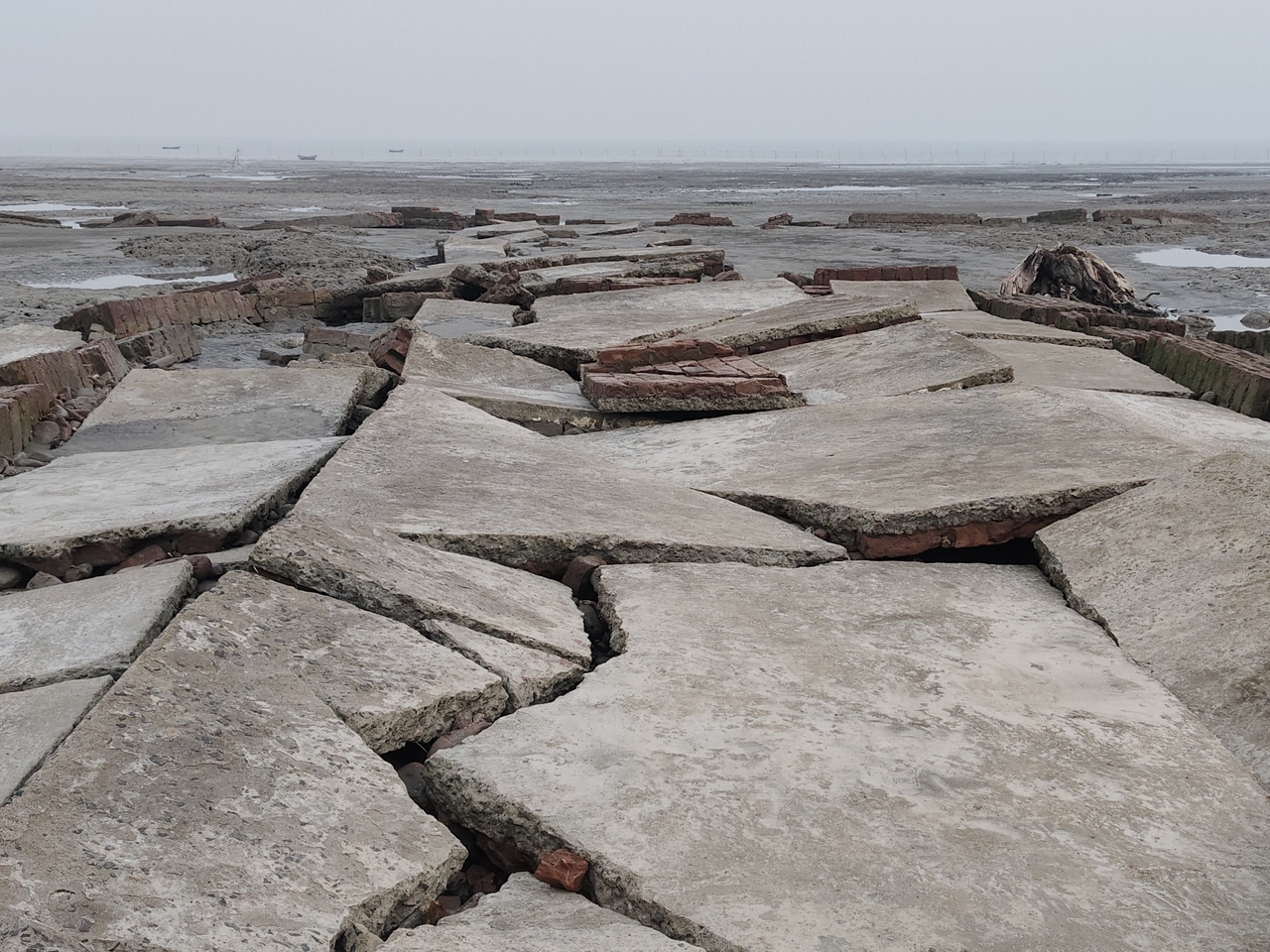
The world must attend to Sundarbans’ critical climate-linked disaster vulnerability at COP 30 this November, concurred a panel of stakeholders on September 3 in Kolkata. Experts dwelled on various aspects of climate change and listed what could be West Bengal’s priorities at the 30th Conference of Parties to the United Nations Framework Convention on Climate Change (UNFCCC) in Belem, Brazil.
The panel agreed that the talking points could be taken forward to the global stage through the Brazilian consulate, Kolkata, which was among the hosts of Wednesday’s discussions. Regarding Sundarbans, the experts highlighted the need to include the region’s demand for increasing financial support. They also underscored the synergy between air pollution and climatic impacts that affect West Bengal, including capital Kolkata
Earlier COP 30 President André Aranha Corrêa do Lago told The Plurals that the summit would encourage discussions on urbanisation, forests, transport, energy, finance, etc — key issues that resonated at the four-hour panel discussion.
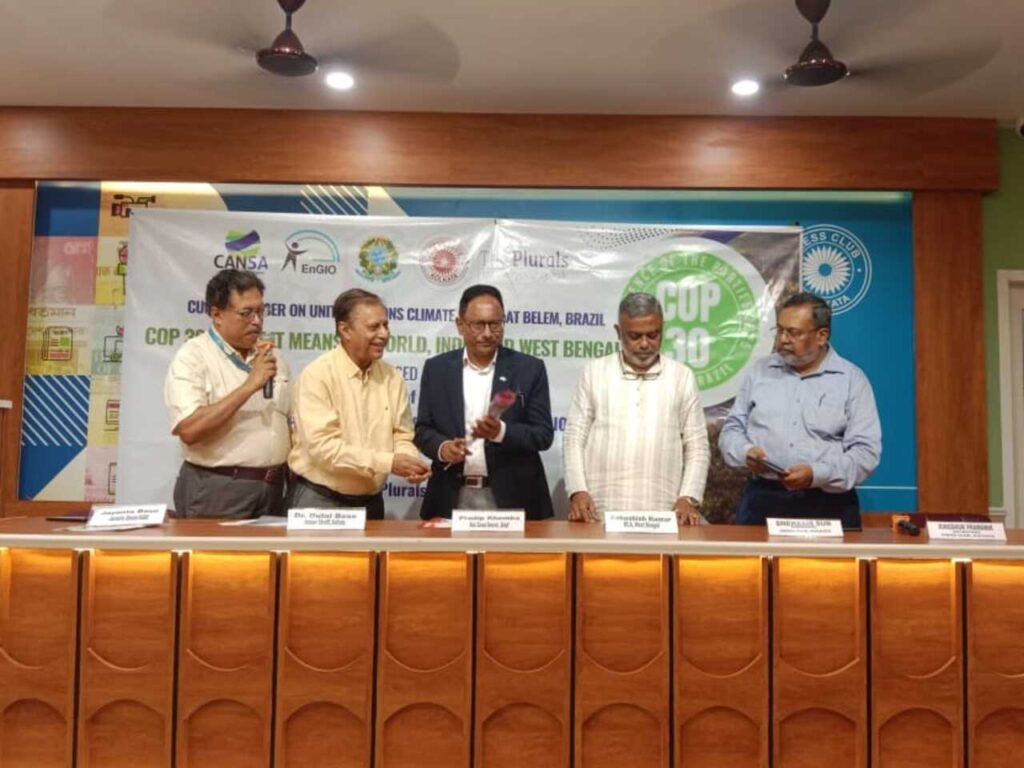
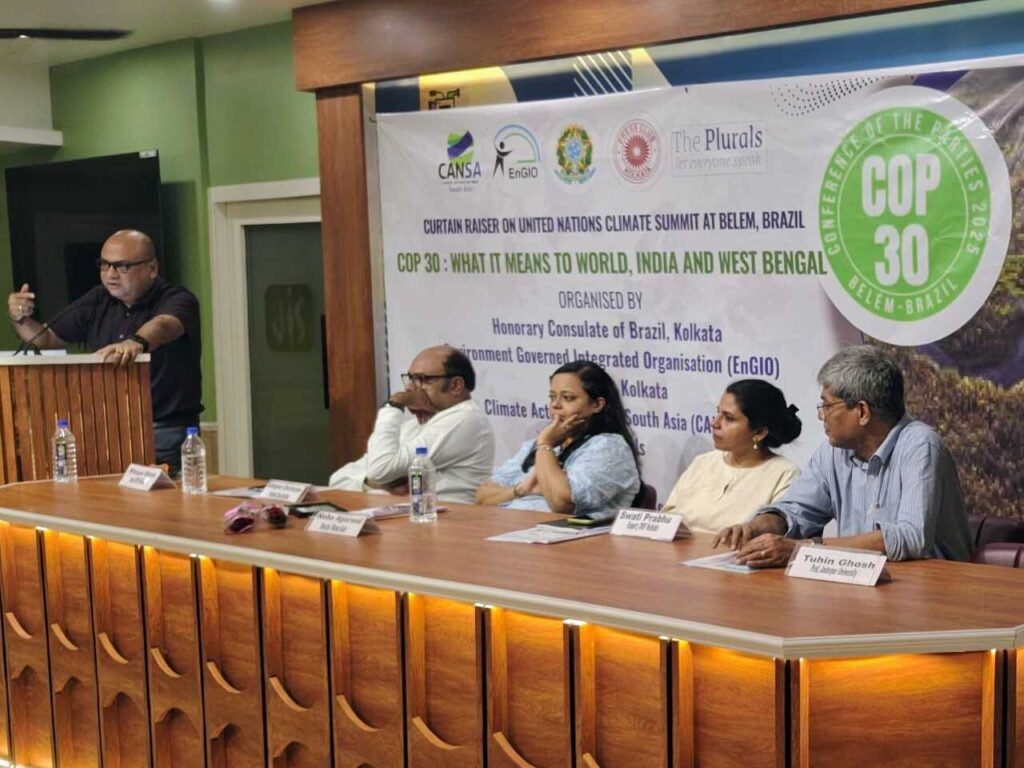
The first of its kind consultation in country, organized by environmental non profit Environment Governed Integrated Organisation (EnGIO) with global climate platform Climate Action Network South Asia (CANSA), Press Club and The Plurals, was attended by chief executive officer of COP 30 Ana Toni, Brazilian consul general in Calcutta Pradeep Khemka, national energy expert Arunabha Ghosh who is also an official advisor of COP 30, MLA Debasish Kumar, former sheriff of the city physician Dulal Bose, Neha Agarwal from solar major Vikram Solar apart from host of experts across the country.
While Khemka pointed out the bonhomie of Bengal and Brazil, and committed to take the agenda forward, MLA and chairman of city corporations’ climate and solar committee Debashish Kumar urged experts to highlight the state’s vulnerabilities. “Sundarban in south and Darjeeling in north are highly climate vulnerable, so is Kolkata. While it’s very important for us to take local level actions , we also need a lot of national and international help” said Kumar. Incidentally only three cyclones in the region – Bulbul, Amphan and Yaas – have reportedly cost a financial loss of 1.5 lakh crores in rupees, informed state government sources.
“It is very important that we start to discuss the high climate vulnerability of Sundarbans islands along with similar climate vulnerable islands from other countries in the region on a global platform,” pointed out Sundarban expert Tuhin Ghosh of Jadavpur University.
“While discussion is held about the small island countries, the climate vulnerability of small islands within large countries but equally or more vulnerable, is hardly considered. We need to start the global discourse as soon as possible,” said Harjeet Singh, a global climate expert and observer in the UN loss and damage committee mandated to see climate vulnerable areas like Sundarban .Singh lamented the minimal funding in adaptation and loss and damage sectors, critical to the coping of regions like Sundarban.
Abhijit Chatterjee, a scientist in Bose Institute, pointed out how several parts of the state, like many south Asian countries, are impacted by the synergistic impacts of high air pollution and climate change; and underscored the need of acting on them simultaneously; adding “this need to be highlighted in Belem”.
“Air pollution is driven by climate pollutants like methane, black carbon, and tropospheric ozone, which cause significant warming impacts on climate change”, stated Anumita Roy Choudhury of Centre for science and environment (CSE), underlining the urgent need to discuss the agendas together, while cautioning that “the discourse should not give opportunity to developed countries to shift the blame on us”.
Economist Nilanjan Ghosh, heading think tank Observer Research Foundation (ORF) in state, highlighted the low adaptation finance, a financial mode that helps areas like Sundarban to adapt better with increasing climate triggered disasters, in offer; and pointed out that there should be global discussion how to improve it including generating financial support from corporate and private wealth sectors. “Even one percent of corporate and private wealth will be able to plug the adaptation finance gap to a large extent”, said Ghosh.
“We have collected all inputs and will soon submit the report to the Brazil consulate for follow up action; we call it ‘from Sundarbans to Amazon’ report”, stated Sujata Basu on behalf of EnGIO.