
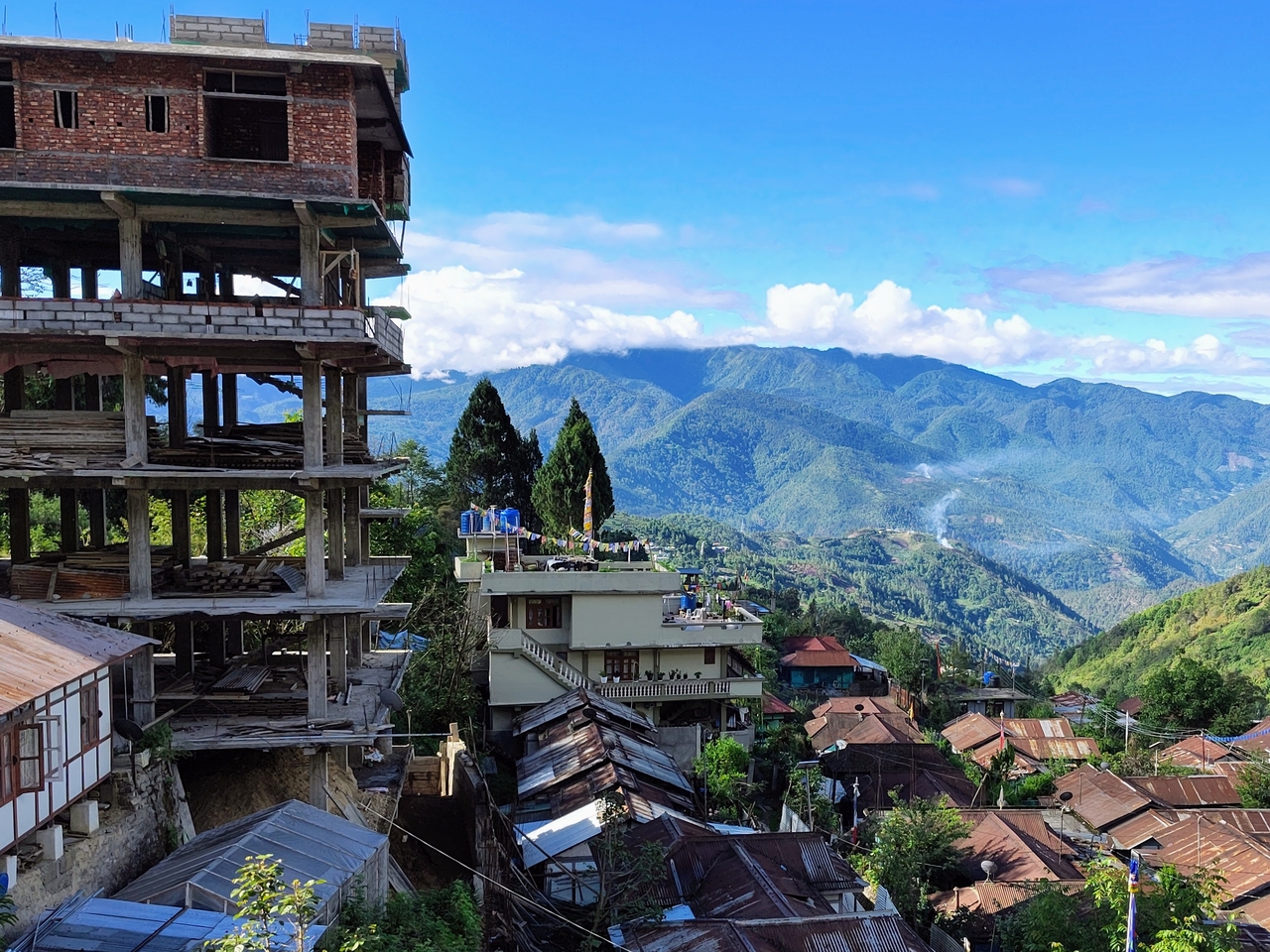

Nestled between the majestic Himalayas and the lush landscapes of Bangladesh, Northeast India boasts a unique identity shaped by vibrant cultures, rich biodiversity, and natural beauty. However, this region faces pressing environmental challenges that threaten its ecological balance and the traditional midnight freedoms enjoyed by its inhabitants; as the climatic and environmental challenges becoming dominant with rampant, and mostly unplanned, construction spread across the hills.
The shift from tranquil nights to days filled with modern demands has had detrimental effects on both the environment and community life. For generations, the people of Northeast have coexisted harmoniously with their surroundings. Hill living communities of Assam, Tripura, Sikkim, Meghalaya, Mizoram, Manipur, and Nagaland largely relied on the unspoiled natural environment for sustenance and spiritual fulfilment. The centuries-old practices of sustainable agriculture, traditional medicine, and forest-based livelihoods like Joint Forest Management (JFM) allowed local populations to thrive without depleting their resources.
All that changed
All these have changed in recent years. The encroachment in the name of development, including at night, has led to deforestation, pollution, and habitat degradation, which has triggered community conflicts and ethnic chaos. The serenity of midnight has been replaced by the pervasive noise of machinery and urban development.
Industrial activities have increased, driven by the demand for resources such as manufacturing some household items, timber, and mineral extraction.
This has resulted in extensive land clearing, leading to soil erosion and loss of biodiversity. Endemic species are increasingly threatened, and fragile ecosystems are falling apart under the pressures of modern demands. A recent study of Tripura Forest Department underlined that around 23 plant species and 56 fauna have already been placed in the rare list, which were once abundantly found in nature. Ditto for states like Arunachal Pradesh, Manipur and likewise.
Urbanization has also altered the dynamics of socio-economic structures. More people are moving to cities in search of employment, leaving behind the rural lifestyle that maintained their connection to nature.
This shift wreaks havoc on local practices of resource management that were vital for sustaining both cultural identity and environmental health. Increasing population pressure in cities like Agartala has seriously affected the mobility, water supply, and waste management. As per government records, more than 27 percent of households in the city are not getting municipal water, and they have to install groundwater extraction systems at the houses, which are being used without any treatment.
Northeast Challenges
The North Eastern states of India face escalating climate and environmental challenges, including more frequent and intense floods, landslides, erosion, and droughts due to changing rainfall patterns and melting glaciers. Environmental problems like deforestation, habitat loss, and biodiversity reduction are exacerbated by human activities and climate change, leading to ecological fragility, infrastructure damage, and negative impacts on livelihoods, food security, and community displacement.
The issue has escalated in recent years, with unexpected rainfall during the pre-monsoon season leading even to the washing away of railway tracks. This has severed the surface connection for entire regions, including South Assam, Manipur, Mizoram, and Tripura. Experts believe that many of the Northeast’s hills are still in their early stages of formation and exhibit first-order topography. The loose soil in these areas is increasingly susceptible to landslides due to changing rainfall patterns induced by climate change. This situation poses significant threats to public life, the economy, and agriculture in the hill region.
Climate and environmental concerns
There is a host of climatic and environmental issues impacting the region. At a national benchmark, the region experiences a higher frequency and intensity of floods, landslides, and erosion, with projections for even worse conditions in the future catered by climatic changes.
Despite being a high-rainfall zone, the region has faced unprecedented drought-like situations, impacting water availability and rain-fed agricultural lands’ with the rainfall patterns having changed. Melting Himalayan glaciers is a significant concern, impacting water resources and increasing the risk of devastating floods downstream of the Brahmaputra River.
Deforestation and habitat loss in states like Arunachal Pradesh and Nagaland, has led to the destruction of habitats; water logging and Pollution in urban areas of Guwahati and Agartala are getting worse with time exacerbated by unregulated development and runoff from surrounding areas. The increasing number of forest fires, in the region, has contributed to severe environmental degradation.
Nothing unofficial about the concerns
India Meteorological Department (IMD) has analysed trends for precipitation and drought-like conditions over India that highlighted the risk in north east with extremely dry and severely dry conditions were found over parts of Arunachal Pradesh, Assam, Meghalaya, Nagaland, Manipur, Mizoram, Tripura and Sikkim in 2021. A study by the National Remote Sensing Centre pointed out that heavy rainfall and flooding indicates that their frequency is increasing in the northeast.
The State Action Plan on Climate Change (SAPCC) of Manipur points out that the state is vulnerable to water-induced disasters because of its location in the eastern Himalayan periphery, fragile geo-environmental setting, and economic under-development. The valley areas witnessed frequent floods even after a short spell of storm due to various reasons like man made ecological changes in the catchment areas, and the high-intensity rainfall during the rainy season in the hilly areas. The flash floods affect agricultural lands and habitats, as well as the urban settlement areas, during the rainy season. Situation is hardly different in other north east states.
According to the Tripura Chemist and Druggists Association, gastroenteritis is a common disease among people of Tripura and the sale of Simethicone medicine, used to relieve the painful symptoms of too much gas in the stomach and intestines, is rampant across the state. Experts believe that the moot reason is obviously contaminated drinking water.
Grassroots Movement
Grassroots movements are emerging, advocating for the preservation of traditional practices and the re-establishment of a balance between development and conservation. Local communities are coming together, emphasizing sustainable practices that respect both people and the planet. Initiatives to protect forests, restore habitats, and promote eco-tourism are gaining traction, providing alternatives to destructive industrial activities. To preserve the midnight freedom of the past, the people of Northeast India are looking toward a new future rooted in sustainability.
Biswendu Bhattacharjee is a Tripura based senior journalist covering a wide range of issues including environmental ones