
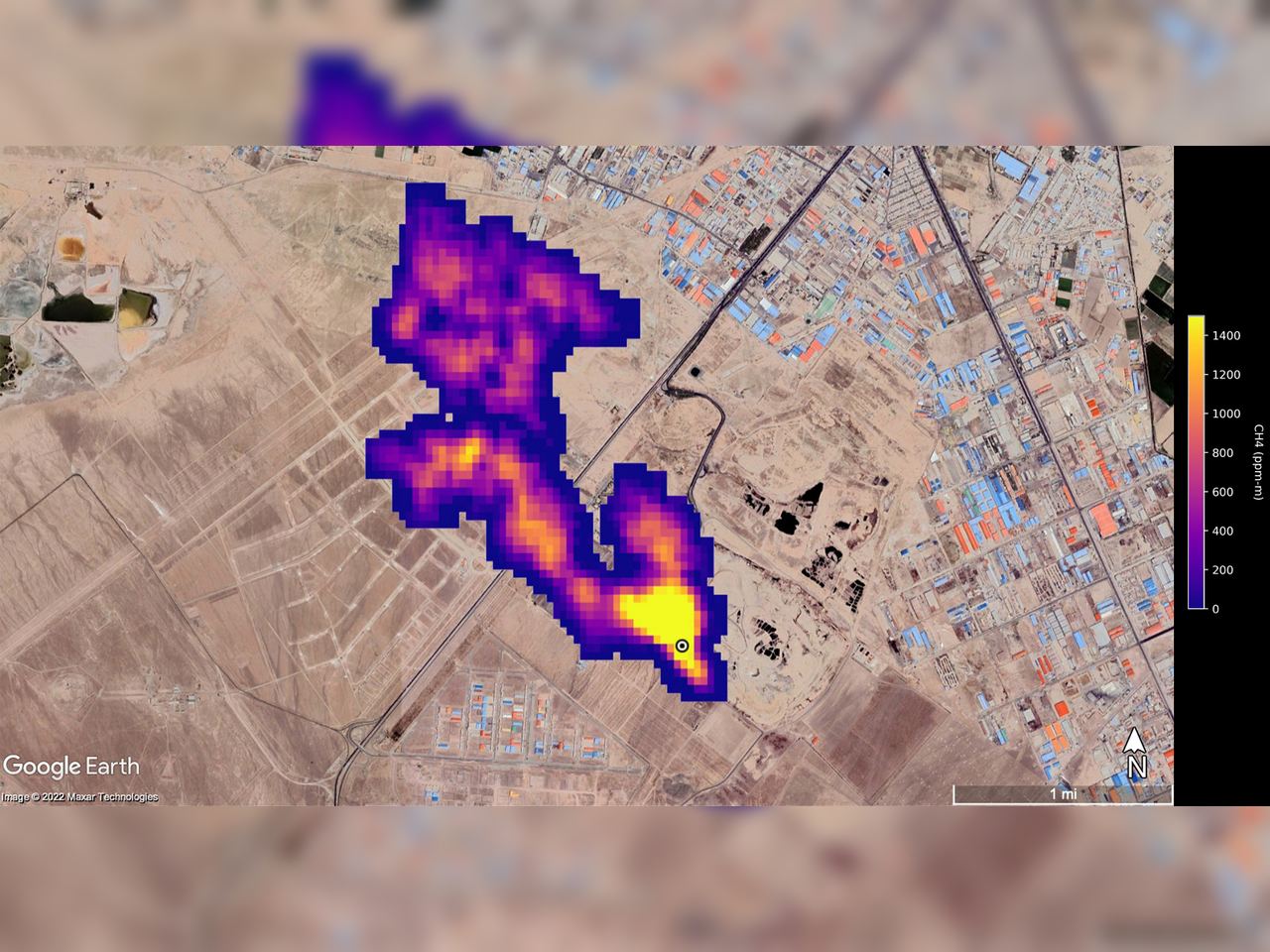
Two of the world’s most methane-polluting landfills are located in India, a new study by the University of California (UCLA), located in the US, finds.
The report, released recently by UCLA’s STOP Methane Project and titled ‘Spotlight on the Top 25 Methane Plumes in 2025’, says two big landfills in India, Jawahar Nagar landfill in Secundarabad, Telengana, and Kanjurmarg landfill in Mumbai, Maharashtra, are among the world’s top 25 super-polluting methane emission waste sites.
Telangana’s Secunderabad emits 5.9 tonnes methane per hour, and is fourth on the global list, and the Mumbai site emits 4.9 tonnes methane per hour, and is 12th on the list.
Methane: a potent greenhouse gas
Methane is one of the most greenhouse gases, accounting for 30 per cent of global warming since preindustrial times. A source emitting 5 tonnes of methane per hour contributes almost as much to global warming as one million SUVs.
STOP Methane is a project of the UCLA Emmett Institute, a leading environmental law center in the US that releases ranking lists of super-polluting methane emissions across several sectors, including oil and gas.
The study includes three sites in Turkey, which will be home to COP 31, the next UN climate conference, in November 2026. UCLA used data portal Carbon Mapper’s public data based on observations from space by key satellites from 2025 to locate the waste sites. Each site represents a major opportunity for cutting emissions, those involved in the study feel.
Polluting spots in both rich and poor countries
Among the 18 countries in which the 25 waste sites have been identified by the study across are both developed and developing countries. Brazil and Chile have three sites each, India, Saudi Arabia and Turkey two each and Algeria, Argentina, Greece, Hong Kong S.A.R., Indonesia, Iran, Israel, Kuwait, Malaysia, Mexico, Philippines,Thailand and the US each have one polluting site.
The list includes two additional “Dishonourable Mentions” for waste sites that have emissions rates that fall within the top 25 range, if observations since end-2025 are also taken into account: a site near Istanbul, Turkey, and Abidjan, Ivory Coast.
With Turkey preparing to host COP 31 in Antalya, the country’s First Lady Emine Erdoğan has launched an environmental clean-up drive. But the landfill near Istanbul shows the largest emissions rate.
Dangerous levels of emission
“This list shows there is a lot of work to be done and not just by the COP 31 host,” said Cara Horowitz, executive director, UCLA Emmett Institute.
“We are talking about seriously dangerous levels of methane coming from the waste sector in a wide variety of countries. Many of these sites sit close to cities, and their emissions pose real risks to public health. The good news is that governments and landfill operators can take practical steps to prevent these massive plumes.”
Researchers from the STOP Methane Project analysed data showing nearly 3,000 plumes from more than 700 waste sites that were responsible for the highest hourly emissions rates observed globally. The rates ranged from 3.6 to 7.5 tonnes of methane per hour.
Satellite technology a boon
Identifying methane emissions is possible without much complexity because of satellite instruments that can detect methane from space.
Two landfill operators in Chile (Penco and Talagante) have reported adopting mitigation steps to address their methane emissions mentioned in the initial version of this 2025 list.
“We have already seen how making reliable data available to larger audiences and increasing visibility can be an effective way of prompting action,” said Juan Pablo Escudero, a project partner with UCLA’s STOP Methane and a Professor at Universidad Adolfo Ibáñez School of Law in Santiago, Chile.
“This data provides great opportunities for responsible operators and national governments to lead the way on cleaning up their waste sectors.”