
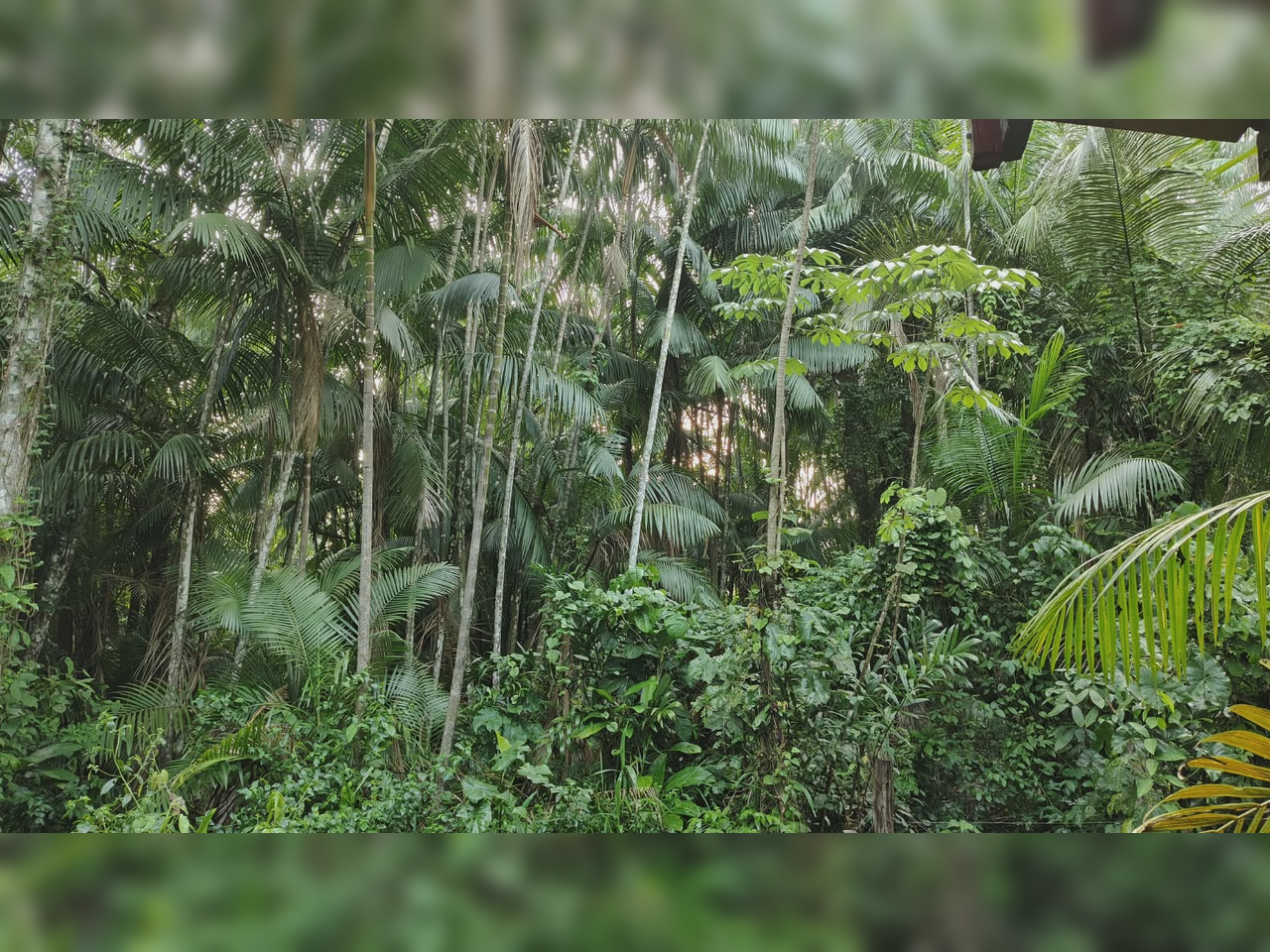
Deforestation has to stop for Amazon rainforest to remain a rainforest. New research published in the journal Nature warns that the lush, towering Amazon rainforest could become “a dry, scrubby savannah” at 1.5-1.9°C global warming if deforestation increases to roughly 22-28% of the Amazon.
The research, from the Potsdam Institute for Climate Impact Research (PIK), Germany, adds that without additional deforestation, however, such changes were likely to occur only at much higher levels of global warming, of around 3.7–4°C.
“Deforestation makes the Amazon far less resilient than we previously anticipated. It dries out the atmosphere and weakens the forest’s own rainfall generation,” says Nico Wunderling, PIK scientist and lead author of the study. “Even moderate additional warming could then trigger cascading impacts across large parts of the forest,” adds Wunderling.
Close to one-fifth already lost
The tipping point seems to be close, though. About 17-18% of the Amazon forest has already been lost, which places Amazon quite close to the critical range marked by the study. Climate change and deforestation interact to escalate the threat of destruction across the Amazon.
The research from Potsdam provides detailed information and analysis on how warming and deforestation simultaneously act on the Amazon ecosystem, by combining climate projections, hydrological modelling and a network approach of atmospheric moisture transport.
How it happened
“Global warming and deforestation affect rainfall feedbacks across the Amazon system,” says Arie Staal, assistant professor at Utrecht University in the Netherlands and co-author of the study. “When deforestation interrupts moisture transport in one area of the Amazon, entire regions hundreds or even thousands of kilometres away can also lose resilience through cascading drought effects,” Staal adds.
A major reason behind the loss of forest is the Amazon’s ability to generate a part of its own rainfall. Up to half of its precipitation in the rainforest comes from the water recycled by its the trees in the forest. Trees release water vapour into the atmosphere, which falls again as rain across the Amazon area. When forest area is lost, this water recycling weakens. It increases drought stress, making other forest regions more vulnerable to degradation.
Stopping deforestation is key
The way to strengthen the Amazon’s resilience to unavoidable warming is by halting deforestation and restoring forest cover. “Until now, the Amazon rainforest has played a vital role in stabilising the Earth system as a carbon sink, regulator of moisture recycling and host of Earth’s richest biodiversity on land. Continued deforestation is undermining this stability, pushing the forest closer to a tipping point. This would not only be devastating for the region, but could have far-reaching consequences for the entire planet,” says Johan Rockström, PIK director and co-author of the study.
“However, these changes are not inevitable. Stopping deforestation, together with ecologically restoring degraded forests and rapid emission cuts can still reduce the risks,” Rockström concludes.
Far-reaching drought risks
Loss of rainfall in the Amazon would have massive impacts on agricultural land from southern Brazil, Bolivia and Paraguay, to the Rio de la Plata basin in Argentina, say scientists. “Brazil, Columbia, Ecuador, Bolivia, and Peru gain 70% of their GNP from agribusiness, hydropower, and heavy industry, all of which would be heavily affected by a reduction in rainfall,” says a release on the study. Drought would also affect inland fisheries, increase in heat affecting humans and increase wildfires.
“The change in the South American monsoon could potentially affect weather patterns as far away as the Tibetan Plateau,” the release adds.
The loss of the rainforest itself would be catastrophic for the millions of indigenous people who live in the Amazon and for its biodiversity, one of the richest in the world.
Scientist Carlos Nobre, one of the first to warn of a possible Amazon “tipping point”, said: “It is essential to implement nature-based solutions to save the Amazon forest: zero deforestation, degradation and man-made fires by 2030, and large-scale forest restoration in the Amazon, especially the southern area that has the highest deforestation and the dry season is 4-5 weeks lengthier in the last 40-45 years and up to 20% drier.”