
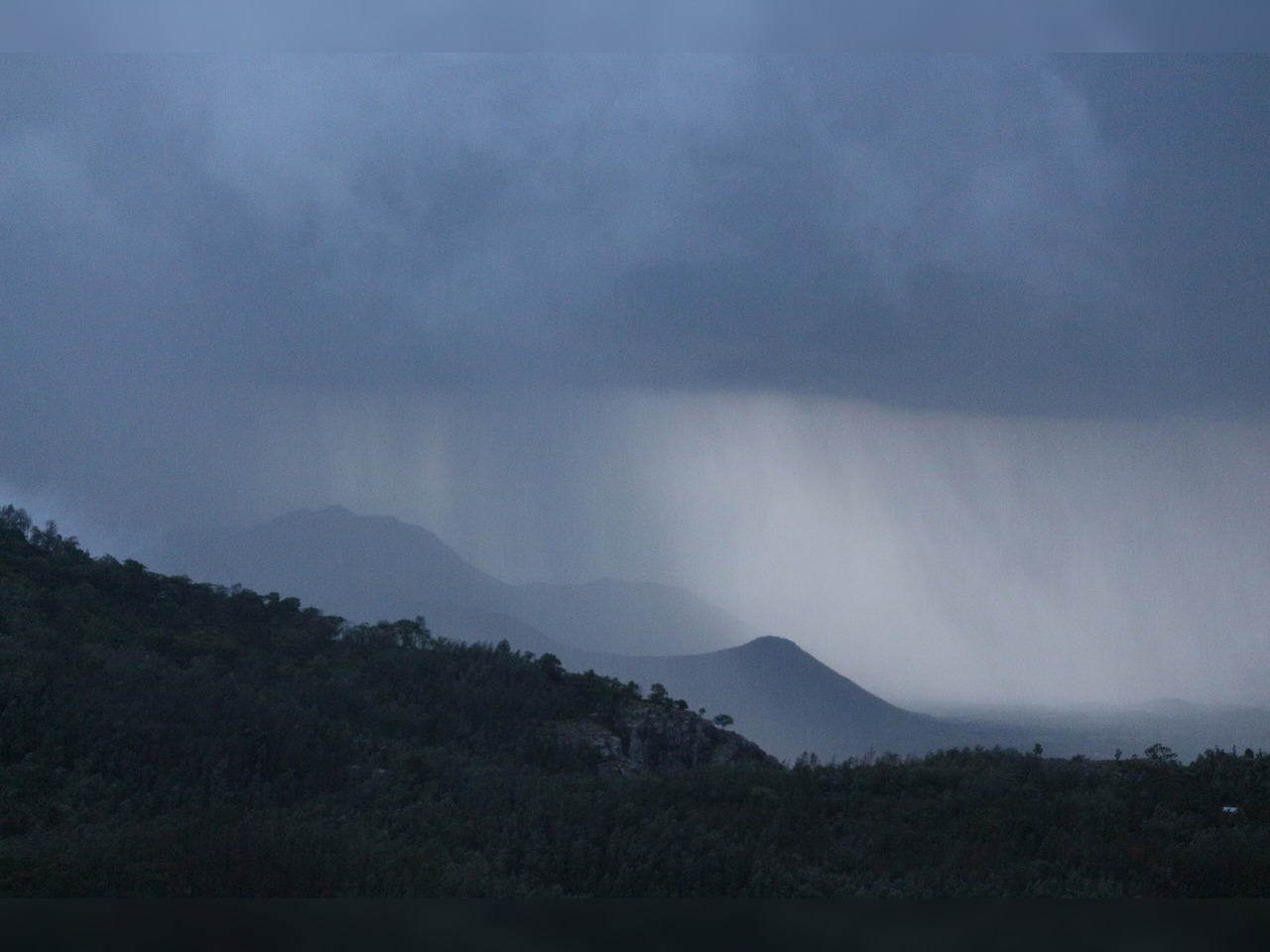
India stands at the fringe of a below-normal monsoon triggered by a very strong El Nino. According to the just released probability forecast by the Indian Meteorological Department (IMD), there is a 60% probability for deficient rainfall in the country, while there is a 24% probability for below-normal rainfall.
The ongoing year has been exceptional so far, as it is slated to see all forms of El Niño Southern Oscillation (ENSO), which is rare. The year began with weak La Niña conditions; presently, the country is in the ENSO neutral phase, to be followed by a quick transition into El Niño conditions by the second half of the year.
According to experts, by the time the monsoon makes an onset over the Indian mainland, El Niño would be in an evolving phase and ENSO neutral conditions will prevail. Mere presence of El Nino is enough to worry about the weakening Indian Summer Monsoon rainfall, said an expert.
El Niño is a very complex phenomenon and is quite famous for its notorious behaviour. It affects large parts of the world but not in a similar manner every time and everywhere. Particularly for sub-tropical regions that bear the maximum impact of this phenomenon, which is invariably linked with less rainfall.
“With the rapid rise in the Niño indices, the impact will start showing in the onset month of June,” stated a study accessed by The Plurals
Figures flash red
IMD has forecast below-normal monsoon rainfall at 90% of the Long Period Average (LPA) for 2026, while National Oceanic and Atmospheric Administration (NOAA) projects an 82% chance of El Niño developing by May–July 2026, rising to 96% by winter.
Climate models indicate a two-in-three chance of a strong to very strong El Niño by late 2026. “Since 1950, the world has seen four super El Niño events – 1982-83, 1991-92, 1997-98 and 2015-16 – with the highest temperature anomaly was found to be +2.5°C in 1982-83.
“Around 60% of El Niño years since 1951 have resulted in deficient or below-normal monsoons in India, hence it is high likely that the phenomenon will repeat this year as well”, stated an expert. Incidentally WMO has announced yesterday that 2027 is likely to be the world’s warmest year.
Experts have also warned that that the distribution of rainfall may be a bigger concern than seasonal totals, with longer dry spells and erratic rainfall. Break-monsoon conditions could become more frequent, affecting kharif sowing and crop productivity. Incidentally nearly 52% of India’s cultivated area remains rain-fed, making agriculture highly vulnerable to monsoon variability.
“Apart from agriculture ground water recharge, food production, hydropower generation, and rural livelihoods could face significant pressure under a weak monsoon,” says the study analysis.
Experts expressed deep concerns
“The problem is not just the total reduction in rainfall, but the way the rainfall is distributed. The delay in the onset of rainfall, along with dry spells that may occur in between, will be the more serious issues,” said G V Ramanjaneyulu, Executive Director, Centre for Sustainable Agriculture. He further added that “ …Predictions suggest that this could be one of the worst monsoons in the past 150 years”.
Anjal Prakash, a professor of public policy in FLAME University, Pune and also an author of IPCC reports, pointed out that “ … A below-normal monsoon at just 90% of the Long Period Average poses an immediate threat to India’s water security: curtails groundwater recharge, depresses reservoir levels critical for drinking water and irrigation, and amplifies the risk of urban water crises—especially in cities already grappling with scarcity”.
He reminded that “ …With 52% of India’s net cultivated area rain-fed and 40% of food production dependent on monsoon rains, this shortfall will strain both rural livelihoods and national food security, while also reducing hydropower generation and intensifying competition for water across sectors”.