
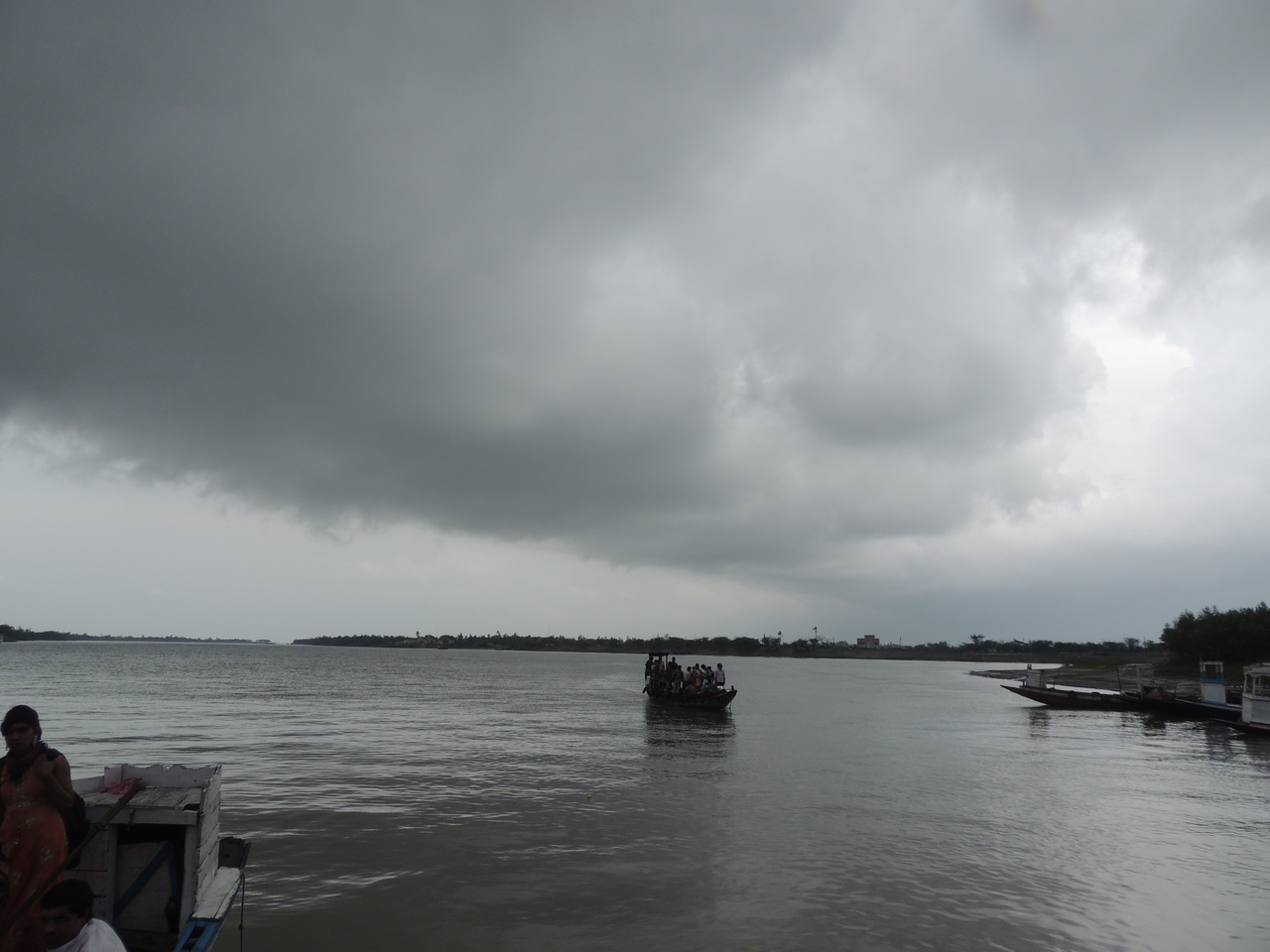
A “Super El Niño” is brewing, and east and northeast India, including West Bengal, are likely to be most affected by the heat spell and reduced monsoon.
On Friday, the World Meteorological Organization (WMO) informed that a “strong” El Niño event is expected to develop from mid-2026, which is likely to impact global temperature and rainfall patterns. The WMO stopped short of calling the imminent phenomenon a “super El Niño”, as many independent experts are describing it as, stating that the term “super El Niño” is not part of its standardised operational classifications.
Experts point out that India’s southwest monsoon is likely to be reduced as well due to El Niño’s impact, though they express hope that counter-atmospheric mechanisms may buffer the impact to an extent. Eastern and north-eastern India, including West Bengal, is likely to be highly affected.
A nearly global dominance of El Niño expected
The latest WMO report points out that “sea-surface temperatures are rising rapidly, pointing to a likely return of El Niño conditions as early as May–July 2026”. Forecasts also indicate there is a “nearly global dominance of above-normal land surface temperatures” in the upcoming three-month period and regional variations in rainfall patterns.
El Niño is a natural climate phenomenon characterised by unusually warm ocean surface temperatures in the central and eastern equatorial Pacific, weakening persistent, consistent easterly winds and shifting global weather patterns. It typically occurs every two to seven years — the last time it happened was in 2023 — and lasts around nine to twelve months.
“After a period of neutral conditions at the start of the year … (now) there is high confidence in the onset of El Niño, followed by further intensification in the months that follow,” said Wilfran Moufouma Okia, Chief of Climate Prediction at WMO, on Friday, adding that “…models indicate that this may be a strong event”.
92% of long-period average rainfall predicted
Experts linked to the Indian Meteorological Department (IMD) told The Plurals on Friday that at this point it is difficult to state specifically how exactly the Indian monsoon would be affected, as a few counter-atmospheric mechanisms are also expected to play their roles. “IMD has already predicted less than normal rainfall during the coming monsoon considering El Niño,” said a senior IMD scientist, adding that eastern, north-eastern and central India are likely to be more affected.
“The 2026 southwest monsoon seasonal (June to September) rainfall over the country as a whole is most likely to be below normal; 95-90 per cent of the Long Period Average (LPA). Quantitatively, the seasonal rainfall over the country as a whole is likely to be 92 percent of LPA …” reads a recent communiqué of IMD.
Counterforces may balance El Niño impact
“I think the rainfall in the next monsoon will be more than the IMD predicted 92 percent despite El Niño, as a couple of counter climatic mechanisms will be in place. I expect the figure to be around 97 to 98 per cent,” observed K. J. Ramesh, former IMD director general, to this correspondent on Friday.
“While El Niño will try to reduce monsoon rainfall, positive Indian Ocean Dipole (IOD) conditions, a climate phenomenon that enhances rainfall in India, and enhanced moisture in the air due to global warming contribute towards enhancing monsoon,” he explained, adding, “When the last El Niño happened, India’s monsoon rainfall figure was 94.4 per cent, while areas in the northwest received 101 percent rain.”
Eastern and north-eastern India is likely to suffer like last time, as it received only 82 percent of the long-period average in 2023 despite El Niño pushing temperatures 1.4 degrees Celsius higher than normal. This is the impact of climate change on this part of the world, where, even without El Niño, the rainfall is gradually decreasing.