
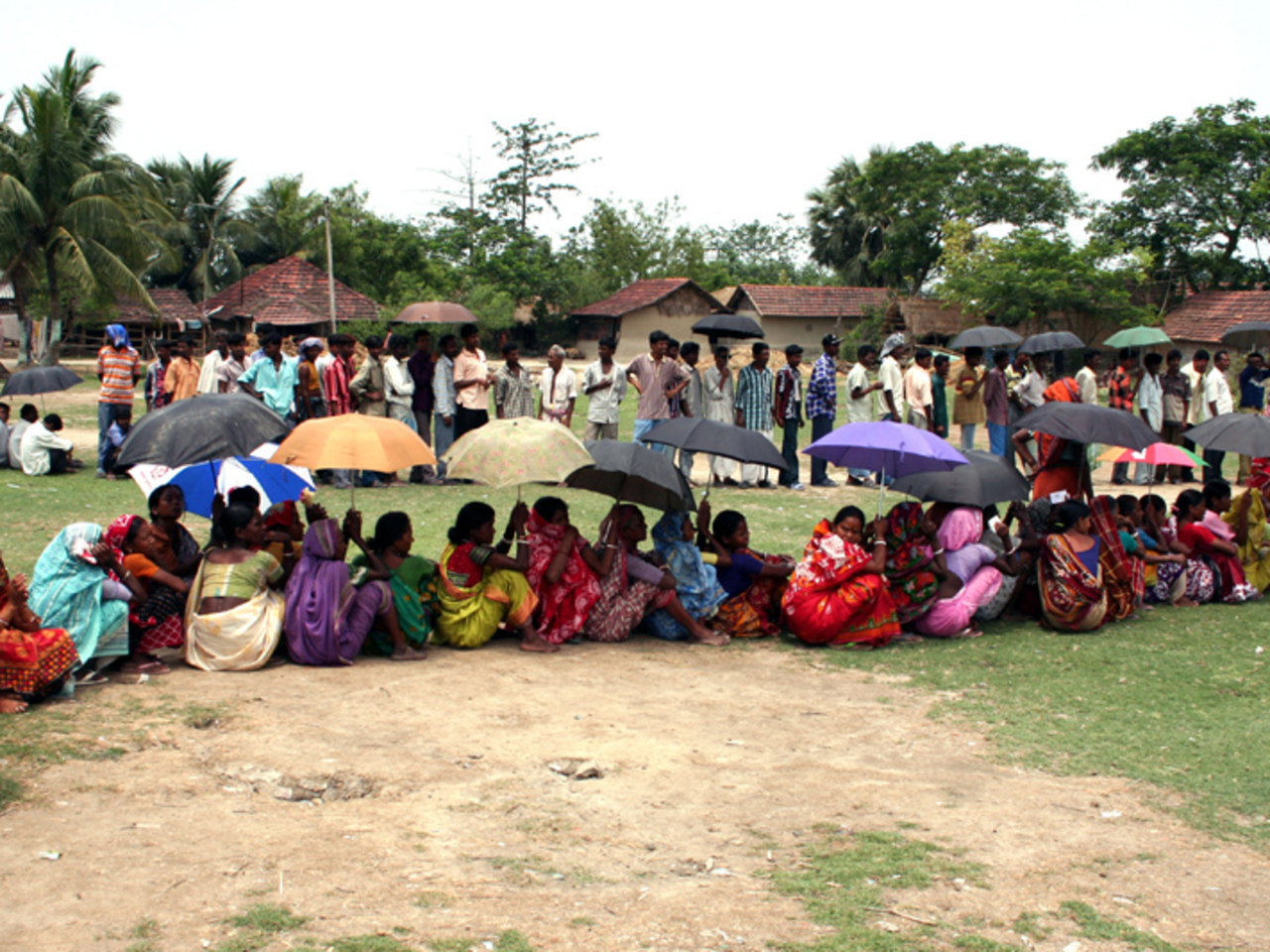
With elections due in West Bengal on April 23 and April 9, climate may play a crucial role in the process. This vast exercise, being held in the pre-monsoon period, exposes crores of people to climate risks, particularly rising heat, humidity, thunderstorms, and lightning.
The polling period coincides with the the heatwave season in northwest and central India. In east and north-east India, this period brings in Kalbaishakhi, nor’westers with thunderstorms and lightning strikes. Climate risk is equally strong in Tamil Nadu, where the elections are scheduled on April 23.
Extreme weather during election days is likely to influence the voting percentage. Less people are likely to come out and vote, whicb can influence the election result.
Hot spell and thunderstorm likely
According to AccuWeather, an Indian platform that forecasts weather according to particular localities, the temperatures from April 23 to April 29 in West Bengal will range generally from 34° Celsius to 38° Celsius, with certain places becoming hotter. High humidity and sunny days are being predicted, with a little rain in some places.
In Kolkata, the temperature during the polling week will be in the range of 35° Celsius to 37° Celsius. Midnapore will be among the hottest places, with daytime temperatures shooting up to 40° Celsius during this period.
Though the India Meteorological Department (IMD) has warned that, in general, an “above-normal” number of heatwave days may prevail in many parts of the country from April to June, its experts pointed that predicting the exact weather pattern on election days is difficult.
“It is difficult to predict as of now, but we are expecting a hot spell till third week of April which may be followed by thunderstorm activities those may coincide with election time,” said IMD Alipore Kolkata head Habibur Rahman Biswas to The Plurals on Friday evening.
In Tamil Nadu, polling day may be very hot and humid in certain parts. These conditions can create “wet-bulb” conditions, which may induce heat stress and health risks such as heat strokes. The entire east coast of the country may experience above-normal heatwave days in coastal areas in Bengal and Tamil Nadu, forecasts say.
April heat history
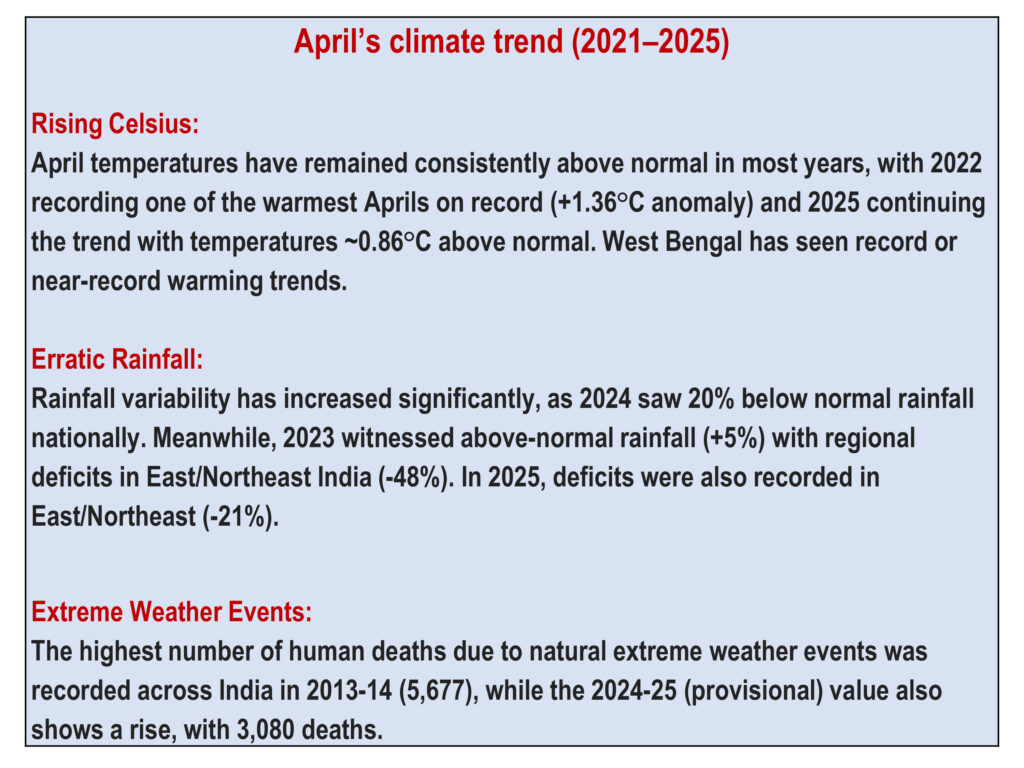
Over the past five years, from 2021 to 2025, climate statistics, based on the data from the IMD, show that the pre-monsoon transition period has become hotter, more humid and more unpredictable.
April has brought in an increasing number of extreme events. April 2022 was among the hottest on record, with temperatures 1.36° Celsius above normal. Recent years have seen sharp fluctuations in rainfall, from very low to very high.
With the heat surge promised in the days ahead, experts feel an increasing need to factor climate measures into election planning. “These evolving climate conditions could directly impact elections in several ways, such as reduced voter turnout due to heat and discomfort, heightened health risks for voters and polling personnel, and operational disruptions caused by extreme weather events. We are already at the peak of pre-monsoon activities, which have been on the rise due to rising temperatures fuelled by climate change,” said Mahesh Palawat, vice-president, Meteorology and Climate Change, SkymetWeather. The measures should include heat mitigation strategies, contingency plans for storms and better safety protocols for frontline workers.
“Most of the political leaders and representatives in our country and the world over dismiss most of the climate concerns around the elections or election-related activities. However, in our country, the Election Commission of India (ECI) considers all these parameters while planning for the elections,” said O.P. Rawat, former chief election commissioner.
“Keeping temperature rise in mind, the ECI makes sure that voting starts very early in the morning, around 7am, and goes on till late evening, 6-6:30 pm.” Rawat added.
Poll climate strategies
Elections should include heat mitigation measures, contingency plans for storms, and improved safety protocols for frontline workers, as well as standard operating procedures, and coordination between election authorities, meteorological agencies, disaster management bodies and local administrations.
Contingency planning must include backup power, secure communication systems and alternative transport arrangements in case of climate-related disruptions. Clear safety protocols, training and protective measures are required to reduce exposure to high heat and storm risks for frontline workers. Climate change is no longer a background factor but a frontline risk shaping India’s democratic
processes.