
The planet’s energy imbalance is at its highest and the years 2015-2025 were the hottest 11 years on the planet on record, says a report released by the World Meteorological Organization (WMO) on World Meteorological Day, March 23.
The report, ‘The State of the Global Climate’, a copy of which is with The Plurals, published at Geneva, points out that the greenhouse gases (GHG) have continually triggering the planet to turn warmer heating up the ocean as well as leading to increased melting of the ice. The trend not only affects the present moment but has long-term consequences, says the WMO.
“The State of the Global Climate is in a state of emergency. Planet Earth is being pushed beyond its limits. Every key climate indicator is flashing red,” said UN secretary-general António Guterres.
“Humanity has just endured the eleven hottest years on record. When history repeats itself eleven times, it is no longer a coincidence. It is a call to act,” he added
Seas suck most energy
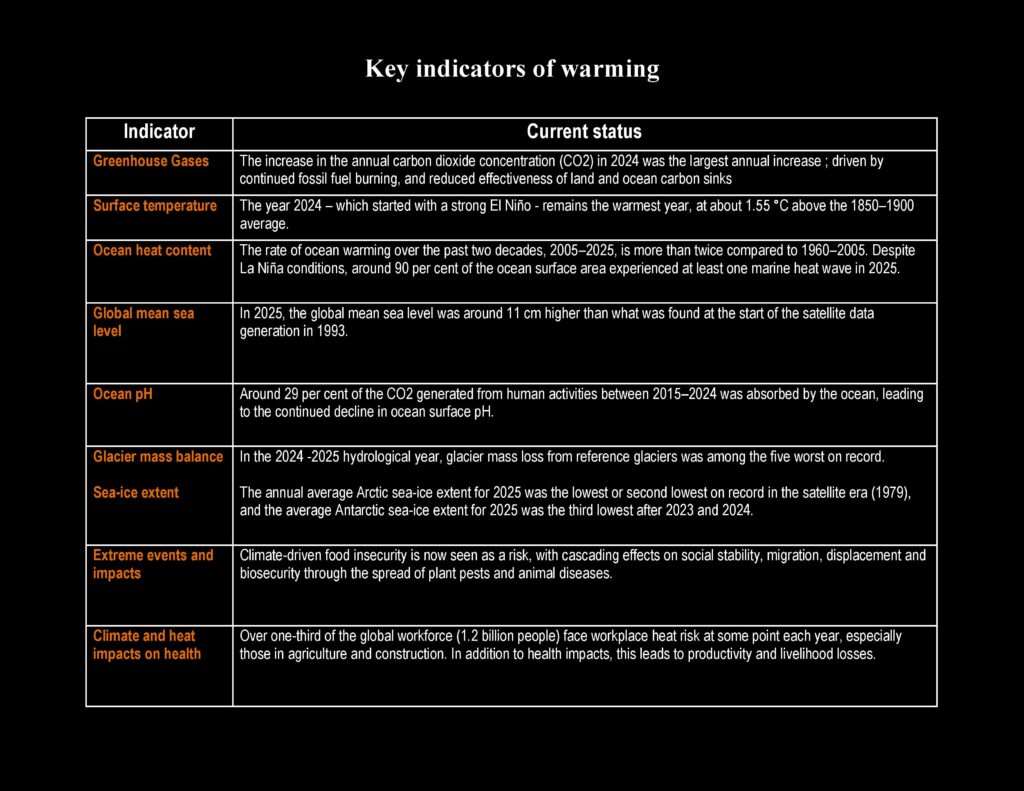
The WMO report claims that earth’s energy imbalance is highest now compared to the last 65 years. It adds that “2025 was the second or third hottest year on record, at about 1.43 °Celsius above the 1850-1900 average”. “Extreme weather events have increased, the oceans are warming and glaciers are melting,” reads report.
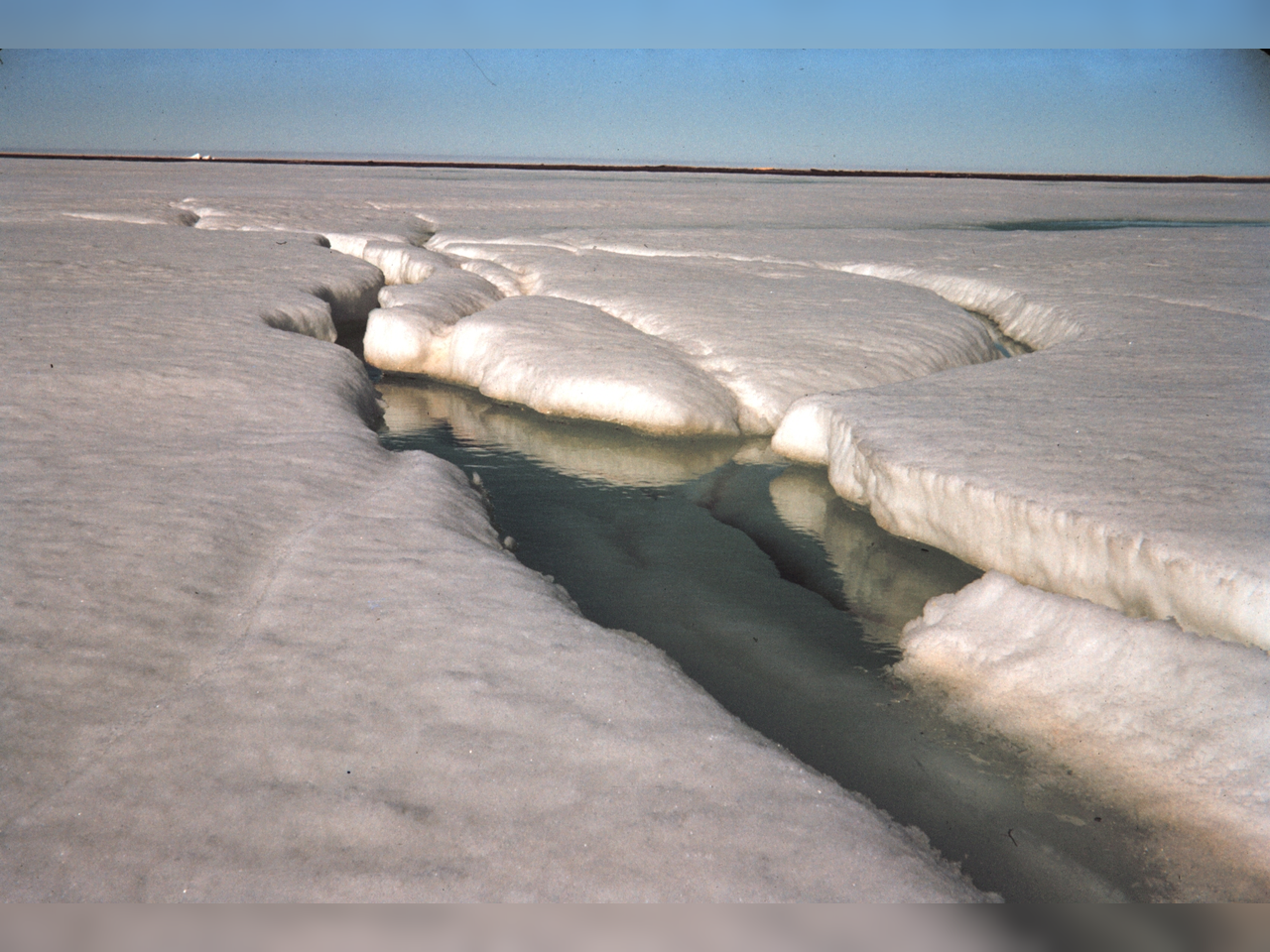
The most heat is absorbed by the oceans. Annual sea ice extent in the Arctic was at or near a record low, Antarctic sea ice extent was the third lowest on record, and glacier melt continued unabated, the report, titled, says.
The report, for the first time in 2026, includes the planet’s energy imbalance as a key climate indicator. The earth’s energy balance measures the rate at which energy enters and leaves the earth system. Under a stable climate, incoming energy from the sun is about the same as the amount of outgoing energy.
“However, increasing concentrations of heat-trapping greenhouse gases — carbon dioxide, methane and nitrous oxide — to their highest level in at least 800,000 years have upset this equilibrium,” says the WMO. The frontline scientific agency adds that the energy imbalance has increased since it began to be measured in 1960, particularly in the past 20 years, reaching a new high in 2025.
“Scientific advances have improved our understanding of the earth’s energy imbalance and of the reality facing our planet and our climate right now,” said WMO secretary-general Celeste Saulo. “Human activities are increasingly disrupting the natural equilibrium and we will live with these consequences for hundreds and thousands of years,” added Saulo.
Humans do not feel 99 per cent of excess heat
The warming of the atmosphere, including near the earth’s surface, which is the temperatures that humans feel, represents just 1 per cent of the excess energy, the report explains.
While about 5 per cent is stored in the continental land masses, most of the heat — more than 91 per cent — is absorbed by the oceans, which are a major buffer against higher temperatures on land. “Ocean heat content reached a new record high in 2025 and its rate of warming more than doubled from 1960-2005 to 2005-2025,” says WMO.
“Another 3 per cent of the excess energy warms and melts ice. The ice sheets on Antarctica and Greenland have both lost significant mass and the annual average Arctic sea-ice extent for 2025 was the lowest or second lowest on record in the satellite era,”
it added, “ … Exceptional glacier mass loss occurred in Iceland and along the Pacific coast of North America in 2025.”
Warming and sea-level rise
The warming of the oceans and melting ice are behind the rise of the global mean sea level, which has accelerated since the start of satellite measurements in 1993.
“Ocean warming and sea level rise will continue for centuries, according to projections by the Intergovernmental Panel on Climate Change (IPCC),” says WMO. Changes in ocean warming, and deep ocean pH are irreversible on centennial to millennial time scales, it adds.
The report highlights the cascading impacts of extreme weather events, including on food insecurity and displacement. It also underlines the impact of climate change on health including the mosquito-borne dengue and of heat stress. The report advocates climate data, early warning systems and integrated climate services for health for protection.
“And in this age of war, climate stress is also exposing another truth: our addiction to fossil fuels is destabilising both the climate and global security. Today’s report should come with a warning label: climate chaos is accelerating and delay is deadly,” said the UN secretary-general.
The current report is based on scientific contributions from National Meteorological and Hydrological Services, WMO Regional Climate Centres, United Nations partners and several experts.