
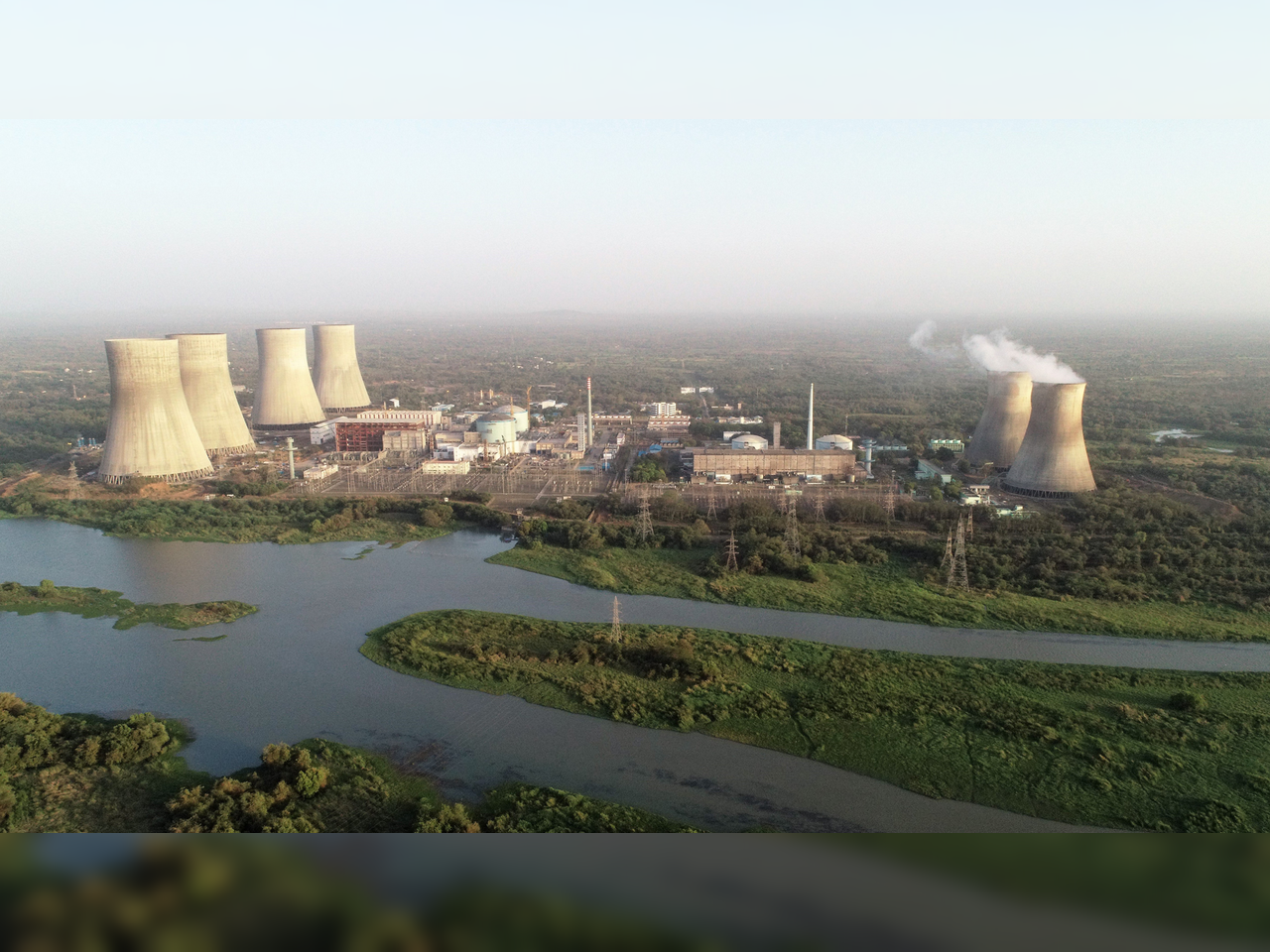

The ‘Sustainable Harnessing and Advancement of Nuclear Energy for Transforming India’ (SHANTI) Bill was passed by Rajya Sabha on Thursday, after it was cleared earlier by Lok Sabha, triggering an uproar among anti-nuclear activists in the country.
Jitendra Singh, Union minister of state (independent charge) for science and technology and earth sciences, attempted to explain the key features of the Bill, cleared after an extensive debate. The minister addressed the concerns raised by members about safety and private control generated by the Bill, defending it firmly and claiming national sovereignty and the governmental accountability remained non-negotiable.
What the govt says
Highlighting the changing global and technological context, Singh said that “objections raised to nuclear reforms in 2010 must be viewed in the light of today’s realities, where technology, safety systems and global energy demands have transformed dramatically”.
Energy growth: Outlining India’s long-term nuclear energy roadmap, Singh stated that the country has already achieved nearly 9 GW of nuclear capacity, with targets of 22 GW by 2032, 47 GW by 2037, 67 GW by 2042 and 100 GW by 2047, constituting nearly 10% of India’s total energy needs. He claimed that nuclear power would be indispensable in meeting future energy demands driven by AI and digital infrastructure, as it provides reliable, round-the-clock clean energy unlike intermittent sources.
Safety: Addressing safety concerns, the minister categorically stated that nuclear safety standards remain unchanged and uncompromised, as per the stringent principles embedded in the Atomic Energy Act of 1962: “safety first, production next.”
No seismic risk: He further reassured the House that India’s nuclear plants are geographically located far from seismic fault zones and pointed out that radiation levels at Indian reactors are many times below prescribed global safety limits.
No impact on cancer: Singh addressed public health apprehensions, stating that there is no scientific evidence of carcinogenic impact from Indian nuclear reactors. He claimed radiation emissions from facilities of nuclear plants such as Kudankulam, Kalpakkam, Rawatbhata and Tarapur being far below permissible limits.
Limited privatisation: Addressing misconceptions about privatisation, the minister stated that while exploration activities may involve private partners, uranium mining beyond specified thresholds would remain exclusively with the government. Similarly, spent fuel management will always remain under government custody, following a clearly defined, long-term storage and handling protocol.
Liability and compensation: Singh explained that the Bill introduces graded liability caps to encourage participation by smaller investors without diluting victim compensation. He assured that in the event of damage exceeding operator liability limits, full compensation mechanisms are provided through government-backed funds and international conventions, ensuring that affected parties are not left unprotected.
Environment considered: The definition of “nuclear damage” has also been expanded to explicitly include environmental damage.
Redressal: The minister highlighted the introduction of the Atomic Energy Redressal Commission, stating that it is meant to provide an additional, faster dispute-resolution mechanism for citizens without restricting access to civil courts or higher judiciary.
Foreign influence: Responding to concerns on sovereignty and foreign influence, Singh asserted that India would adopt only those international best practices that suit Indian conditions, without compromising strategic autonomy or traditional strengths.
No weapon grade activities: He reiterated that the SHANTI Bill pertains strictly to civilian nuclear energy, with uranium enrichment levels limited to reactor requirements and completely unrelated to weapons-grade activities.
Role in developmental sectors: Singh drew attention to the expanding role of nuclear science in healthcare, agriculture, food preservation and cancer treatment, citing advances in nuclear medicine for childhood leukaemia and prostate cancer.
Coming up: Response of anti-nuclear activists and those opposed to the Bill.