
During September 25-27, various union government departments and agencies published several news releases linked to the environment, climate change, public health, and related social sectors that are important for the country’s present and future.
The Plurals has collated the key information for you.
India expressed commitment to tackle global pandemics
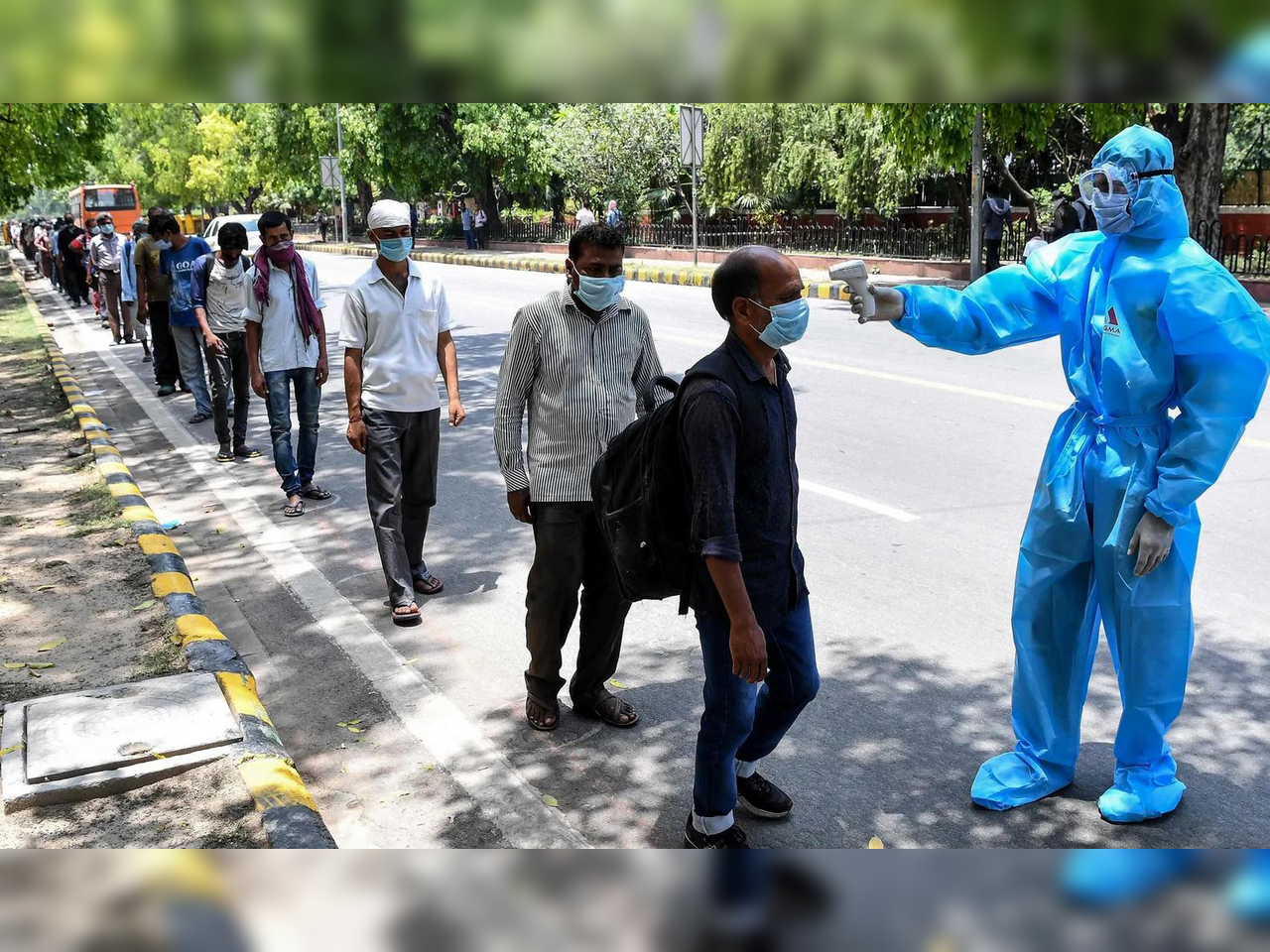
Representing India at the UN High-Level Meeting on ‘Pandemic Prevention, Preparedness and Response’ in New York on 25th September, Union Health Secretary Punya Salila Srivastava reaffirmed the nation’s commitment to strengthening global health security through international cooperation. She stressed the need to translate the lessons of the COVID-19 pandemic into sustained investment, institutional capacity and resilient health systems.
Addressing the meeting at the United Nations Headquarters, Smt. Srivastava outlined India’s coordinated approach to pandemic prevention and response across government and society, which covers a wide range of potential health emergencies. She spoke of the country’s efforts to expand laboratory networks, emergency coordination, health workforce, stockpiles and clinical care capacity to ensure that systems are equipped to respond effectively to health emergencies.
Detailed report link:
https://www.pib.gov.in/
Management Effectiveness Evaluation report of tiger reserves in India launched
Union Minister for Environment, Forest and Climate Change Shri Bhupender Yadav today launched the Inception Workshop for the 6th Cycle of Management Effectiveness Evaluation of Tiger Reserves in India (MEE-TR), organised by the National Tiger Conservation Authority (NTCA) in collaboration with the Wildlife Institute of India (WII), in New Delhi.
The inception workshop marked the commencement of the 6th Cycle of MEE-TR, which will cover all 58 Tiger Reserves in the country. The workshop brought together representatives of NTCA, WII, State Forest Departments, Tiger Reserve management teams and experts to discuss the framework, methodology and implementation of the 6th Cycle.
In his inaugural address, Shri Bhupender Yadav highlighted that India has demarcated over 85,000 sq km for tiger conservation. He emphasized the need to continuously integrate evolving scientific processes and technologies into wildlife conservation and evaluation. At the same time, he stressed that a science-based approach must be guided by compassion, values and vision to ensure harmonious engagement between forest departments and local communities. He acknowledged the contribution of generations of forest officials in fostering a sense of belongingness towards wildlife conservation in the society.
Detailed report link:
https://www.pib.gov.in/
Government highlighted organic waste as valuable resource of clean energy
Across India, organic waste is finding a second life as fuel, electricity and valuable manure. Under the Swachh Bharat Mission, launched in October 2014, scientific management of municipal solid waste has remained a core objective. As the Mission evolved, organic waste has been recognised as a valuable resource to produce clean energy.
Biogas, produced through the anaerobic decomposition of organic waste, is among the most viable, economical and environmentally friendly cooking fuels available. The by-product slurry is rich in nitrogen and serves as an effective organic fertilizer. It reduces dependence on chemical inputs, lowers costs and helps maintain soil fertility. This delivers a dual benefit from a single initiative.
Detailed report link:
https://www.pib.gov.in/
Ministry of Science & Technology scanner on the future impact of black hole jets
Astronomers have discovered a possible mechanism by which the black holes at the hearts of galaxies could be influencing the humongous, faint reservoir of gas surrounding their host galaxies, ultimately shaping the fates of galaxies.
When one thinks of a galaxy, one imagines dust and stars sparkling within beautiful spirals. But beyond the galactic disk’s edge lies a diffuse, ghostly envelope spreading out as far as 10–20 times the size of the galaxy. This gaseous reservoir is called the circumgalactic medium or CGM. This CGM provides the fuel for star formation.
But if all the gas existing within the boundary of the CGM did end up clumping together into stars, extremely luminous galaxies with a huge number of stars would form. But such galaxies don’t really exist. For more than a decade now, astronomers have proposed that energy from supermassive black holes (SMBHs) sitting at the hearts of galaxies could be preventing the gas from cooling and collapsing into stars. But there’s no consensus yet on how this may be happening. Before going into how, it helps to put into context the relative sizes of the SMBH and the galaxy to understand the scale of influence being talked about.
Though an average SMBH could be the size of the solar system, it is still tiny compared to the galaxy, which could host 100 billion such stellar systems.
Detailed report link:
https://www.pib.gov.in/
Eco-friendly green fuel will be supplied to ships from India’s first port-based e-methanol production facility
India took a major step toward becoming a green energy exporter as Gujarat Chief Minister Bhupendra Patel, Union Minister of Ports, Shipping and Waterways (MoPSW), Sarbananda Sonowal and Assam’s Chief Minister Dr Himanta Biswa Sarma laid the foundation stone for the country’s first port-based e-methanol plant at Deendayal Port Authority (DPA) in Kandla, Gandhidham, Gujarat, today.
The 150-tonne-per-day plant will use renewable power, water and biogenic CO2 to produce e-methanol, a green fuel that will enable cleaner shipping, and supply it to vessels plying on the Asia-Europe International Trade Corridor, one of the world’s busiest trade routes. The project positions India as an exporter of green fuel to global shipping.
The plant will position India as a global leader in the production and supply of green fuel, and will produce green methanol at a much more competitive rate compared to other global producers, just US$750 per tonne, against a global rate of US$1,300 per tonne
Detailed report link:
https://www.pib.gov.in/
“Climate Resilient Water Management” was the theme of just concluded India International Water Week 2026
The 9th India International Water Week (IIWW) 2026 concluded today at Bharat Mandapam, New Delhi, with the Valedictory Ceremony chaired by Union Minister of Jal Shakti, Shri C R Patil. Held from September 22–25 under the theme “Climate Resilient Water Management”, the deliberations brought together policymakers, government officials, international organisations, development partners, researchers, academia, industry, water-sector practitioners, innovators and young professionals to discuss emerging challenges and solutions for water security.
Detailed report link:
https://www.pib.gov.in/