
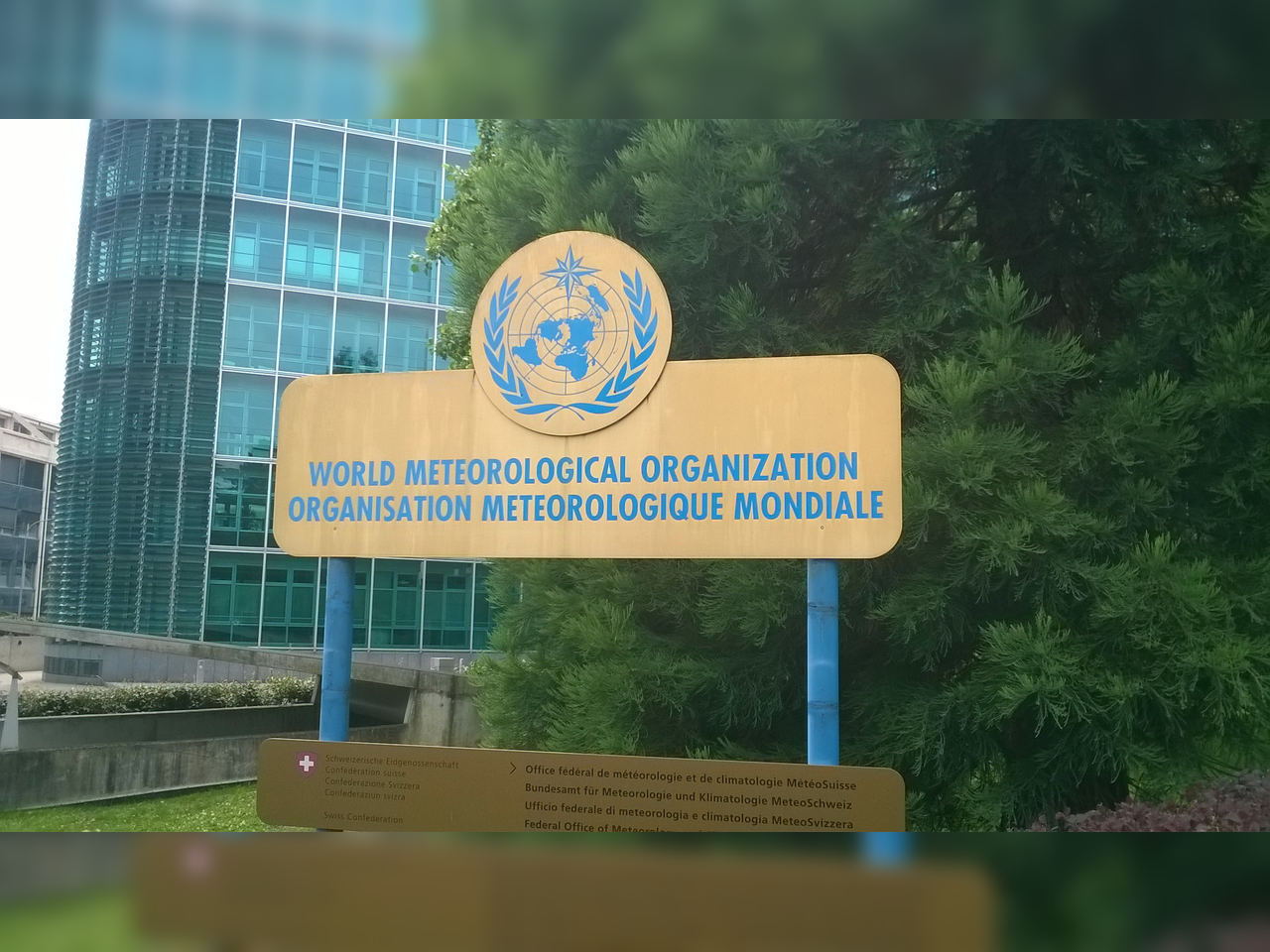
The World Meteorological Organization (WMO) warned that El Niño will continue to intensify steadily into a strong event during August–October 2026. On Friday, a joint statement issued by WMO and the UN Secretary-General António Guterres in WMO’s Global Seasonal Climate report released at Geneva has pointed out the imminent impacts of El Niño on global weather.
The UN Secretary-General stressed on the disastrous impact of El Niño, acting with fossil fuel-induced climate change; “El Niño is not just on our doorstep – it is inside the house and turning up the heat. And this is only a warm-up act”.
El Niño is strengthening
“El Niño is strengthening – adding fuel to a planet already on fire with scorching heat domes, apocalyptic wildfires and record hot seas,” said the UN Secretary-General. “Fossil fuels are fanning the flames of this crisis. Expansion must stop. More coal, oil and gas will lead to a more combustible future,” said Guterres.
“The warm-up act is over. We cannot afford to wait for the main event,” the UN chief said.
The WMO says it is intensifying its mobilisation of “information and support services to help countries anticipate and minimize the impacts of El Niño”.
Indian Ocean basin to be affected
WMO warns, based on multi-model ensemble forecasts, that sea-surface temperature anomalies may exceed 2.9°C in key monitoring regions due to El Niño, while “a positive Indian Ocean Dipole” may occur. Positive Indian Ocean Dipole means a warmer climate pattern in the western Indian Ocean on average, while the eastern Indian Ocean becomes cooler than average. Acting together, these oceanic factors can sharply increase regional climate impacts, such as, drought, floods and wildfire risk, particularly around the Indian Ocean basin.
Globally the Indian Ocean Basin is the third-largest water depression, covering about 73 million square kilometers with an average depth of 3,741 meters; and bounded by Asia to the north, Africa to the west, Australia and the Sunda Islands to the east, and the Southern Ocean to the south.
Sea surface temperatures in tropical Atlantic are also expected to remain warmer than average, says the WMO in its Global Seasonal Climate Update, which will issue the next update in early September.
El Niño timeline
El Niño and La Niña are opposite phases of the phenomenon El Niño–Southern Oscillation (ENSO), which is a powerful driver of year-to-year climate variability.
El Niño events occur typically every two to seven years and last between nine and twelve months. Often they begin to develop between March and June, and peak intensity between November and February.
They exert their strongest influence on global temperatures during the year following their onset. As a result, 2027 is being predicted to be excessively hot. Earlier WMP predicted that 2027 is likely to be the warmest year ever.
El Niño effects vary according to region.
Strong temperature-rise signal
The WMO’s Global Seasonal Climate Update predicts “an overwhelming likelihood of above average temperatures across most land areas”.
Its most pronounced signals on land extend across Africa, southern Europe, the Arabian Peninsula, South Asia, eastern Asia, Central America, the Caribbean, Southern Africa, and many places in South America and New Zealand. The equatorial Pacific Ocean area carries the strongest signals of intensifying El Niño events.
“El Niño is one of the most closely monitored climate phenomena in the world. But forecasts in themselves do not prevent hazards, people do. This El Niño developing against the backdrop of unprecedented ocean heat and rising temperatures, provides governments and communities with a window of opportunity to anticipate risks and act before impacts unfold,” said WMO Secretary-General Celeste Saulo.
More rains, more drought
“The August–October 2026 rainfall outlook exhibits patterns of a classic, strong El Niño event,” says the WMO. Wetter-than-normal conditions are likely across the Greater Horn of Africa, central Asia, south Europe, western North America and south-eastern South America. Drier-than-normal conditions are expected in southern and eastern Australia, southern Central America and parts of the Caribbean, north-western South America and northern Europe.
“The decisions we make today will shape the impacts we experience tomorrow. WMO and its members are committed to ensuring that credible and relevant climate information reaches those that need it most,” the WMO Secretary-General added.