
Stopping illegal stone quarries and coal mines and monitoring polluting industries are included in the manifesto of the Indian National Congress ahead of the Assembly polls in West Bengal. Most of the demands that have been raised by the green lobby, including stronger action against polluting industries, have been given priority in our manifesto.
However, one thing surprises me. Though large institutional setups dedicated to environmental protection have been built over the last 10 to 15 years both in Delhi and Kolkata, hardly a few cases have actually been filed in court by the environment ministry to protect the environment. If you look at the data, the number is extremely low.
The reason, I believe, is that a powerful network exists involving the polluters and a section of the regulators. We have to accept that those who pollute and destroy the environment have long reach and deep pockets. They can influence or “buy” people at any level, anytime.
Although strong environmental laws were enacted during the UPA government, many state governments do not implement them properly. Even today, when a factory is to be built, there are environmental norms that must be followed, but how strictly are they enforced on ground? I have my doubts.
In this context, let me flag the question of large-scale gatherings of people and their environmental implications. I have no objection to events such as the Gangasagar Mela or the Kumbh Mela, but do the organisers reserve even one per cent of their budget to clean up the pollution left behind by such massive events?
If we ourselves keep polluting our environment, how can we expect to protect it? Mahatma Gandhi once said that nature has given us plenty, but when our greed crosses limits, we begin to consume nature itself. And remember, nature is far more powerful than us, many times over.
When an earthquake strikes, or when floodwaters rush down from Bhutan into Darjeeling, we may blame one or the other factor — but we cannot control nature. Why are we cutting mountains to build roads, for what purpose? We have to accept that we are still unable to stop such mayhem affecting nature.
Look at Kolkata: drains and sewage systems are getting clogged. Urban areas are becoming unlivable, there is hardly any space left for water drainage. I studied at Burdwan University; earlier there were open fields that used to get recharged with rain water. Now, those places have become chock-a-block with high-rise buildings!
In Kolkata, high-rises are coming up everywhere, sometimes, even during the night, the construction continues. It is hard to sleep due to the constant din of construction. Buildings are rising endlessly — but for whom? Where is all this development leading? The groundwater level in Kolkata is steadily declining. Is anyone monitoring this?
Nature will not remain silent forever. When it reacts, the consequences will be severe.
That is why, from our party’s side, we continue to raise warnings. Environmental protection and maintaining ecological balance will be major points on our political agenda and movements in the future.
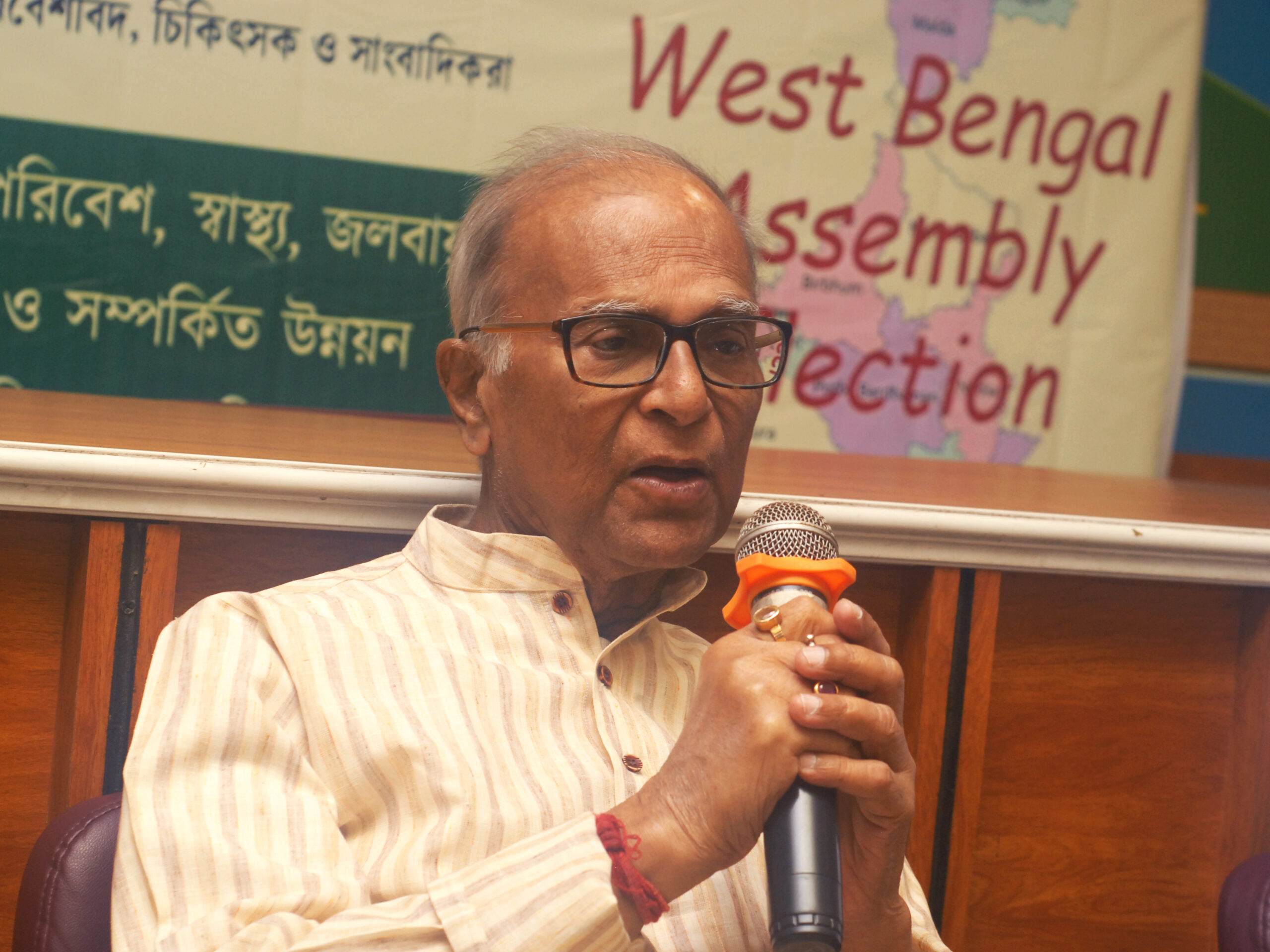
(This first-person account is based on the speaker’s recorded speech on March 28, 2026, at Kolkata Press Club, delivered during the event Politics meets Paribesh organised by The Plurals, Bengal Environment Journalists Platform and nonprofit EnGIO.)