
During my time in Parliament, I was part of two environment committees, where I got the opportunity to observe how the government works and how laws are dealt with in the sector. In both committees, I could do little as almost none of my suggestions was accepted.
One was on biodiversity, where I saw with my own eyes how the government decisions were destructive for biodiversity and nothing could be done. The other was on forest conservation, where, instead of protecting forests, activities like road expansion and other so called developmental works were prioritised. When one sees that even the National Green Tribunal grants permissions for development in sensitive areas, not much hope is left.
But, still, I believe, it is important to put forward a few key proposals to these political parties on environmental and related matters. Whether they include those in their priority list is up to them; and, even if they do, there is no guarantee that they will implement them.
The list, I want to flag off, is as follows:
The first subject on the list has to be air pollution. Particulate Matter pollution levels in Kolkata and Howrah have crossed dangerous limits long ago and is one of the highest in India. The readings that we saw last January were alarming. The Kolkata Municipal Corporation has proposed a Rs 100 crore plan to combat the problem, but the amount is inadequate. The plan seems to be good but it needs to be taken far more seriously. After all, we all know what damage can happen to our lungs in a highly polluted environment.
The second priority should be social forestry. I am from Bardhaman, and I have seen along the Kalna–Katwa road how all the trees have been felled just because the shade of the trees, it was assumed, slightly reduced crop yield. This is absolutely criminal. Immediate action is needed, and any government can do it if there is political will.
Third on the list is noise pollution. It has reached a very serious level. Earlier, we had two or three major festivals a year that people eagerly awaited. Now, there are multiple events every month. People organise pujas for various reasons, and after collecting funds, they use loudspeakers for days, harassing entire neighbourhoods. At such times, one remembers late Justice Bhagawati Prasad Banerjee’s efforts to control noise pollution. This must be strictly addressed — celebrate as you wish, but keep it within limits and do not inconvenience others.
The fourth priority is tree plantation. I would like to thank Kalyan Rudra, chairman of West Bengal Pollution Control Board, for making the effort to build a “bio-wall” or green barrier across districts like Jhargram, Bardhaman, Bankura and Purulia for raising the green quotient and reducing air pollution arriving with westerly winds. I urge all political parties to consider adopting this as a policy, as it is not very expensive and also creates employment.
Fifth, the return of Ganges dolphins indicates some improvement in water quality of the river Ganga. This is due to the installation of several sewage treatment plants. However, about a hundred or even more are needed. The question is, when will they be built?
Sixth is the degradation of the Saraswati river, which should be treated as a separate priority. With proper planning, restoration results can bear fruits within two years.
Seventh is saving the water bodies. We often speak about saving ponds and wetlands, yet they continue to disappear in front of our eyes. This must be treated as a serious criminal offence, not a minor violation. Strong legal direction from the government is needed against the violators.
Eighth on my list is Dhapa’s landfill — I am told that there are already about 9 million tons of legacy waste, with thousands of metric tons added every day! We have heard about recycling for years. Some work has been done, like parks built on landfill areas, but there needs to be real clarity and accountability. Huge sums of money are being spent, but results remain unclear. Specific demands should be made regarding Dhapa and nearby landfill zones.
Ninth is the critically affected Sundarban area. It is an environmental and climate change hotspot and needs a different approach from the administration. We have to remind ourselves that Sundarban is a unique ecosystem. Groundwater levels are falling in the zone. Plantation drives have been undertaken, but survival rates are low. Reports suggest even mangrove plantations are being poorly executed. This requires serious scientific planning and governance. Sundarban should not be treated as just another administrative posting — it needs dedicated expertise.
These are very specific suggestions. There are others as well. All need to be collated and sent to political parties. They should prioritise the issues.
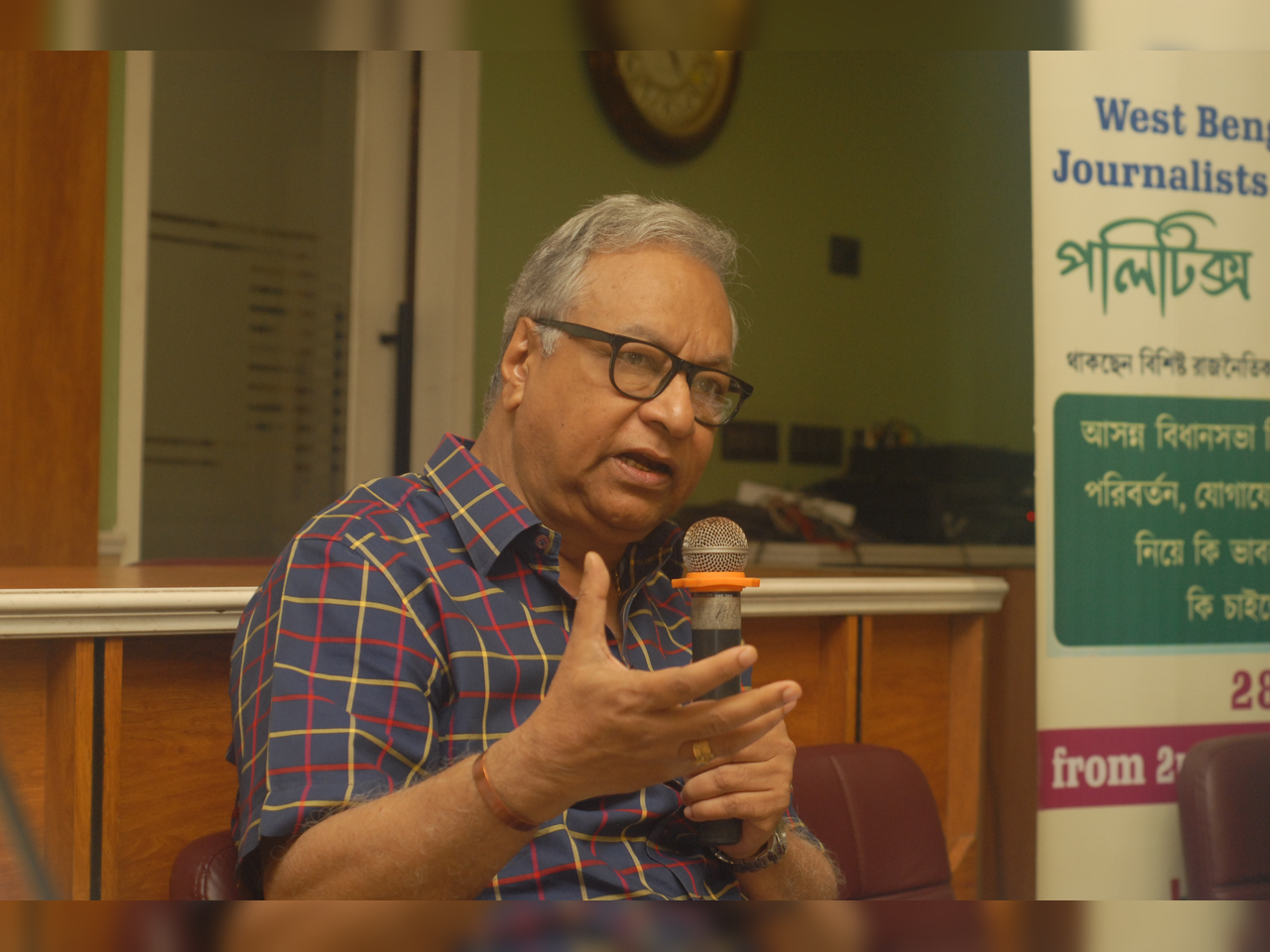
(This first-person account is based on the speaker’s recorded speech on March 28, 2026, at Kolkata Press Club, delivered during the event Politics meets Paribesh organised by The Plurals, Bengal Environment Journalists Platform and nonprofit EnGIO, as well post meeting inputs.)