
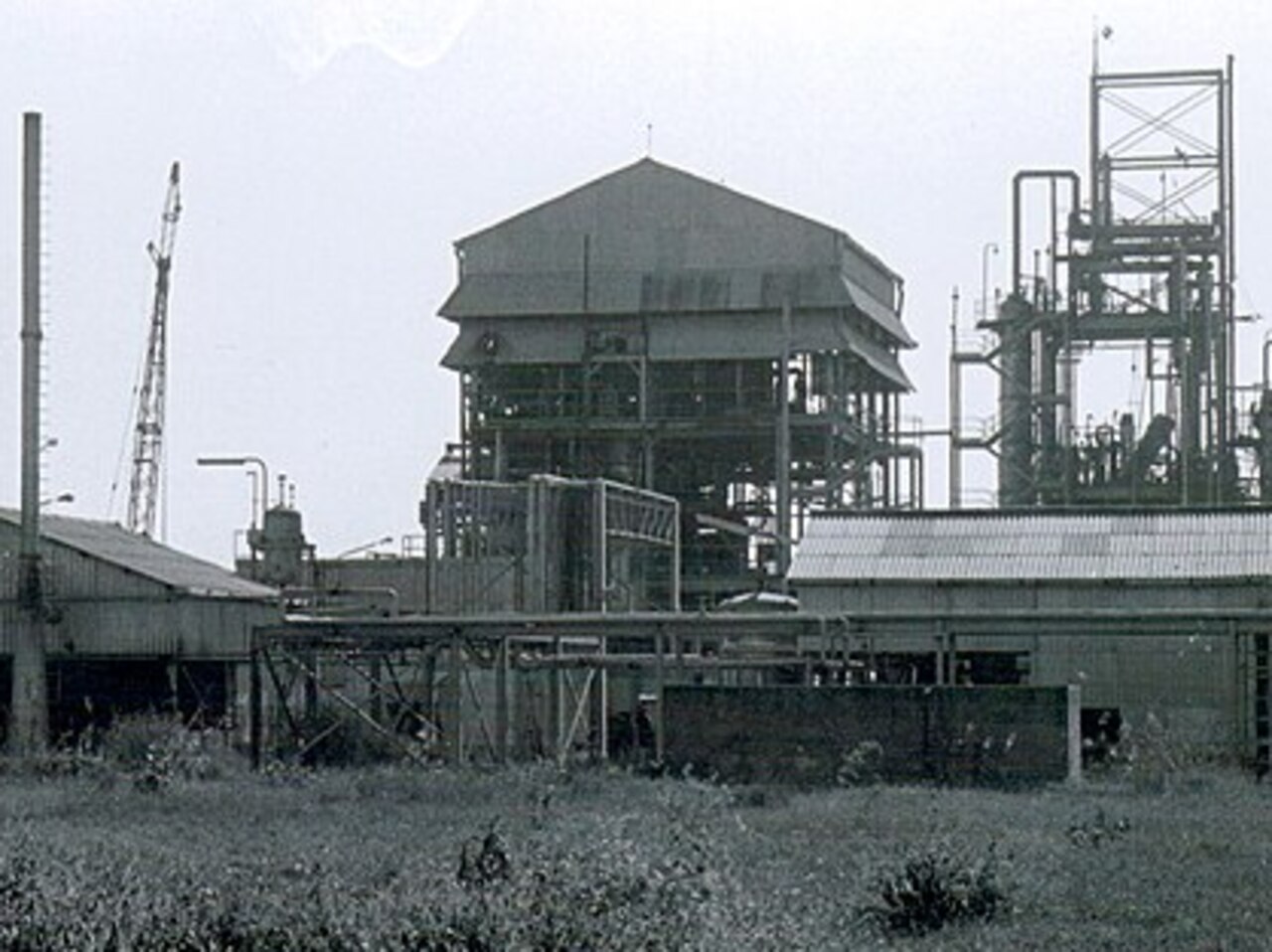
The nightmare that engulfed Old Bhopal on the night of 2-3 December 1984 refuses to go away, though it may have receded from public memory. Even today, there is no firm figure of how many people died when a cloud of highly toxic methyl isocyanate rolled through the lanes surrounding the pesticide plant then owned by Union Carbide—estimates range between 20,000 and 50,000. Even at the lower end, it ranks among the worst industrial disasters in the world.
Have India’s policymakers and industrialists learnt from it? There is really no reason to think so. There is a long list of fatal industrial accidents since 1984—45 people were killed on 23 September 2009 when an under-construction chimney collapsed at a power plant inside the Bharat Aluminium Company factory in Korba, Chhattisgarh. A fire at the Indian Oil Corporation depot on the outskirts of Jaipur on 29 October 2009 killed 12 people and injured at least 130. Half a million people had to be evacuated. On 23 August 2013, 23 people were killed when a blast led to the collapse of the cooling tower in the HPCL refinery in Visakhapatnam. Six people were killed and over 40 injured due to a leakage in a methane gas pipeline in the Bhilai Steel Plant in Durg, Chhattisgarh on 12 June 2014.A fire in a Gas Authority of India Limited pipeline killed 18 people on 27 June 2014 in Nagaram in the East Godavari district (reorganised as Dr. B.R. Ambedkar Konaseema district in 2022) of Andhra Pradesh. On 15 March 2017, an ammonia leak from a cold storage facility near Kanpur killed five people. Eleven people were killed and over 5,000 fell ill due to a gas leak LG Polymers plant in Visakhapatnam on 7 May 2020.
Free India shows near-total lack of safety consciousness
These are just the major accidents. Almost every day, there are reports in inside pages of newspapers about people dying while cleaning a sewer or due to an electrical short circuit. Series of blasts, and killings, in legal and illegally run fire units across India are too routine to be even mentioned.
Big and small, these industrial accidents show a pattern—the near-total lack of safety consciousness in factories, buildings, roads or bridges under construction, sewage pipes, you name it.
This is not usual in other developing countries, leave alone developed nations. Thousands of Indians holiday in southeast Asia nowadays. Has anybody seen a building construction site in Thailand, Vietnam or Indonesia without every worker wearing a hard hat and heavy boots? How many hard hats do you see in buildings under construction in India? And when you do see them in road or bridge construction sites, how many are in safe footwear?
Cheap labour, little compensation, insensitive policy makers
Why does this happen in India? The big reason is that labour is cheap, and in most cases the management or contractors or whoever is responsible gets away with paying very little compensation or fine after an accident, leave alone a jail term. Instead, corporate India closes ranks against any notion of criminal liability, and policymakers are often overtly or covertly on their side, as was seen so clearly in the cases against Union Carbide officials following the gas leak in Bhopal.
How to force a change? Bring law that hurts erring corporates
Labour will continue to be cheap in an overpopulated country where the unemployment situation keeps getting worse. And current liability laws are not strong enough to change the safety situation. So how can this change be forced?
Globally, the proven way to force safety consciousness and responsible corporate behaviour is to have a law of torts that enables individuals to sue corporations for criminal liability as well as for compensation. This is the way by which safety standards were improved manifold in North America, western Europe, Japan, Australia and other developed countries in the twentieth century. It did not happen automatically. It happened because corporations realised they would go bankrupt if they had to pay large compensation claims, so it made commercial sense to improve safety standards and minimise accidents.
After the Bhopal gas leak, many of the victims sued Union Carbide in various courts around the US. There was a lot of talk in India about the need for a law of torts. But India’s policymakers opposed the idea—instead, the government of India appointed itself the notional parent of all gas leak victims in US courts and accepted a consolidated sum in compensation. Very few of the victims were satisfied with what they got as a result, though the total sum did go along way to bankrupting Union Carbide.
Why Indian policy makers are averse to law of torts
There is a reason many policymakers and industrialists fear the law of torts. Theoretically, it enables any citizen to sue any firm or any arm of the government if he or she suffers a loss due to any activity. Someone affected by an industrial or a rail accident or an air crash can go to court and say the compensation being offered is inadequate. This can even be extended to someone displaced by the building of a dam, a road, a factory, or an airport. India’s land acquisition policy will be under far closer scrutiny than it is now. State governments will have far less leeway in offering cheap plots to industrialists. It is easy to see why all branches of the executive oppose a law of torts in India.
Still there is a hope; court willing
But the world is moving in the direction where individuals and groups go to court against authorities more and more often—the verdict of the International Court of Justice after a group of environmental activists and students from various Pacific island countries went to court to demand that all governments do much more to control release of greenhouse gases causing climate change is just the latest in a growing list. Indian courts have also occasionally moved in the same direction—for example when the Uttarakhand High Court declared that rivers have rights.
If the safety and basic rights of workers and all citizens can be improved through new laws or stronger implementation of old laws, that can only be to the good.
It is bizarre that we need to engage on the agenda in a country that has got freedom eight decades back and dreams to be a superpower soon.
Joydeep Gupta is an award-winning Indian environmental journalist who reports on climate change, pollution, water, and biodiversity. He currently works as the India Manager for the Earth Journalism Network