
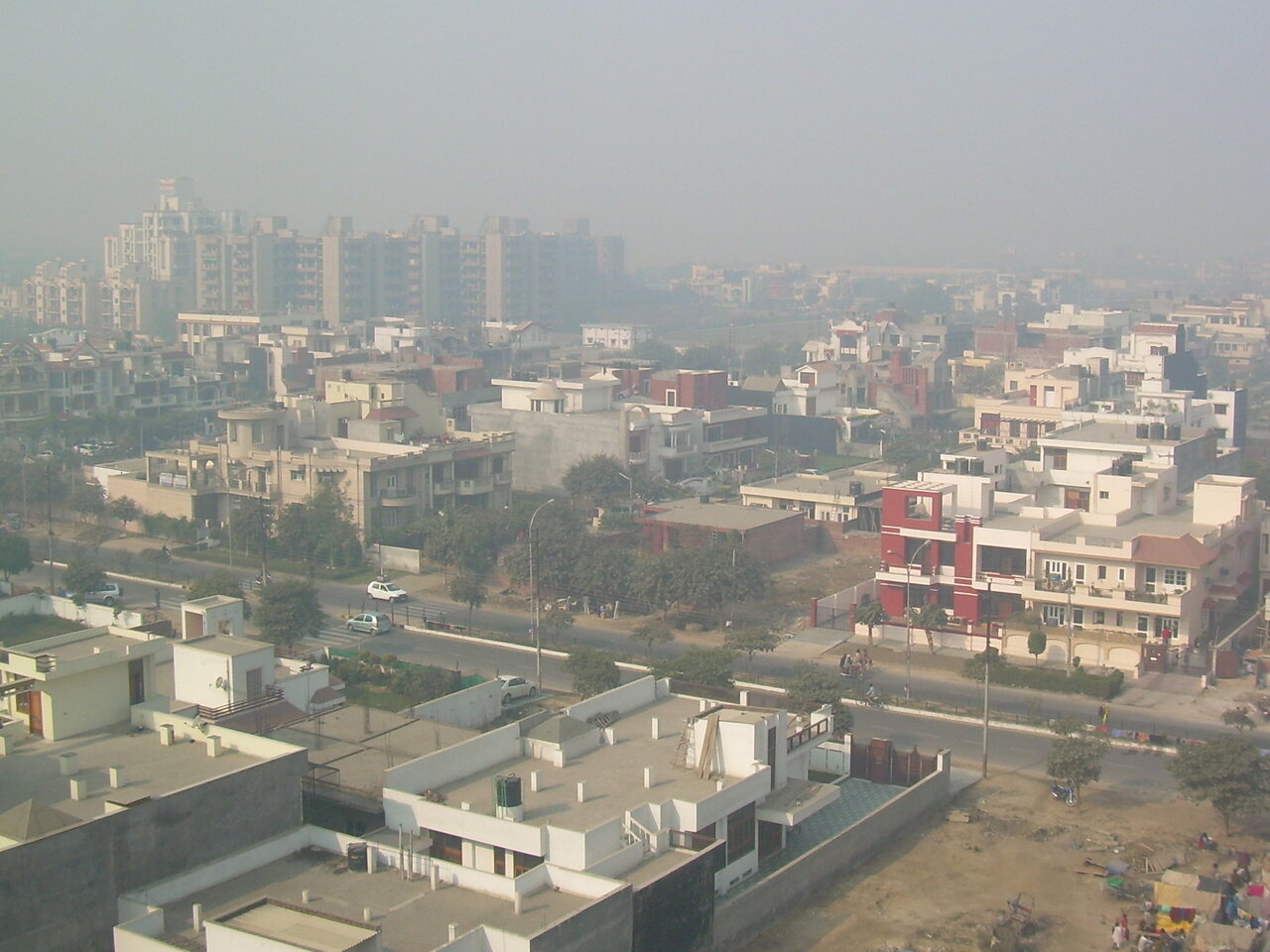
Since independence in 1947 India has rapidly urbanised and experienced surging economic growth. As a practice and discipline, urban planning has historically been transformed through the influence of political ideologies, changes in administrative procedures, technological development and changes in the cultural economic priorities of society. Under the age of smart cities, India shows a paradox. Several of its officially ascribed ‘model’ cities also have emerged as some of the most polluted, leading to questions regarding the efficacy of existing policy and planning paradigms.
Post independence, focus shifted from city to nation
It is interesting to delve deeper into the history of urban planning in India, and how factors such as politics, bureaucratic shifts, and the ambivalence towards the environment have all converged to create specific outcomes.
India’s modern urban planning can be traced to colonial times when metropolises such as Delhi, Mumbai, Kolkata, and Chennai were rendered along the lines of British bureaucratic requirements. The colonial urban fabric was focused on the control and extraction of economic and administrative resources, rather than on sustainability. As a matter of fact, sustainability was hardly considered a key parameter in urban planning during that period.
Post-independence, there was a shift towards the development of a “nation”, whereby central planners focused on industrialisation and urban growth. While the first Five Year Plans prioritised industrial growth, rapid urbanisation caused massive slum proliferation and put severe strain on city infrastructure.
Urban planning often a battleground between state and centre
The ministry handling urban development attempted to centralise the urban governance, however the effort was attempted in a piecemeal and often ad hoc manner. In 1992, the 74th Constitutional Amendment Act was also an important advocacy in decentralisation and led to the devolution of powers to Urban Local Bodies (ULBs). But, rampant political interference, budget shortfalls and lack of coordination impeded effective planning.
Historically, urban planning in India has been a battleground between the central and state governments. In addition to the states having their own policy, they also enjoy the power of preparing budgets, and setting up the general policies to regulate land uses, zoning and city developments.
This is not to say that the top-down approach to urban development has not historically impacted India – for example, the national urban policies of the Jawaharlal Nehru National Urban Renewal Mission (JNNURM) in 2005 and the Smart Cities Mission in 2015, which sought to “modernize” urban areas in the country and develop infrastructure, technology and sustainability, are classic examples of the trend.
Urban planning agendas are also conditioned by political interests. Election cycles cause an emphasis on visible infrastructure – roads, metro lines, and iconic buildings – rather than sustainable environmental management. This has in some cases, has resulted in short-term political “victories” at the expense of long-term urban resilience and ecological sustainability.
Moreover, urban planning is often frustrated by corruption, bureaucracy, and agency turf wars. Disjointed authority within the city has made comprehensive policy execution difficult; promoting unchecked development and resultant environmental damage.
Smart cities, unsmart environment
India is one of the fastest urbanising countries in the world where it is estimated that more than 40 percent of the total population will be urban by 2030. Cities suck in the rural migrants in search of economic opportunities and therefore are often unplanned, lack adequate infrastructure and, in the process, beckons a stressful environment.
Urban centers often turn nodal points for environmental degradation as sources of vehicular exhaust, industrial waste, organic refuse, and sewage. Indian cities, as a rule, dominate the list of global cities with poor air quality. Water bodies get polluted, green spaces are being destroyed and the expansion of urban heat islands increases vulnerability to climatic impacts.
The Smart Cities Mission uses digital technology, sustainability in design to manage and promote efficient urban living. It focuses on intelligent mobility, waste and energy, and citizen engagement. There are over 100 cities targeted for development under this umbrella. Ironically, a lot of them like Delhi, Bangalore, Gurugram and Pune are being ranked amongst the most polluted cities. Urban sprawl, pollution and environmental degradation continue to plague these cities. Much investment in metro lines, IT hubs, and buildings tends not to include environmental impact assessments or do it only for the sake of passing the projects without any real understanding, and hence solution, regarding the environmental problems.
One of the problems with smart city initiatives in India is that they have tended to focus too narrowly on the technological up- gradations and infrastructural development, to the detriment of necessary environmental protections. Most importantly, many of their projects do not address the basic struggle for sustainable ecological management and results in a growing consumption of energy, pollution, and intensity in the destruction of our natural resources. Sustainable urban expansion remains a mirage in many smart cities because of failing land-use policies and the lack of stringent zoning codes. This is leading to increased congestion, air pollution and carbon dioxide emissions.
Too many regulators, hardly any regulation
The regulatory architecture does not help, and the lack of coordination and overlapping responsibilities within multiple agencies is an issue for more efficient control and regulations. Given the high level of corruption in government, many environmental policy ideals attempting to stem pollution have been purely nominal in practice. Also, there is a major problem of resilience being tied to socio-economic disparity where smart city initiatives tend to invest in high-end infrastructure that would serve only the middle and upper classes leaving behind the disadvantaged who would continue to struggle for basic needs such as access to sanitation, clean water, and breathable air.
The problem is that informal settlements are often found to be in environmentally risky areas thus triggering additional pollution and increased health risks. What is an even higher concern, some projects participate in green washing, duping policy makers, and citizens with spurious declarations of sustainability that claim to be environmentally beneficial but are, actuality, not.
Increased evidence is building that suggests that these smart city initiatives are not simply policy failures, but disasters, because of the promotion of the wrong priorities, lack of engagement with communities, and lack of foresight for environmental sustainability.
Citizen-focus critical for future urban planning
To overcome these challenges Indian urban planning needs to depart from siloed, technocratic planning into more integrated, participatory, and environmentally sensitive planning processes. And this change starts by making environmental sustainability mainstream in every urban policy. Environmental sustainability should become a mandatory requirement for every project especially in the larger and newer smart city projects. However, this would mean inclusive but stringent sustainability measures such as use of renewable energy, maintenance and augmentation of green spaces, pollution control, water conservation, building for climate change etc.
The need to strengthen governance and better coordination is equally important ensuring that decentralised governance structures work with clear jurisdictions and accountability mechanisms. Inter- agency coordination is prioritised to have policies that are holistic and get implemented effectively. Urban planning should be inclusive and ensure equity, and make sure that those often left behind can benefit from infrastructure and environmental goods and services while finding a voice; informal settlements need upgrading and infrastructure programs to improve the housing and environmental quality of residents. A focus on resilience and climate adaptation is imperative, and this will re- direct city funding towards climate-proof infrastructure such as urban wetlands, flood management systems, and heat reduction programs.
Lastly, having tools for efficient monitoring and sound decision making is also important. The smart sensor networks, GIS applications, and a strong network of citizen observation and reporting can help in measuring pollution. Combining such integrated approaches is amongst the tools that may be used to guide the trajectory of urban development in India towards sustainability, resilience, and inclusivity.
But, does anyone care to listen within the din of the developmental paradigm that has been chosen by the politicians for us over the decades; the question hangs, so does the urban future of India.
Anjal Prakash is an academic, researcher, and science writer, currently working as a clinical associate professor (research) and research director at Bharti Institute of Public Policy, Indian School of Business, Hyderabad, India.