
Chittatosh Mookerjee, a former chief justice of Calcutta and Bombay high courts, was a teenager when he witnessed India getting its freedom at the stroke of
midnight on August 14-15, 1947, sitting in the Indian Parliament, then called the Constituent Assembly.
Mookerjee and his family members were invited to the historic occasion as guests of his uncle Syama Prasad Mookerjee — whom he fondly calls Mejokaka — who was to be inducted as the minister for industry and supply in India’s first Cabinet under Jawaharlal Nehru.
On the eve of India’s 79th Independence Day, Chittatosh Mookerjee, now in his 90s, recounted to the author his experience of watching India becoming Independent from up and close.
Gandhiji advised to take Syama Prasad Mookerjee in ministry
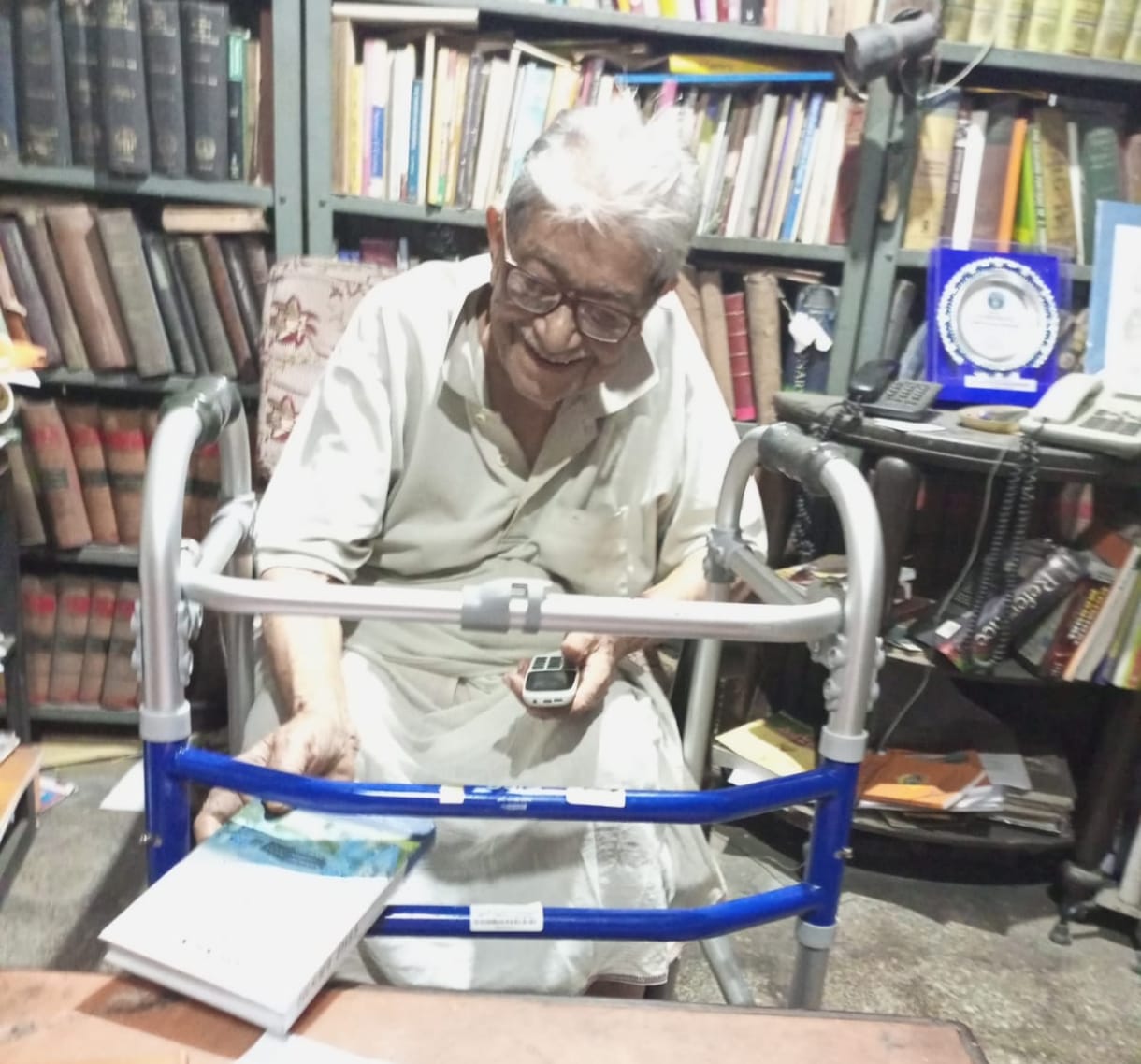
“It was building up for some time and we were hearing that my uncle, Syama Prasad Mookerjee, would be a minister in sovereign India’s first ministry. Few people were taken in the ministry outside Congress and my uncle, who was with Hindu Mahasabha, was one of them. Perhaps it was advised by Gandhiji, who liked my uncle a lot. They actually met in Sodepur when Gandhiji came there in 1946,” said Mookerjee, sitting in his cosy study room of his ancestral building in Bhawanipur, surrounded by a heap of books.
“As a result, Mejokaka wanted the family members to accompany him to Delhi, where he was to take the oath. Almost 10 to 12 of us, including him, went to Delhi in a special saloon that was attached to a train…. By that time, I had already passed out from Mitra Institution Bhowanipur and was at Presidency College,” added Mookerjee, the grandson of iconic Bengali educationist and scholar, Sir Asutosh Mookerjee.
History was creased in front of me
“We all went and took our seats in the visiting gallery during the late evening of August 14, 1947; and history was created in front of us. Sucheta Kripalini sang Vande Mataram and we all stood up; then there were speeches from the first President of India, Rajendra Prasad, Sarbapalli Radhakrishnan, Choudhari Khaliquzzaman, a Muslim League leader; and of course, the famous ‘Tryst with Destiny’ speech by Pandit Nehru just around midnight. All members of the Constituent Assembly also took oath as the members of India’s first Parliament.
The occasion concluded with the rendering of Jana Gana Mana and Sare Jahan Se Achha being sung in chorus. Hansa Mehta, on behalf of the country’s women, presented the flag to the President,” remembered Mookerjee. I shook hands with Pandit Nehru and both Lord and Lady Mountbatten
“Next day was more hectic. In the morning, Rajendra Prasadji, with Mejokaka, came to meet our family on King Edward Road, where we were staying in Delhi, after the new Cabinet took oath. In the afternoon, Nehruji, accompanied by Lady Mountbatten, unfurled the national flag on the rampart adjoining the Red Fort, coming in a horse-driven coach. We saw the event sitting on an open ground,” Mookerjee recounted.
“Finally, on the evening of August 15, there was a grand reception party being hosted by Lord and Lady Mountbatten at their house (later turned into Rashtrapati Bhavan) with lights all around. Lord and Lady Mountbatten as well as Pandit Nehru stood in a hall and people were climbing up the grand staircase and shaking hands with them. I also shook hands with Pandit Nehru and both Lord and Lady Mountbatten after standing in a queue,” said Mookerjee with a smile.
Mahatma Gandhi was not there, as he was in Bengal trying to douse the flames of a riot.
“Frankly speaking, many of us could not realise the true importance of being citizens of an independent country at that time. However, things were changing all around and British people, more visibly the officials, were gradually leaving,” added Mookerjee.