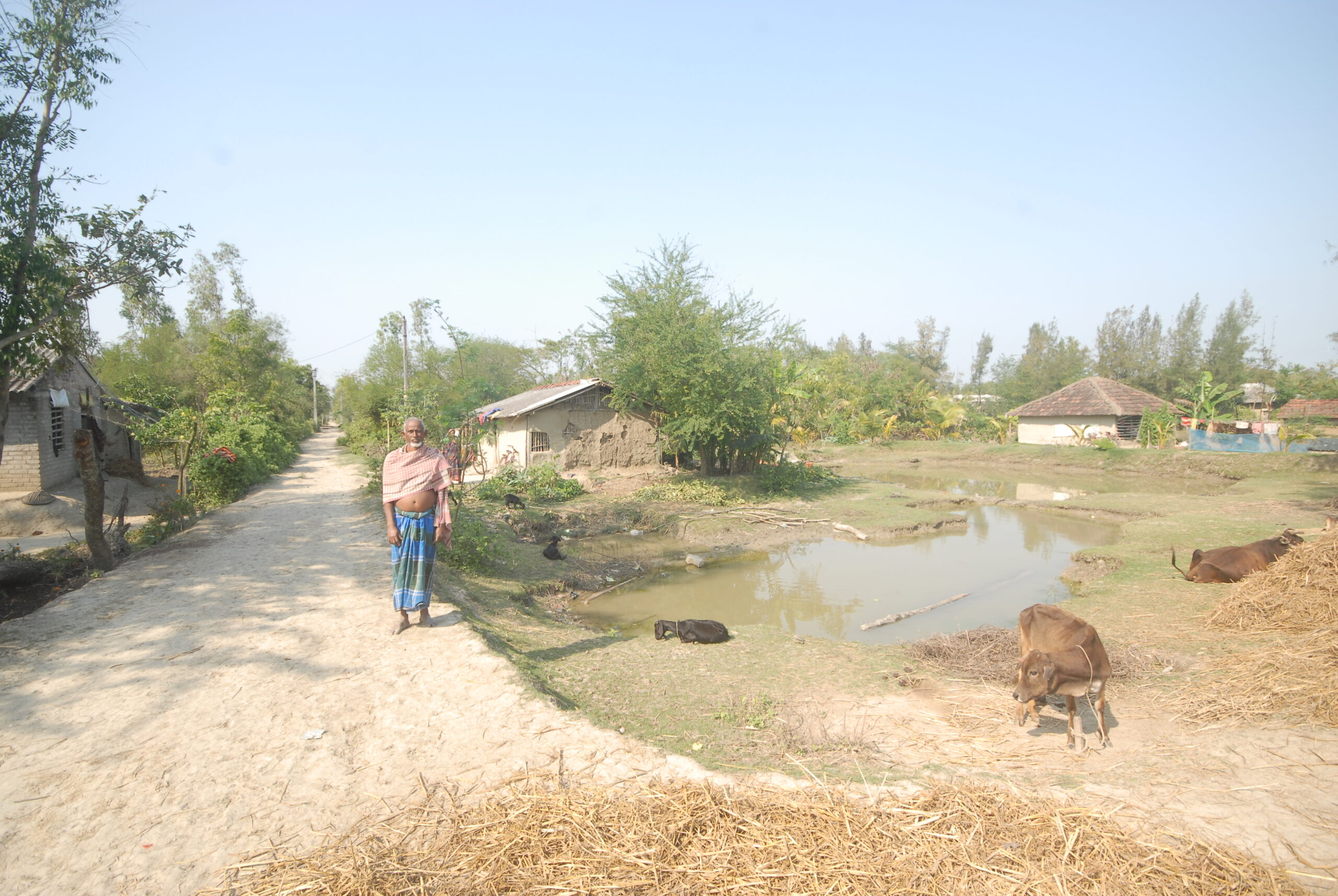
Green activists have recently complained that all political parties in Bengal, both in power and opposition, have historically ignored the rural environmental agendas; and have been continuing with the trend during the ongoing campaign leading to the Panchayat election slated to take place on July 8.They alleged that this is despite the rural areas in West Bengal have been plagued by a range of environmental problems.
The allegation has been vindicated by a recent report prepared by environmental non-profit Environment Governed Integrated Organisation (EnGIO).
The report – How green are Bengal Panchayats: what is data saying? – has been prepared based on data generated by several departments and agencies of both union government and West Bengal government; and non-profits particularly Centre for Science and Environment (CSE); said Sujata Basu, a senior researcher associated with the non-profit.
“We have identified 11 important green issues affecting Bengal’s rural areas and tried to see what the data is saying on those. We used whatever latest data could be obtained on the issues. Clearly, as per the data, the situation is not rosy” added the expert.
The major findings are as follows:
Waste management– As of 2022, 119 out of 41461 villages in Bengal only has solid waste management arrangement – less than 0.5% – and 21 villages – less than 0.1% – the liquid management system. National Green Tribunal (NGT) has fined state about 3500 crores INR for not complying with norms.
Countering Climate Change: West Bengal is 60th most climate vulnerable region globally out of 2600 regions assessed; 4th highest risk prone zone in India. Rural areas in coastal districts, central Bengal districts like Bankura; Birbhum as well as north Bengal stand highly vulnerable.
Air pollution impact – 92% of rural population, in 2020, lost 5 to 7 years of lifespan due to air pollution exposure. In 2019, only Kalimpong, among all the 23 districts of Bengal, recorded annual PM 10 pollution level within the national permissible limit. Two predominantly rural districts, Bardhaman and Bankura, topped the pollution table with Kolkata behind.
Forest cover – In between 2017-21, the forest cover in state got reduced by 70 sq km, more in north Bengal but also in south Bengal, as per State of Forest Report 2021.Most of the affected areas fall under panchayats.
Water pollution situation – West Bengal has the highest number of arsenic-affected people in the country. State’s 83 blocks in mostly 8 districts have their ground water affected by arsenic contamination. Almost 90 per cent of the arsenic-affected groundwater in the affected areas is used for irrigation; hence, multiplying risk. About 12 percent of the population in 8 of the state’s 23 districts is impacted by water contaminated by fluoride.
Ground water situation– As per latest assessment, out of 345 assessed units, 232 units are Safe, 31 are Semi-Critical, 22 are Critical and 60 are of poor groundwater quality; most in rural Bengal.
Pesticide use – West Bengal is 6th in chemical fertiliser consumption in country; has consumed 17062 tonnes in between 2017-22; around 6 percent of total national consumption. However, the state has done well in biofertilizer consumption, and stands second in the country.
Drinking water supply status – West Bengal has only 29.35 percent tap water supply in rural households; one of the worst statistics in the country
Damaging brickkilns – The state has about 12000 brickkilns, most operating illegally and damaging the agricultural land by damaging the top soil.
Sustainable Development Goal (SDG) performance – West Bengal is ranked at 12 th in India; but slipped in 5 indicators during 2019-20; one of the country’s worst performers in SDG Goal 15- Life on land category – which covers terrestrial ecosystems, forests, and biodiversity loss.
Environment crimes – In between 2018 to 2020, there have been 222 recorded environmental crimes in state with a rate of 0.1 percent of overall cases with charge sheet filing rate being 68 percent; both being within the lowest figures in the country as the national averages are 4.7 and 98.9 percent respectively. A sizeable number of green crimes happened in rural or adjoining peri-urban areas.
POLITICS
NEWS
Green agendas neglected in Bengal panchayats; says report
Green activists have recently complained that all political parties in Bengal, both in power and opposition, have historically ignored the rural environmental agendas; and have been continuing with the trend during the ongoing campaign leading to the Panchayat election slated to take place on July 8.They alleged that this is despite the rural areas in […]