
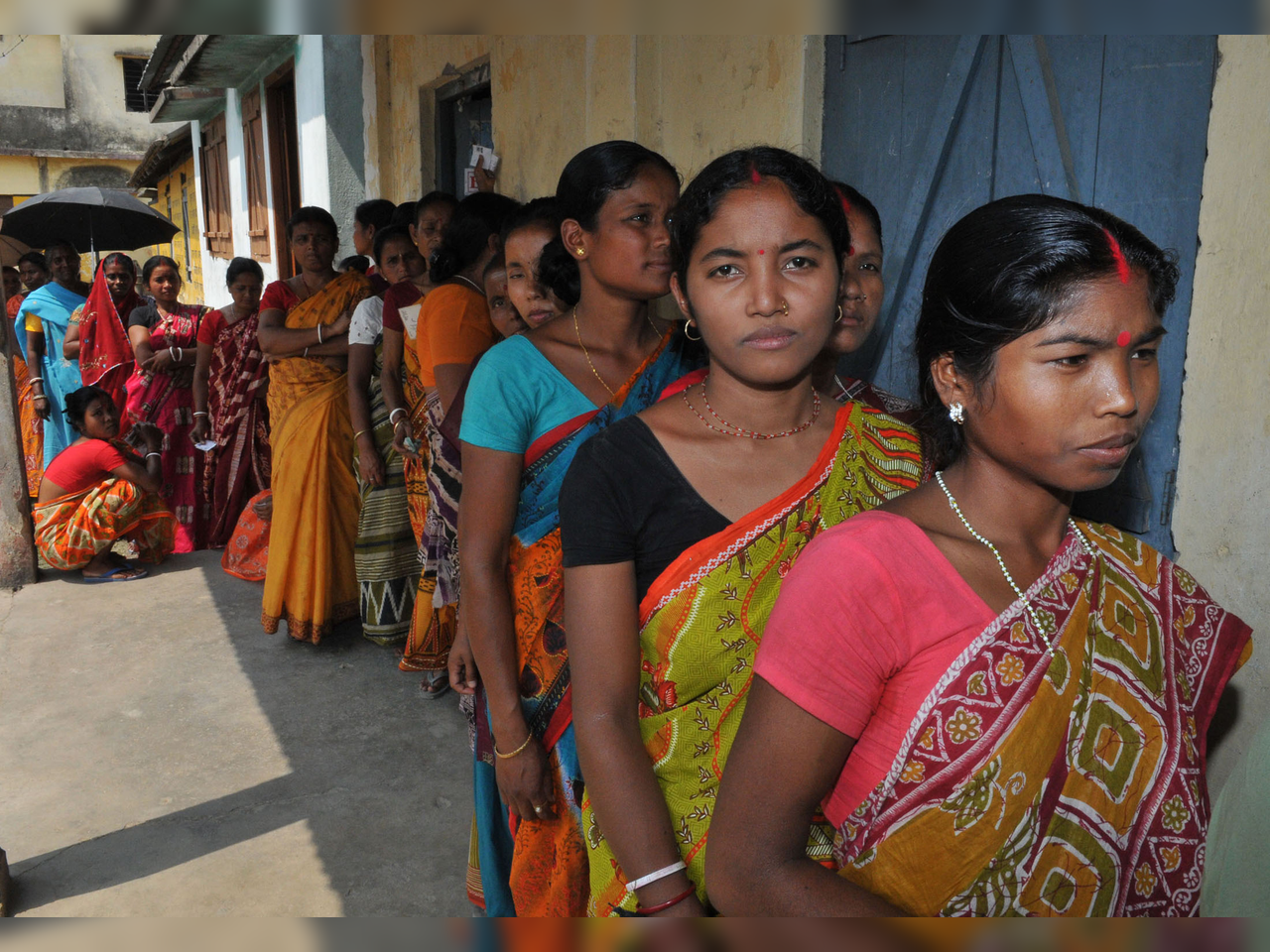
The more cash is promised to women, the more they are dumped as voters.
Women are being wooed ferociously again by political parties with money. The going rate for women in poll-bound Bengal, according to the BJP, is Rs 3,000 per month per head, which will come to them as monthly financial assistance; the Congress has marked Rs 2,000 per head for Bengal’s women in their election manifesto, and the Trinamul Congress, Bengal’s ruling party, pays Rs 1,500 every month to each of its 2 crore beneficiary women under ‘Lakshmir Bhandar,’ which is regarded as a pioneering scheme of cash transfer for women and has secured the party a solid voter base of women.
In not an unrelated event, the voter base of women has shrunk measurably in Bengal in the last few months even as the election promises, for women, have soared. This is best demonstrated by the election process, especially the role played by Special Intensive Revision (SIR) and the role played — or not played — by the Election Commission of India (ECI).
Before SIR was undertaken in the state, Bengal’s voter list counted 969 women for every 1,000 men — a record for the state. But the ratio changed with the number of women voters falling to 964 for every 1,000 men in the “final” post-SIR list published on February 28. This is the first time the ratio has dropped since 2012.
Deleted at every step
The SIR process eliminated far more women than men at every stage, even as its processes remained opaque. But constant data analysis by activists kept citizens informed.
The analysis of Kolkata-based Sabar Institute shows that in December 2025, about 58 lakh names were deleted from the electoral list by the ECI under the “absent, shifted, dead, or deleted” (ASDD) category. Among them, 53.8 percent were women, says the organization. On February 28, the ECI placed about 60 lakh voters under adjudication.
On April 9, the ECI released another “final list” with 90.83 lakh voters deleted from Bengal that included both the “unmapped” individuals as well as well as those who were deleted after being placed under the “logical discrepancy” category.
With the rising number of lists, the share of women going missing from the voters’ list has been going up. About 61.9 lakh women were deleted or placed under adjudication at the time the ECI declared the April “final list,” says the Sabar Institute. “These deletions disproportionately impact Muslim, Scheduled Caste (SC), and Scheduled Tribe (ST) women, silently erasing them from India’s democracy,” says Sabir Ahmed, researcher associated with the institute.
The gender gap was evident from the ECI figures after the first round of deletions in December 2025. The total number of electors in Bengal then stood at 70,816,630. Among them, the ECI said, 36,199,391 were men and 34,615,837 women. The women were fewer in number than men by a margin of 1,583,554.
Gaping gender gap
“Women make up more than half of the deleted voters in over 88 percent (219 of 294) constituencies,” the Sabar Institute analysis adds.
The highest numbers of deletions of women voters are concentrated in “two key socio-demographic regions”: Matua (55 Assembly seats in SC-dominated belts in North and South 24 Parghanas) and 25 ST-dominated constituencies in Jungle Mahal (Purulia, Jhargram, Bankura, and West Midnapur). Significant deletions of women voters has occurred in Muslim-majority districts in North 24 Parghanas. Both the Muslim community and women constitute major support bases of the Trinamul. Bengal chief minister Mamata Banerjee has alleged that SIR was designed to weaken her support bases.
Women make up almost half of the population in the country. Yet a process such as SIR renders them into a minority and renders the women belonging to marginalised communities even more marginalised.
What is home? Who cares?
“Women comprise the largest migrant group in India through marriage migration, are less likely to hold land/property, and are much less likely to have or retain educational degree certificates,” says Samata Biswas, a migration researcher associated with the Calcutta Research Group, explaining why it is more difficult for women to establish their identities as bona fide voters and submit the many documents that the ECI has demanded as part of SIR.
The indifference of the SIR process to this basic fact of women’s lives, which often makes them leave behind documents and ID papers, has led to severe discrepancies in Bengal and other states. Apart from Bengal, a sharp gender gap was also observed in Bihar, where around 4 million fewer women voters were registered through the SIR process compared to male voters. According to a fact-finding report titled ‘In Focus Bihar SIR’ by Feminists in Resistance, there were 907 women for every 1,000 men in Bihar pre-SIR; in the final SIR list for 2025, that number seems to have dropped to 892.
About 44 percent of the women deleted from the draft electoral rolls in Bengal 2026 in December had been marked as “permanently shifted.” This could almost be a synonymous phrase for marriage.
Few women in the election commission and parties
“When the full bench of ECI came to Kolkata to meet all political parties, I could not see a single woman on the podium representing the commission. How can they think of deciding on an election process in a state that has women as roughly half of the voters, without any woman member?” demanded senior TMC leader and minister Chandrima Bhattacharya in conversation with The Plurals, claiming that ECIis anti-woman, repeating an allegation that Mamata Banerjee has been often alleging.
“Wooing women with several benefits is a strategy not only in Bengal but also a model that is replicated across the nation. Roughly every second voter is a woman. It is ironic, therefore, on many levels, that women are invisible in the official electoral process and also in the eyes of most political parties,” says Sarmistha Dutta Gupta, an independent researcher and writer.
Parties, on the whole, are poorly represented by women; only 167 among the 1475—about 11 percent—of the candidates contesting the first round of elections in Bengal are women, says an analysis by the Association of Democratic Reforms (ADR). The percentage is the same as the 2021 Assembly elections. In the Bengal elections, Trinamul has fielded 55 women candidates, outpacing the BJP’s 33