
On July 27, 2024, three students, in twenties, drowned at Rau’s IAS coaching centre in central Delhi’s Old Rajender Nagar after the building was flooded following heavy rains in the city. The three students were in the library, in the basement of the building, preparing for the examination. After the tragedy, Delhi police had confirmed that using the basement for such purposes was illegal and closed down the coaching centre, but that was little solace for the families who lost the bright youths – two girls and a boy. Apparently, the streets outside had been overflowing with storm water, which broke down the coaching centre’s gates and gushed into the basement. While several other students managed to escape, three got trapped.
It was a Saturday — it had rained the day before, and the rains had continued off and on the 27th as well. I was thankful for the weekend and the fact that I did not have to struggle through the nightmare of flooded roads and grinding traffic (as I had had to do on the working days of that week). I caught the news of the tragedy in the afternoon. My reaction was initially one of complete disbelief: how can people – young people – die by drowning inside a building! But they had.
A lot of questions were asked as a series of similar violations came to the surface after the incident, and, quite rightly, fingers were pointed towards administration and its accountability. The Central Bureau of Investigation (CBI) was pressed into enquiry, but two years after the tragic drowning, the CBI has filed a closure report, stating no senior officials were responsible. So much for accountability!
The rain – then and now
The rains, and what they bring with them, have changed. I was born and grew up in a small town in the north Indian plains. The rains were equally torrential then; I remember playfully wading through above-ankle-deep water as it rushed through our street, which was at a lower level than the main thoroughfare. The smell of moist earth. That incredible feeling when one would reach school, only to be told that a ‘rainy day’ — a holiday – had been declared. The whiff of pakoras that my mother and grandma would be frying, and the inevitable khichudi at lunch… Even now, when I think of those years, a sense of peace settles on me: a nice, happy feeling of having lived and witnessed something rare, something that’s changed and perhaps has been lost forever.
I live today in the national capital – to be precise, in Noida, which is a part of what is known expansively as the NCR: the National Capital Region (NCR). Noida is about 30km away from Old Rajendra Nagar, where the IAS coaching centre stood. The grand epithet of NCR notwithstanding, this agglomeration of one mega-metropolis, its many suburbs and several smaller towns and cities is collectively brought to its knees every year when the monsoons hit. Without fail. And as a commuter who, five days in a week, drives – ‘wades and crawls’ would be better terms I guess — through bumper-to-bumper traffic and flooded roads at such times, I have had the misfortune of living through what it means.
Horror hits every time the skies darken
I have said that what the rains mean and bring with them today has changed – the sense of peace has been replaced with one of pure horror whenever I see the skies darkening. And, especially when I am about to hit the roads. Of course, it is primarily because of what we have turned our cities into. Concrete jungles that have proliferated on the natural drainage systems of the city, choking them completely and turning every bit of land surface into flooded cesspools. Infrastructure that collapses and crumbles in the rain, trapping people underneath. Perfectly good-looking roads which disappear under the first few showers, turning into scarred and cratered carriageways. Power systems and lines that snap and electrocute, metamorphosing into killing machines.
That, generally, is what rains are synonymous with in this national capital of ours.
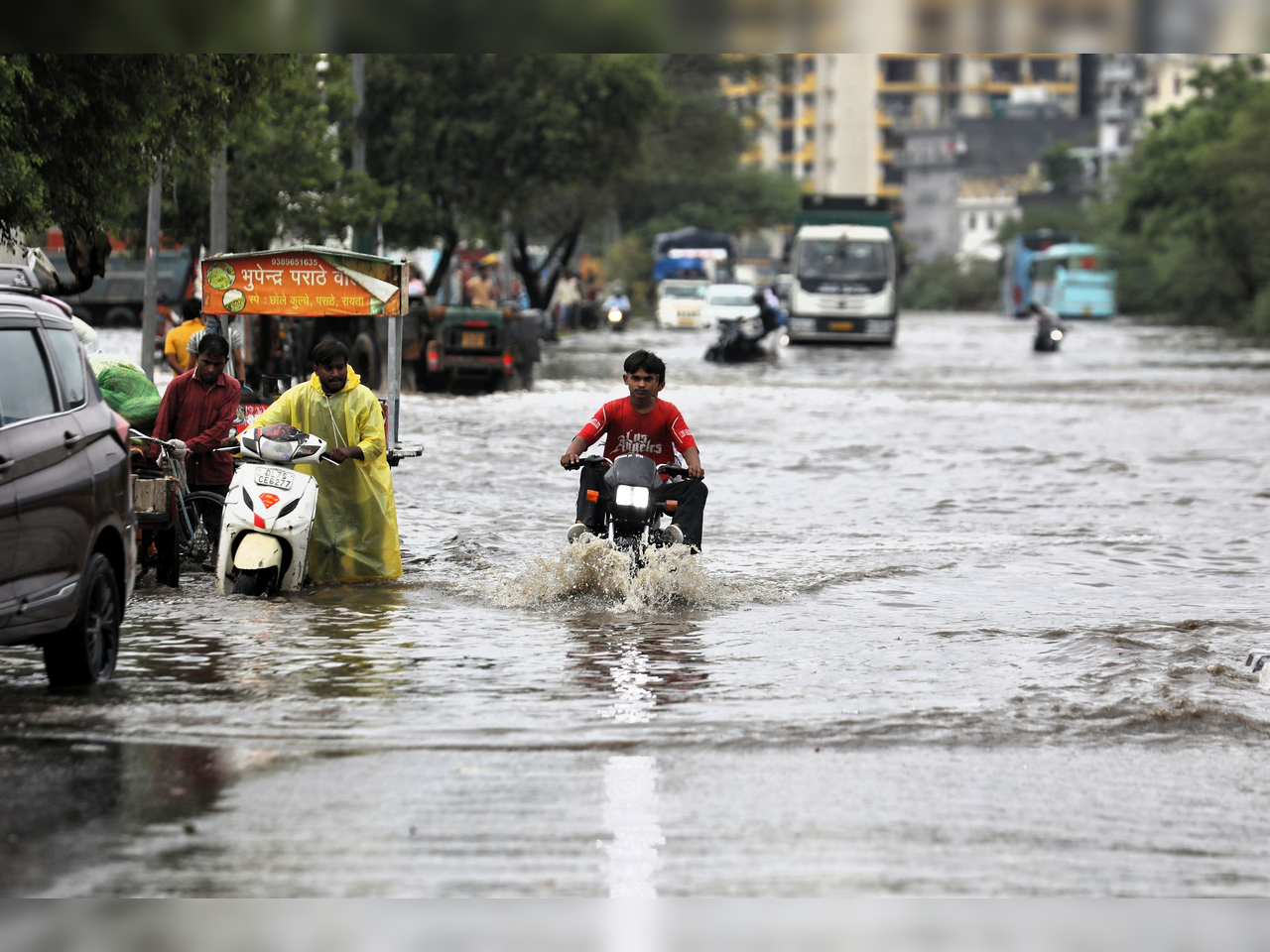
Often the roads turn into fearsome rivers
My experience of the city and its monsoons has largely revolved around my almost 20-km commute to my workplace and back on those days when the skies opened up. There have been days when I have had to turn back because either the roads had turned into fearsome, frothing rivers, or the traffic had knotted itself up into a gridlock stretching over kilometres – in fact, stuck in one such situation one evening, I came to know later that the jam had extended for over four kilometres!
On many such expeditions, I have witnessed vehicles getting stranded with their drivers helplessly watching as the luckier ones (including mine) chugged perilously through. I have seen and given a lift once in a while to people trying to wade through the swirls. One of the more astonishing sights has been of water gushing out from flyovers like a series of waterfalls (this is a regular spectacle near many flyovers in Gurugram).
Drowning and electrocution have become common
But there is a more sinister aspect to this monsoon mayhem in this city. Instances of people – mostly children – drowning in rainwater-filled pits and bogs have become very common. So have cases of electrocution: power lines that are either left loose or that collapse in incessant rains turn water-filled roads and the structures that they hold (such as metal barricades and gates) into death traps.
One of the most horrific and bizarre examples, as I have pointed out in the beginning, was the coaching centre’s flooding incident, leading to the death of the three young students.
The Yamuna, otherwise ‘celebrated’ much of the year for its pollution levels, breaches its banks in years of extreme rain, destroying lifestyles and livelihoods.
We are falling apart, failing ourselves
What is the underlying story that emerges from all this? It is a story of how we as a nation have failed to manage our cities and urban conglomerations. Even as extreme, unpredictable, incessant rainfall is emerging as a major sign of climate change and is almost an annual occurrence, have our cities recognised the threat? Are they doing anything about it? I despair when I see the fruitless thrashing around that municipal administrations indulge in the name of solutions.
Delhi-NCR is one of the most densely urbanised locations in India – speaking of real solutions, when will we give some thought and attention to the waterbodies, wetlands and flood plains (whatever little of these still exist) of the city so that they help drain out the rain and stormwater that we are still fortunate to receive? When will we seriously mandate “catching the rain” so that it can be used to recharge our groundwater, among other things?
The rains are changing. When will we?