
The Uniform Standard Procedure (USP), finalised for considering appeals at tribunals set up by the Supreme Court (SC) from millions who have lost their voting rights following Special Intensive Review (SIR) in West Bengal, is likely to push the adjudication period to more than a decade unless the present judicial infrastructure to address such appeals gets expanded dramatically. The Plurals has a copy of the USP, which a three-member committee of judges established by the Chief Justice of Calcutta High Court finalised on April 7. The document indicates that a full-fledged legal proceeding will follow.
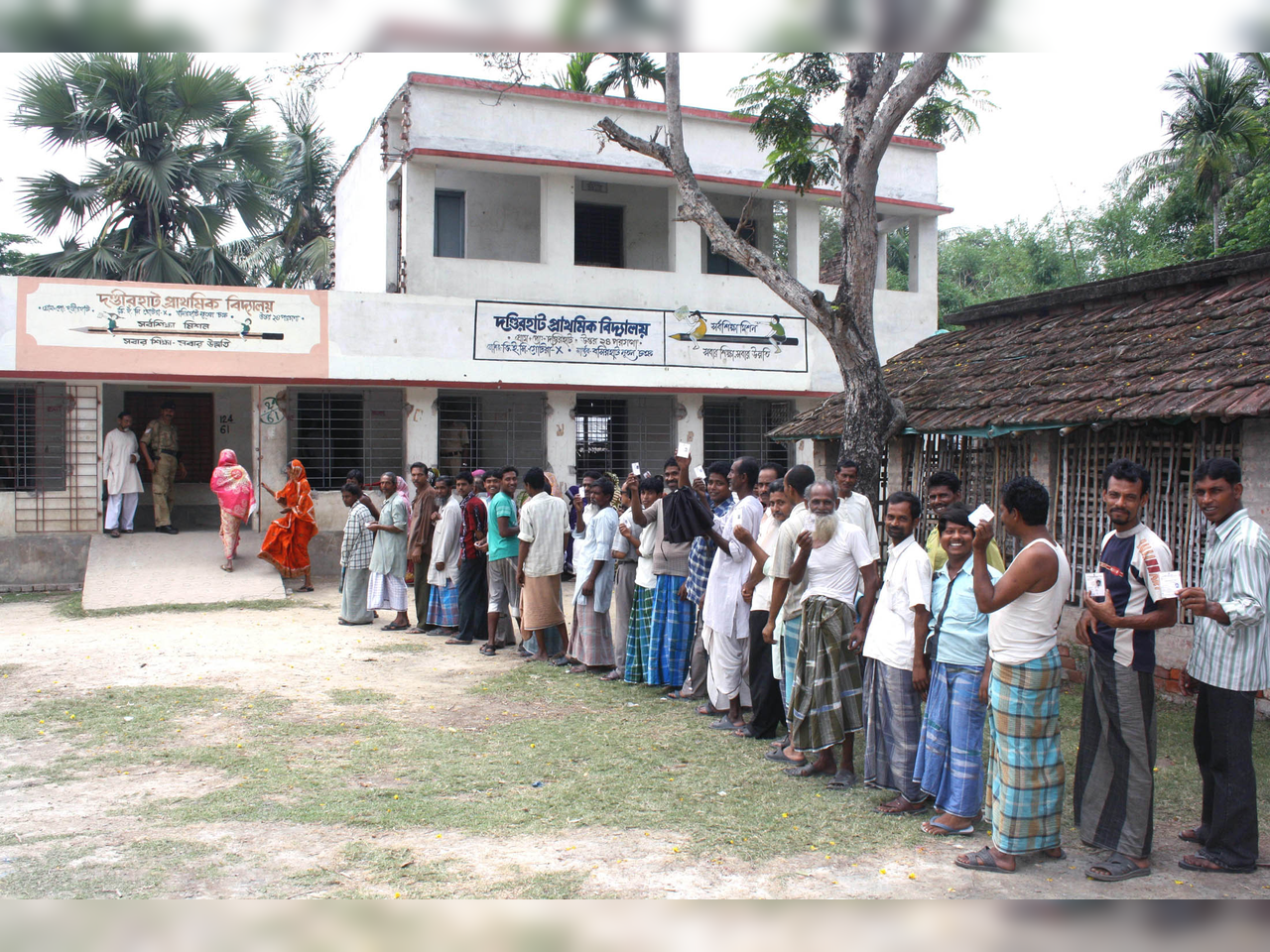
On April 14, 2026, the Supreme Court emphasised that a person born in India holds a constitutional right to remain on the electoral rolls and participate in voting. However, this constitutional right is likely to be kept on hold for at least the next two state elections, intermediate Parliament elections and local elections. It is also uncertain how many on the list will be able to continue the legal discourse until the end, especially the poor and migrants, due to the inherent cost and time consumption. Disenfranchising voters for a long time may impact the support services these people receive from the government, as well as the voting rights of their progeny.
According to the Election Commission of India (ECI), about 90 lakh names have been deleted in West Bengal from the latest voting list. This includes 27 lakh who were originally in the mapped category, meaning they could be linked prima facie to the 2002 voting list — either directly or through their parents or close biological relatives — but were later deleted after being placed in the “logical discrepancy” category. The deleted individuals, including those originally mapped, are all set to miss their voting rights on April 23 and April 29, when the two-phase elections will take place in Bengal.
According to sources, as of April 14, around 34 lakh people have appealed to tribunals, a figure higher than the 27 lakh deleted for “logical discrepancy”, meaning many from the so-called “unmapped” category have also applied. Since there is no deadline for submitting these appeals, the number is expected to increase. People are keen to appeal because they feel disenfranchising them as voters may also raise questions about their citizenship status in future though no constitutional institution has yet commented on any linkage between the two.
The tribunal guidelines
The USP, which all 19 tribunals will follow to hear SIR-related appeals, has 15 points.
The guidelines state, under point IV, that even if the tribunal, after checking all the records, holds “a prima facie view that the appeal does not have merit”, it can still “give a fair opportunity of hearing to the appellant before passing any final order of dismissal”. However, point VII of the guidelines clarifies that the tribunal will use its discretion “on a case to case basis” whether to hear the appellant, or his or her representative, in person. According to sources, although the guideline includes both offline and online hearing options, the latter is preferred for convenience, especially for those living far from the Syama Prasad Mookerjee National Institute of Water and Sanitation (SPM-NIWAS) in Joka, Kolkata, where the tribunals are scheduled to function.
Point V of the guidelines makes it clear that if the tribunal decides to accept the appeal after reviewing the documents, it may pass the final order without requiring the appellant to appear in person.
The tribunals will accept and examine “supportive documents that have been filed by the appellant” in addition to the documents already available with the ECI and submitted to them. They will also examine “the reasons recorded by the adjudicating judicial officer” supporting their decisions for the inclusion or deletion of any name.
About 700 judicial officers made decisions on nearly 60 lakh people under the “logical discrepancy” category, averaging around 9000 decisions per officer, within a short period. Supreme Court Judge Joymalyo Bagchi remarked on April 13 that even a 70 per cent correct assessment rate should be considered an “excellent” outcome.
“Broadly, the protocol is as follows: if the tribunal judge finds no justification in the appeal, it may reject the appeal straightaway. If the judge feels prima facie that the appeal lacks merit but is not conclusive, he or she will ask the appellant to appear in person. Finally, if the judge finds that the appeal has merit, then the tribunal will direct the ECI to restore the appellant’s status as a bona fide voter,” explained a senior government official familiar with the tribunal’s functioning.
Glitches galore
In its present form, the tribunals are expected to deliver very little and, that too, very slowly, sources told The Plurals.
“The tribunals will work for five days a week for about 5 hours per day. At a rate of even addressing one case in just 6 minutes — the bare minimum for them to review records and make a decision — each tribunal may address a maximum of 50 appeals per day, totalling about 1000 per month,” the official added.
“Combined across all tribunal benches, the addressed number will be around 20000 per month, less than 2.5 lakhs per year. Please remember that a major section of those addressed will require hearings, which can be much more prolonged. Therefore, unless the number of tribunals is enhanced dramatically, it may take much more than a decade to adjudicate on millions of appeals,” he further explained.
A former judge pointed out that already it seems the ECI does not seem to be very cooperative, and the commission’s enthusiasm may decline further once the elections are over.
“The main question is who will take responsibility for this long-drawn process, and moreover, who will compensate those who are found to be valid voters after the exercise that threatens to last for decades?” asked Biswajit Mukherjee, a social activist and a retired chief law officer in the Bengal government.
“Once the elections are done and dusted, even the political parties will gradually lose interest, and these people, mostly the poor and on the fringe of society, will largely be left to their own devices in search of their voting rights and national identity. Unless the Supreme Court passes specific directives about expediting the process, this is going to be a major societal scar,” said Mukherjee.