

A coalition of 74 global organisations has demanded that the COP31 presidency make health central to all aspects of the negotiation for the make-or-break climate summit to be held next November in Antalya, Turkey.
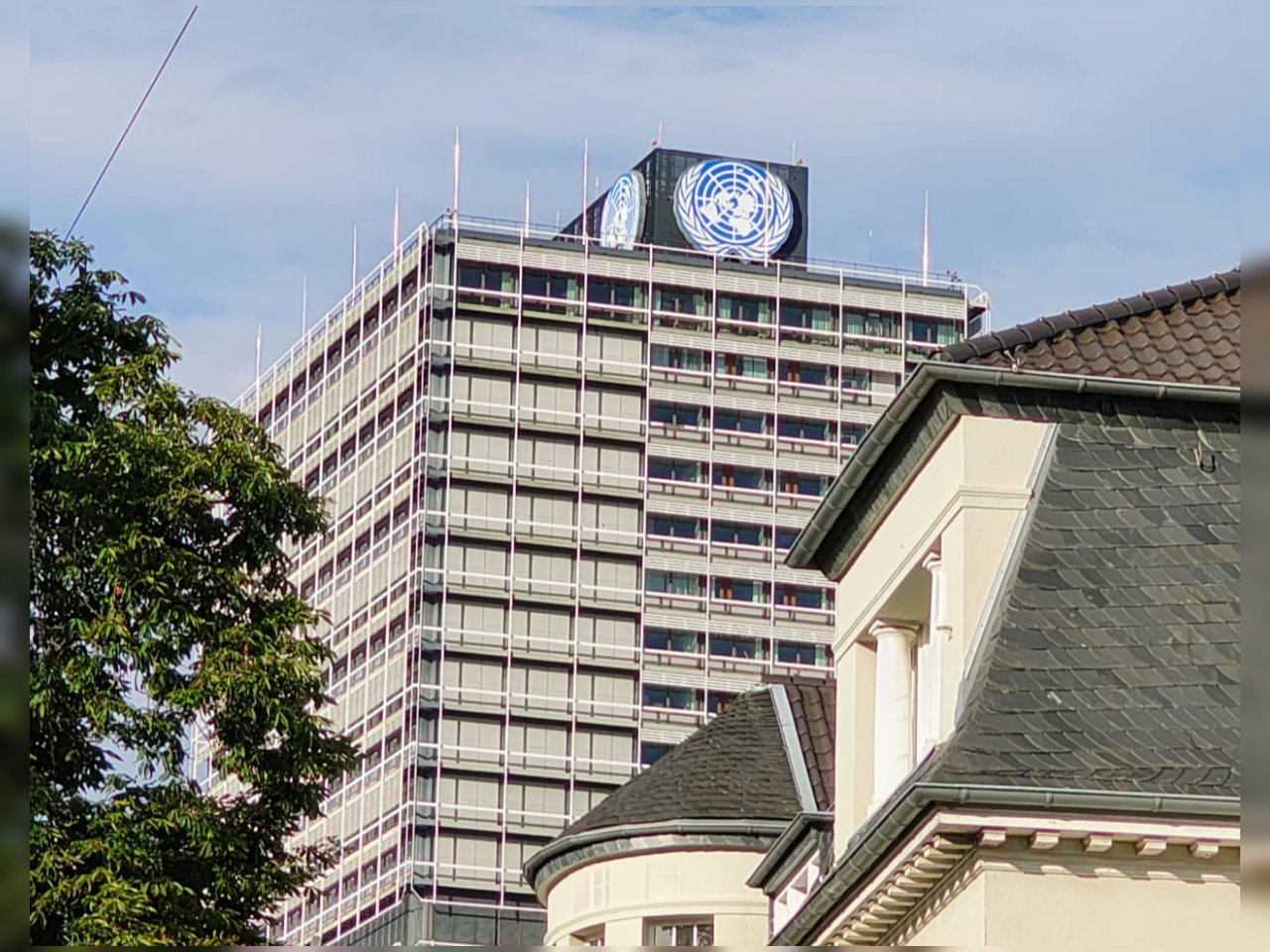
This demand was made on Monday, the first day of the ongoing UN climate negotiation in Bonn, being called SB 64 or mini-COP. The health coalition includes leading global health organisations as well as civil society groups working in the fields of environment and climate.
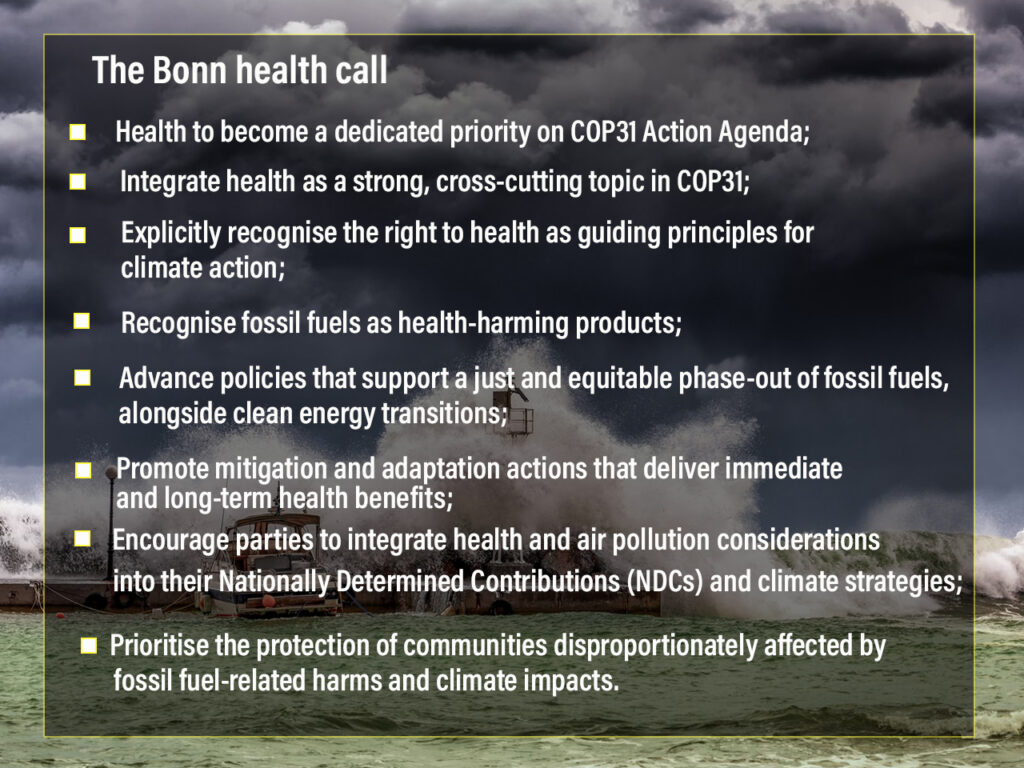
“The climate crisis cannot be tackled without addressing health,” reiterated the coalition call that was initiated by the Right to Clean Air Platform from Türkiye and submitted to the COP31 Presidency ahead of the negotiation. The coalition urges that health be prioritised in all aspects of the COP31 Action Agenda and calls for the acknowledgment that fossil fuels are harmful to health.
The initiative, led by Right to Clean Air Platform, also includes Doctors Without Borders (MSF), the European Respiratory Society (ERS), the European Public Health Association (EUPHA), 350.org, The Lancet Countdown on Health and Climate Change, Our Common Air, the NCD Alliance, the Columbia University Global Consortium on Climate and Health Education, the Center for International Environmental Law (CIEL), the Global Climate and Health Alliance (GCHA) and the Turkish Medical Association (TTB).
The COP31 presidency had already included health as a standalone item on the Action Agenda, in line with civil society demands.
India is facing an unprecedented and severe public health crisis explicitly linked to intensifying climate change with data showing that extreme weather events occurred on nearly 98% of all days in a single year, driving a massive surge in climate-linked illnesses and mortality.
Key demands
The clarion call sets out several concrete demands: health must be established as an independent and robust priority area within the COP31 Action Agenda, health should be central to all themes, especially energy, transport, industry, agriculture, waste and adaptation; and health should be included systematically in climate policies to help in mitigating climate-related health risks and inequalities, thereby enhancing social resilience.
“Fossil fuels should be recognised as ‘health-harming products’, considering the health impacts they create throughout their entire life cycle, from extraction to combustion,” adds the demand charter.
Experts emphasised that the ability of health systems to respond to climate change is directly tied to mitigation and adaptation policies implemented across all sectors; and warned that this capacity could be stretched to its limits if urgent action is not taken.
Turkey presidency acknowledgement
Parallel to the call made globally, Turkey recently included ‘Dynamic and Resilient Health Systems’ as a standalone theme on the COP31 Action Agenda, an overture acknowledged by global health community.
“We consider the inclusion of health in the Action Agenda a highly significant step, particularly given that it was absent from the initial draft prepared by the COP31 presidency,” said Deniz Gümüşel, co-ordinator of the Right to Clean Air Platform (THHP). “This development was influenced by calls from international health organizations, civil society, and academia, including the joint appeal endorsed by 74 organisations from around the world, which was coordinated by THHP,” he claimed. “It is also important as a sign that the voices of non-state actors are being heard in the shaping of COP31. The next step is to ensure that, beginning with the negotiations in Bonn, health is brought to the center of all climate policies,” the expert told The Plurals.
Not a symbolic gesture
Tan Sri Jemilah Mahmood, commissioner at Our Common Air and executive director, Sunway Centre for Planetary Health, Malaysia, stated that “The inclusion of health as the tenth Action Agenda theme is not a symbolic gesture — it is a much-needed acknowledgment that the climate crisis is already a health emergency. From rising seas to deadly heat, the bodies of the most vulnerable bear the true cost of our collective inaction.”
Mahmood further added Bonn must now translate this recognition into binding commitments, with health systems in the Global South at the centre — not the periphery — of climate finance and adaptation planning.
Health impacts at record level
“The latest data from the Lancet Countdown shows that the health impacts of climate change are at record levels, claiming lives, harming health, damaging livelihoods and exacerbating inequalities worldwide. Unless climate action is accelerated at scale, the world will continue down a dangerous path of escalating threats to health and survival,” said Marina Romanello, executive director of the Lancet Countdown on Health and Climate Change.
“Addressing climate change through health-promoting actions could immediately save tens of millions of lives annually through cleaner air, healthier diets, liveable cities, thriving economies and stronger health systems,” the expert added.
“COP31 is an opportunity to show that protecting health is not a side issue for climate negotiations, but rather a measure of whether the climate action taken by governments is working,” pointed out Jeni Miller, executive director of the Global Climate and Health Alliance.
WHO pushing climate linked health demands
The World Health Organization (WHO) has continuously pushed the agenda of the integration of public health into global climate negotiations.
The Alliance for Transformative Action on Climate and Health (ATACH) is a WHO-led mechanism that supports member countries in building climate-resilient health systems and lowering the carbon emissions of healthcare facilities. Over 80 nations have signed onto these commitments.
Moreover WHO actively provides guidance for countries to ensure that health risks and indicators are officially written into their Nationally Determined Contributions (NDCs) — the foundational climate action plans submitted to the UN. The massive global consensus connecting public health to the climate crisis has been primarily driven also by the COP28 UAE Declaration on Climate and Health endorsed by over 144 countries, which successfully unlocked over $1 billion in dedicated funding for climate-health programs.