
Serader Sera Nirmal Pujo Puroskar, the greenest of the green puja award, is an unique exception within the host of puja awards in offer; as it, in its eighteenth year continuing since 2007, played a key role in changing the face of Kolkata’s durga puja by turning it greener, and more socially responsible apart from acting as a vehicle to promote the virtues of environment during the puja assemblage; considered one of the biggest in the world connected to a socio-religious event.
The award has been constituted and run by non-profit Environment Governed Integrated Organisation (EnGIO) and being supported by a host of governmental, corporate and green organisations this year including department of disaster Management in Government of West Bengal, West Bengal Pollution Control Board, Climate Action Network South Asia (CANSA), Vikram Solar, Exide, Indian Oil and few others. The Plurals is the media partner of the event that had 75 participants, after a shortlisting from around 300 participant pujas, who were split in 7 sectors.
Judging criteria
The awards are being judged by the frontline academics, consular members, experts of the state and beyond. “We have added the youth observers this year as part of the judging as they are extremely important in our effort to seek sustainability which has largely been derailed globally and locally”, pointed out an organizer.
The markings are being done based on a range of parameters including themes and their execution, use of eco friendly materials in pandal construction, energy conservation, use of non-toxic colour in idol preparation, maintenance of noise norms, safety and disaster management aspects as well as social contributions to society.
The themes
The judgment in the south Kolkata sector, spread over Bhawanipur, Khiderpur, Alipore, was done by three eminent experts; Sujata Basu , an academic and frontline official of EnGIO, with Lopamudra Mukherjee and Satabdi Nandi ; professors in a renowned south Kolkata college.
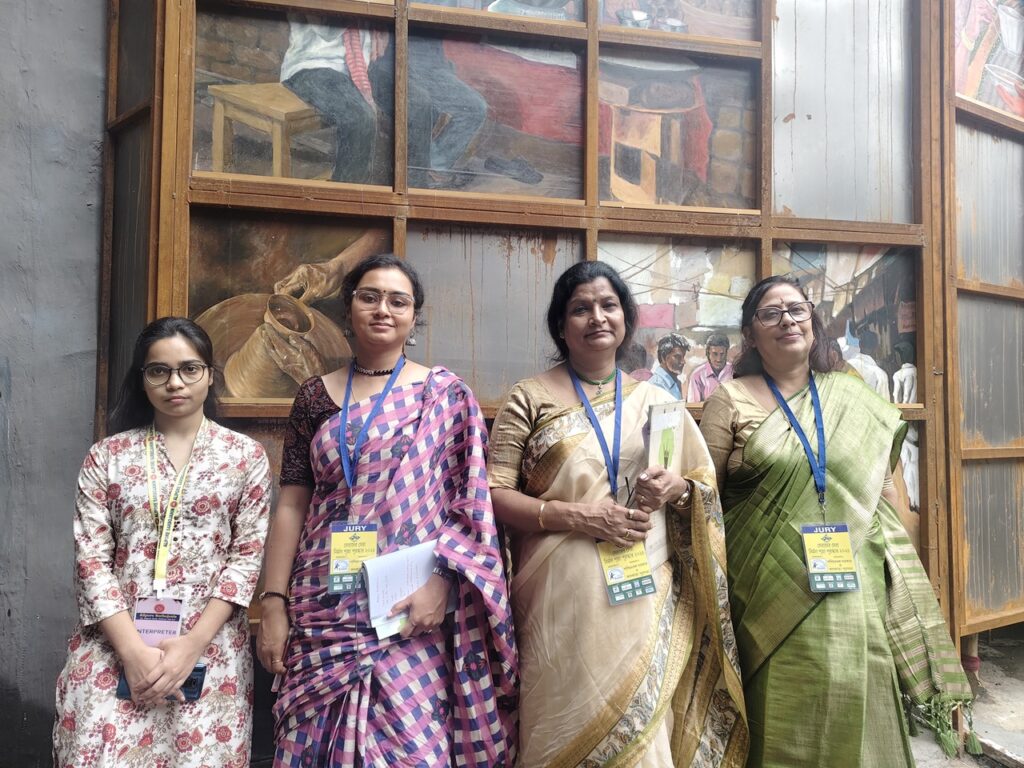
The Juries, Lopamudra Mukherjee, Sujata Basu, Satabdi Nandi and a club representative from R to L
Jubamaitry in Kalighat focused on the sustainable development goals. Abhijit Mukherjee, a key committee member and scientist from IIT Kharagpur, explained the Tree of Hope, linking to the goals with a reference of Sundarban; one of the major global climatic hotspots. Juba Sangha Puja Committee highlighted the ambience of a pollution free Bengal village while Charu Market Nabapalli Sangha focusedon the peril called plastic and thermocol waste.
The theme of Haripada Dutta Lane’s Sarbajanin Puja Pandal, paat hogla bansh o beter bheere ma ashchen modder ghore, embodied environment in practice while Palli Mongal Samiti, near EEDF hospital, brought one face-to-face with the rarely focused issue of visual impairment. Udayan at Khidderpore stood out with their execution of the theme of water scarcity, while 75 Pally Sangha showed deforestation and paid tribute to India’s green activists including the pioneers of Chipko movement.
Kolahol Ghosthi showcased craftmanship from Sonajhuri Haat in Shantiniketan while history came alive in Alipore 78 Pally, as the pandal recreated the 1851’s great exhibition in London, blending Indian charm with western aesthetics. Paddapukur Youth Association, the only puja in Kolkata built over a massive water body, themed on water scarcity exploring contrast between water abundance and drought, urging balance and conservation.
The topper
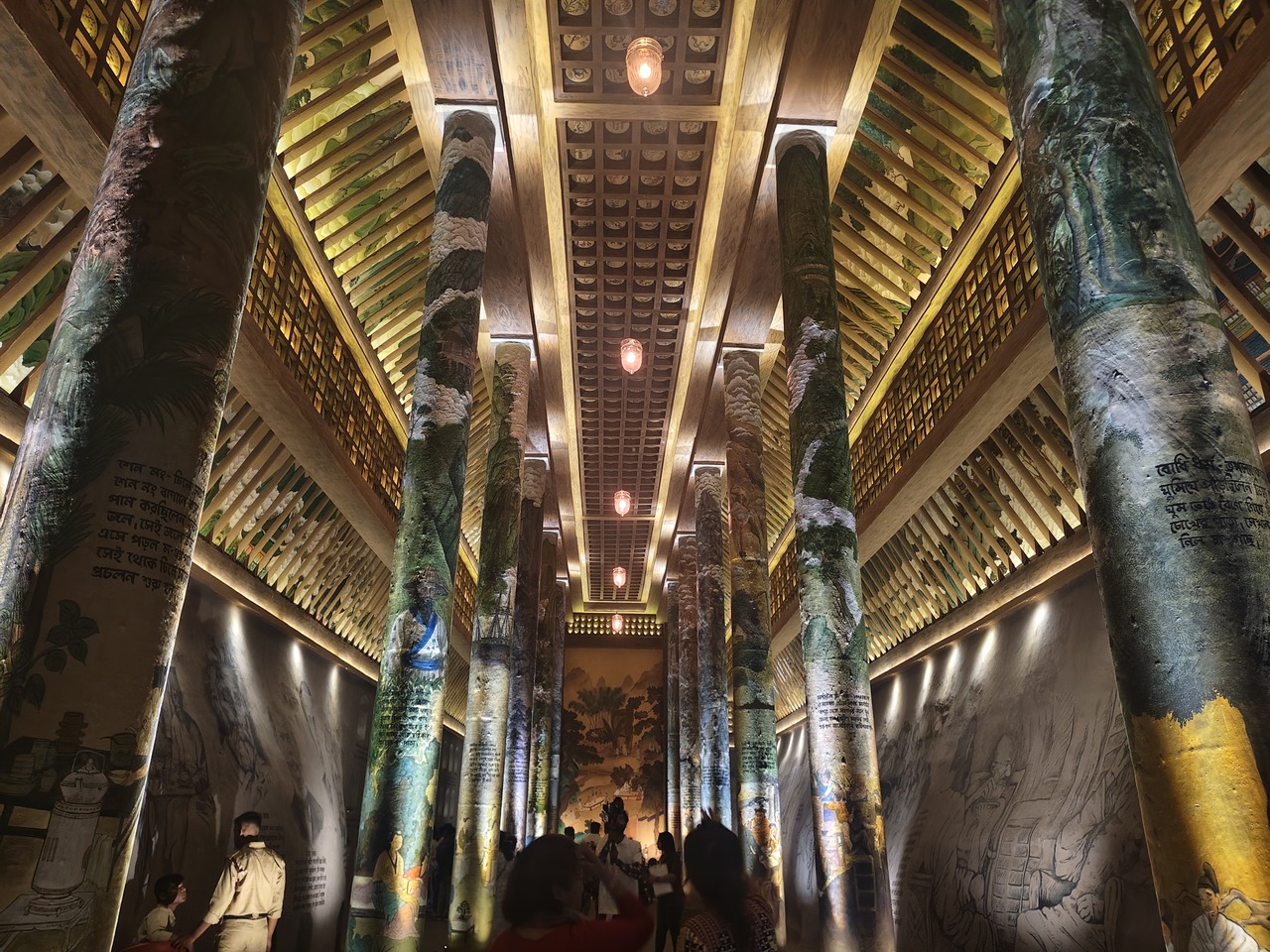
Alipore Sarbojanin, a runaway winner getting top ranking from majority of the juries, amazed with a detailed portrayal of tea, its journey from plantation to processing, and the global culture of tea usage. The organisers shared that the artisans worked for eight months to bring on forth the exquisitely crafted ceiling of the pandal and artwork drawn on that.
“It is an excellent depiction of the theme. We drink tea every morning but hardly know the history, geography and so many other facts linked to it” opined the juries.
The puja qualified in the final round of twelve pujas to be judged by a panel of juries consisting of consular heads, academics, experts and others. The final results will be announced on Saptami evening.
Satabdi Nandi is a faculty in Asutosh College