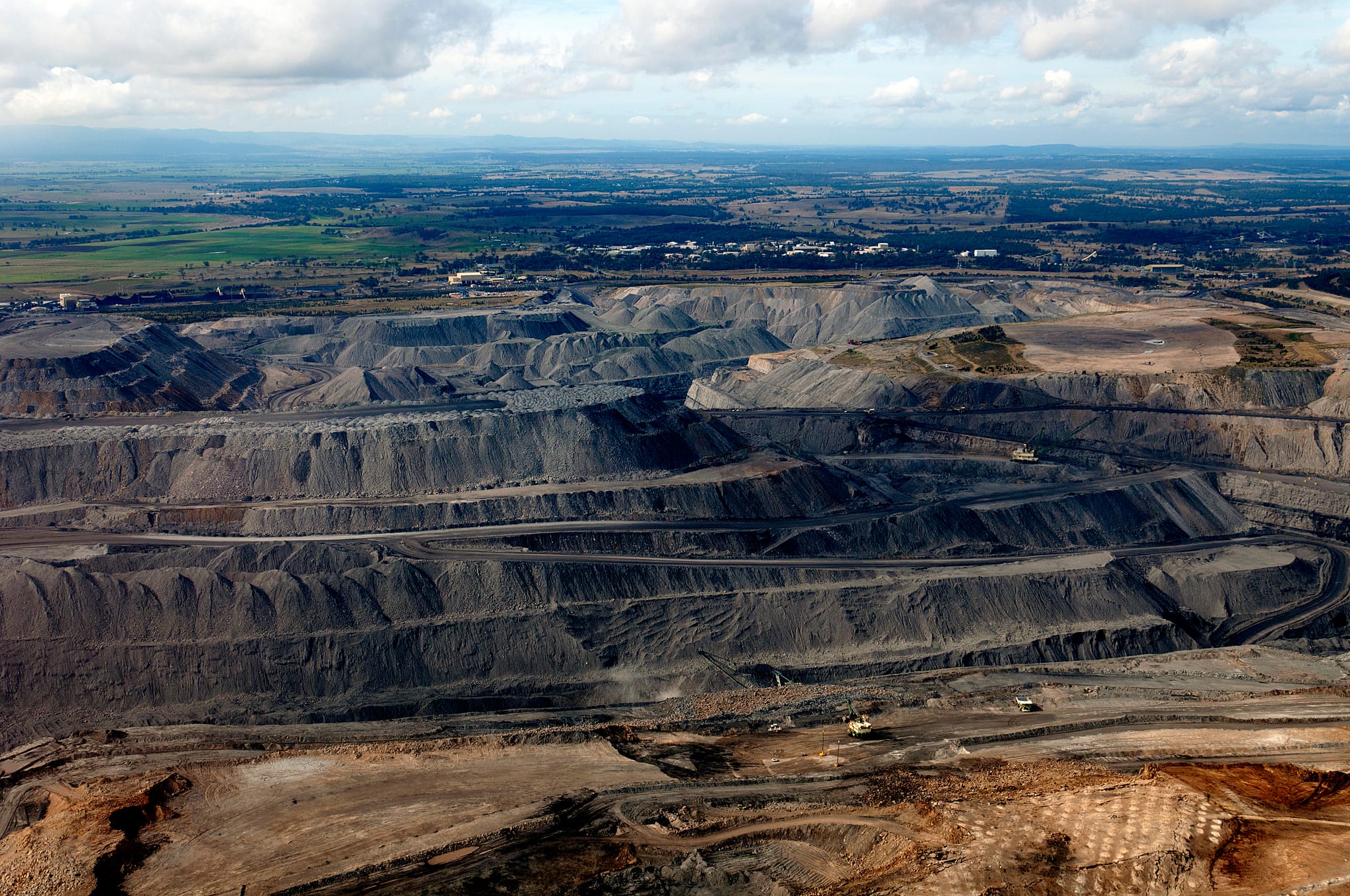
The global squeeze on coal funding can impact the ambitious DeuchaPachami project of the West Bengal government.
The recently released report prepared by a consortium of several specialized global non profits and think-tanks, titled Boom and Bust Coal, found that total global coal power capacity under development declined in 2021; and pointed out that “essentially no significant international public financier remaining for new coal plants”.
The consortium, led by Global Energy Monitor, includes CREA, E3G, Sierra Club, SFOC, Kiko Network, CAN Europe, LIFE, and a Bangladesh group comprising non profits BWGED, BAPA, & WKB.
A fact sheet prepared by Indian non-profit Nagarik Mancha has earlier shown that in DeuchaPachami coal belt in Birbhum district of Bengal, claimed to have second biggest coal reserves in the world, “foreign investment and technology will hence be needed for mining”.
The latest report pointed out that apart from China; most countries are actually shelving their coal projects in the face of surging global climate concern and dwindling international support.
“After rising in 2020 for the first time since 2015, total (global) coal power capacity under development declined 13% last year, from 525 gigawatts (GW) to 457 GW … 34 countries have new coal plants under consideration, down from 41 countries in January 2021,” reads the report.
The report however pointed out that “China continued to lead all countries in domestic development of new coal plants, commissioning more coal capacity than the rest of the world combined” with more than half – 56% – of the 45 GW of newly commissioned global capacity being in China.
“Outside China, the global coal fleet shrank for the fourth year in a row, although at a slower rate than in 2020”, states the report adding that while United States has slowed down in cutting off new coal projects – 16.1 GW in 2019 to 11.6 GW in 2020 to an estimated 6.4 GW to 9 GW in 2021- European Union showed good progress with a record 12.9 GW coal power retirements in 2021, with Germany topping the chart.
The report also pointed out that “many emerging economies have cut back their plans for new coal-fired capacity, with the largest reductions happening in India, Vietnam, Bangladesh, and Egypt.
Overall the world has around 2,400 coal-fired power plants operating in 79 countries with nearly 2,100 gigawatts(GW) of capacity. An additional 176 GW of coal capacity is under construction at more than 189 plants, and 280 GW is planned at 296 plants.
The analysis explained that “India’s new target for clean power capacity will enable the country to start phasing down coal well before 2030, even assuming power demand growth continues at pre-Covid rates”. During COP 26 at Glasgow, the Indian Prime Minister, last November, announced that by 2030 India would be installing 500 GW of non fossil power.
The report reminded that recently released Intergovernmental Panel on Climate Change (IPCC) report has showed that “there is no carbon budget left to accommodate new coal plants, and that coal use needs to fall by 75% by 2030 (from 2019 levels) to limit global temperature rise below 1.5 degrees Celsius”; the best possible target that the world can pursue, that was committed at Paris Agreement in 2015.
“There is simply no carbon budget left to be building new coal plants. We need to stop … now,” said Flora Champenois of Global Energy Monitor.
The expert explained that the directive of the latest IPCC report is clear; “stop building new coal plants and retire existing ones in the developed world by 2030, and the rest of the world soon after.”
The analysis warns that “there is essentially no significant international public financier remaining for new coal plants” with Japan, South Korea, and China all pledged to end public support for new international coal plants, followed by a commitment from all G20 countries before the COP26 in Glasgow.
“Apart from the obvious environmental consideration, economic fallout may also impact DeuchaPachami project, as international support for such projects is dwindling quickly on climatic grounds,” said Harjeet Singh, a senior advisor of Climate Action Network International to The Plurals. Singh pointed out that several coal-based projects, including few in India, are in process of being shelved off before their scheduled deadline.
ENVIRONMENT
NEWS
Global coal report puts spanner in Deucha Pachami project
The global squeeze on coal funding can impact the ambitious DeuchaPachami project of the West Bengal government.The recently released report prepared by a consortium of several specialized global non profits and think-tanks, titled Boom and Bust Coal, found that total global coal power capacity under development declined in 2021; and pointed out that “essentially no […]