
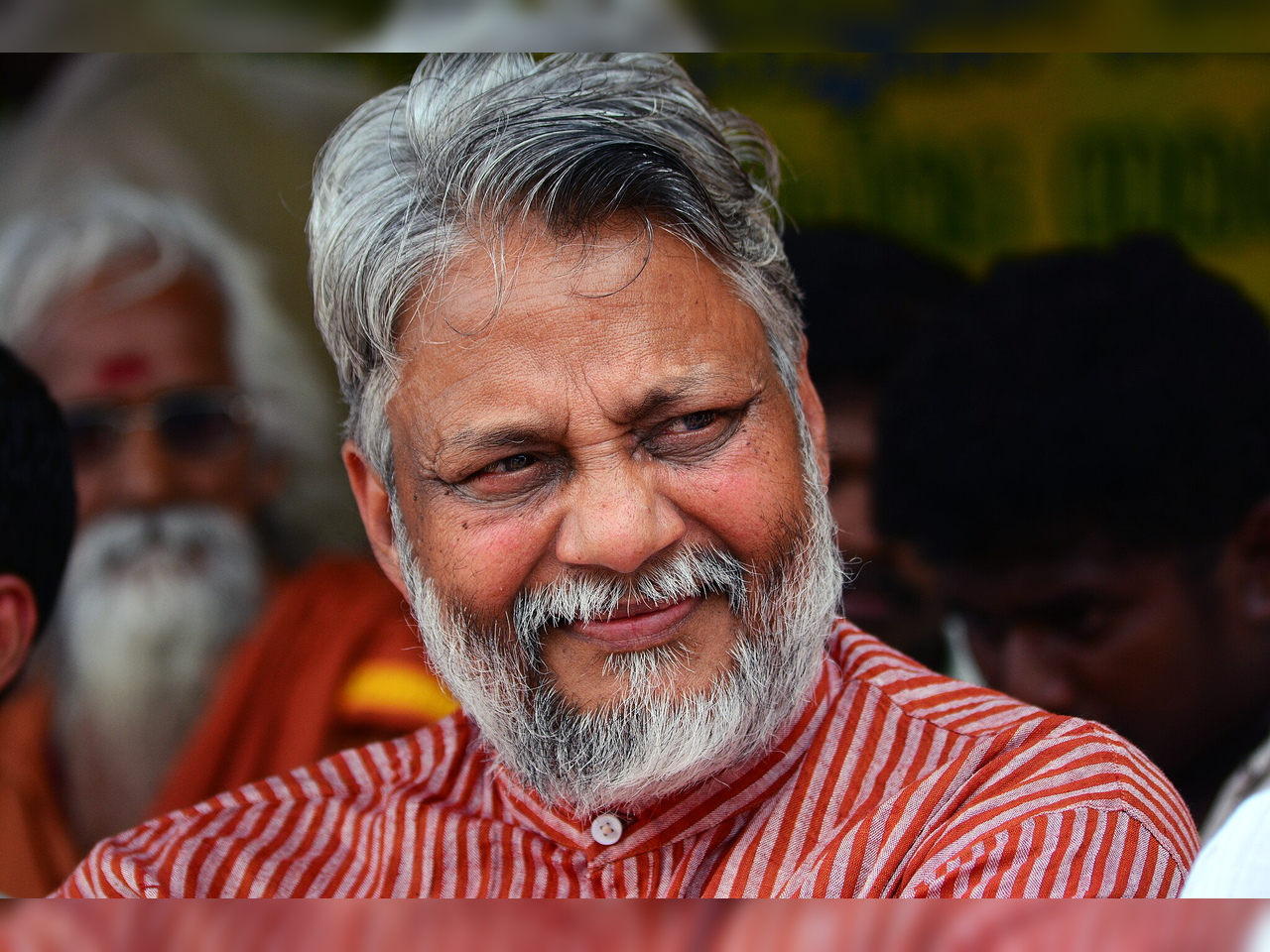
On Sunday, a day before the Supreme Court of India stayed its own earlier order on the Aravallis that had redefined it as starting from a height of 100m, eminent water conservationist Rajendra Singh, known as the ‘Waterman of India’, had written a letter to the Chief Justice of the Supreme Court of India asking for a revision of the new definition of the Aravallis and for its protection.
“I am deeply distressed by the judgment of the Supreme Court by which the Aravali has been defined and demarcated, thereby effectively breaking the integrity and continuity of the Aravali eco-system into thousands of hillocks, opening the rest of more than 90 per cent of the area open for mining and development,” wrote Singh in his letter, a copy of which is with The Plurals. He is known for his remarkable contribution to water management in semi-arid areas in Rajasthan, one of the states through which the Aravallis stretch.
“There is no 100m hillock along the Delhi-Haryana border. Thus, I believe it may open all those protected areas of the Aravalli for new mining and development and allow the Thar desert to enter Delhi,” continued the letter.
Singh, a recipient of the Stockholm Water Prize and the Magsaysay Award, had played an important role in stopping mining in an Aravalli area in the 90s.
Earlier Supreme Court stopped mining in Aravalli
“The Aravalli is not an object; it is an ecosystem of hills with gentle slopes. Winds, the monsoon, groundwater reserves, water harvesting systems, vegetation, forests, wildlife, and all forms of biodiversity together have shaped the Aravalli over millions of years. These very bio-diversities also sustain it. Is it possible in any way to define or demarcate the Aravalli?” Singh had asked.
“It is our duty to ensure that the protection and enrichment of any ecological zone and natural resource should be such that its quality increases and is not diminished in any manner. Perhaps this is what fundamental environmental principles, such as the Public Trust Doctrine and Intergenerational Equity, teach us. Our Constitution and our constitutional duties also say the same,” the letter read.
The geographical significance of the Aravallis is well known and the Supreme Court has acknowledged it many times, Singh said. “Even before our origin, Aravalli has played a role in the formation of the Himalayas, the seas, and the Sahyadri ranges around it. At a time when climate change is afflicting the masses, when air has become so polluted that even breathing has become difficult, can we even imagine causing any kind o f harm to the Aravalli?”
Singh reminded that in 1994, he had filed a petition successfully in Supreme Court to stop mining activities in Aravalli.
“In the year 1994, based on a petition filed by me, a bench headed by (Chief) Justice (MN) Venkatachaiah ordered the closure of 478 mines in Sariska and thereafter stopped mining throughout the Aravalli. Today, there is once again a need for that same judicial consciousness and action.”