
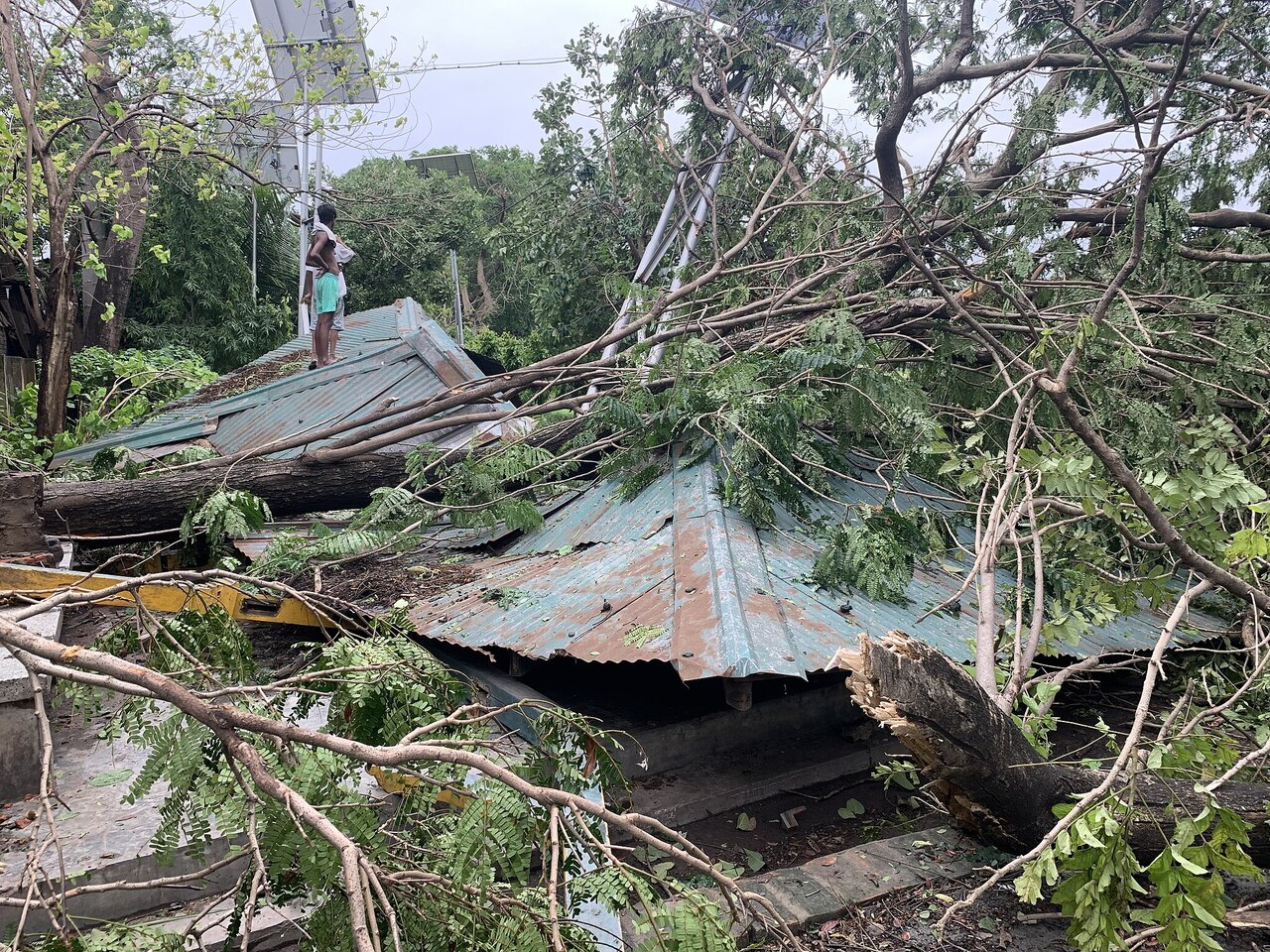
Even as Indian officials at the World Economic Forum (WEF) in Davos are projecting the country as the potential third largest economy in the world and looking for big investments, warning signs are out that the country is running out its capacity to insure its infrastructure development because of climate-related risks.
A report by Climate Trends, a Delhi-based research-oriented initiative focussed on environment, climate change and sustainable development, says that increasing climate risks may be outpacing the country’s ability to insure hydropower projects, highways and urban infrastructure. These would expose governments and investors to growing financial stress.
Assets may turn climate liability
Titled ‘Climate Risks and Insurance for India’s Infrastructure’, the Climate Trends report finds that though most of India remains insurable, insurers are becoming increasingly concerned about the infrastructure projects. “…India’s infrastructure push may be expanding climate exposure faster than risk-transfer mechanisms are adapting,” the report says.
The report identifies “flooding, extreme rainfall, cyclones and landslides…as high to very high risks (scores 4–5) for capital-intensive infrastructure such as urban assets, highways, ports and hydropower projects, driving repeated losses and rising insurability concerns.”
“As India seeks big investments at the World Economic Forum and plans double-digit (nominal) growth over the next five years, it would be remiss to not point out the risks to India’s infrastructure posed by climate impacts and extreme weather events – which are unarguably increasing in frequency, severity and geographical spread,” said Aarti Khosla, founder and director, Climate Trends.
Premium surge linked to climate change
The authors of the report spoke with several leading insurance companies of the country, like SBI General Insurance, Munich Re India, Swiss Re India, and General Insurance Corporation of India.
A leading global insurance firm, Swiss Re “estimates that India’s life and non-life insurance premiums will grow at one of the fastest rates in the world through to 2028, at 6.7% and 8.3% respectively,” says the report. The report correlated the finding with the fact that India has been recently ranked as the seventh-most vulnerable in terms of climate impacts. Within the country, such projects have been mostly planned in Assam, Andhra Pradesh, Odisha, Uttarakhand, Himachal Pradesh.
Projects worth Rs 2.95 lakh crores at stake
Data indicates that some of the largest infrastructure projects by investment are also situated in these vulnerable regions, with the total investments amounting to Rs 2.95 lakh crores, Climate Trends said.
These range from Odisha’s Paradip port modernisation project, to Rs 5,000 crores worth of port projects in Andhra Pradesh, tunnels and highways worth Rs 38,000 crores in Himachal Pradesh, Teesta hydropower project in Sikkim, Zozila tunnel and BRO roads project in Ladakh, to Arunachal Pradesh’s Etalin, Dibang and many other dam, highways and hydropower projects, the report points out.
“The country’s rising exposure for its essential assets could thus lead to mounting climate-induced losses, which would be a fiscal and financial burden. Climate resilience must therefore be integrated into infrastructure planning from the very beginning to minimise the costs of post-disaster reconstruction,” says Khosla.
“Also, several steps will have to come together to ensure long-term insurance viability for such assets, such as advanced actuarial models and standardised frameworks for risk disclosure, premium pricing and loss assessment.”
In 2025 India had experienced an inordinately high number of extreme weather events: on 331 out of 334 days between January and November, according to the Delhi-based think-tank Centre for Science and Environment (CSE).