
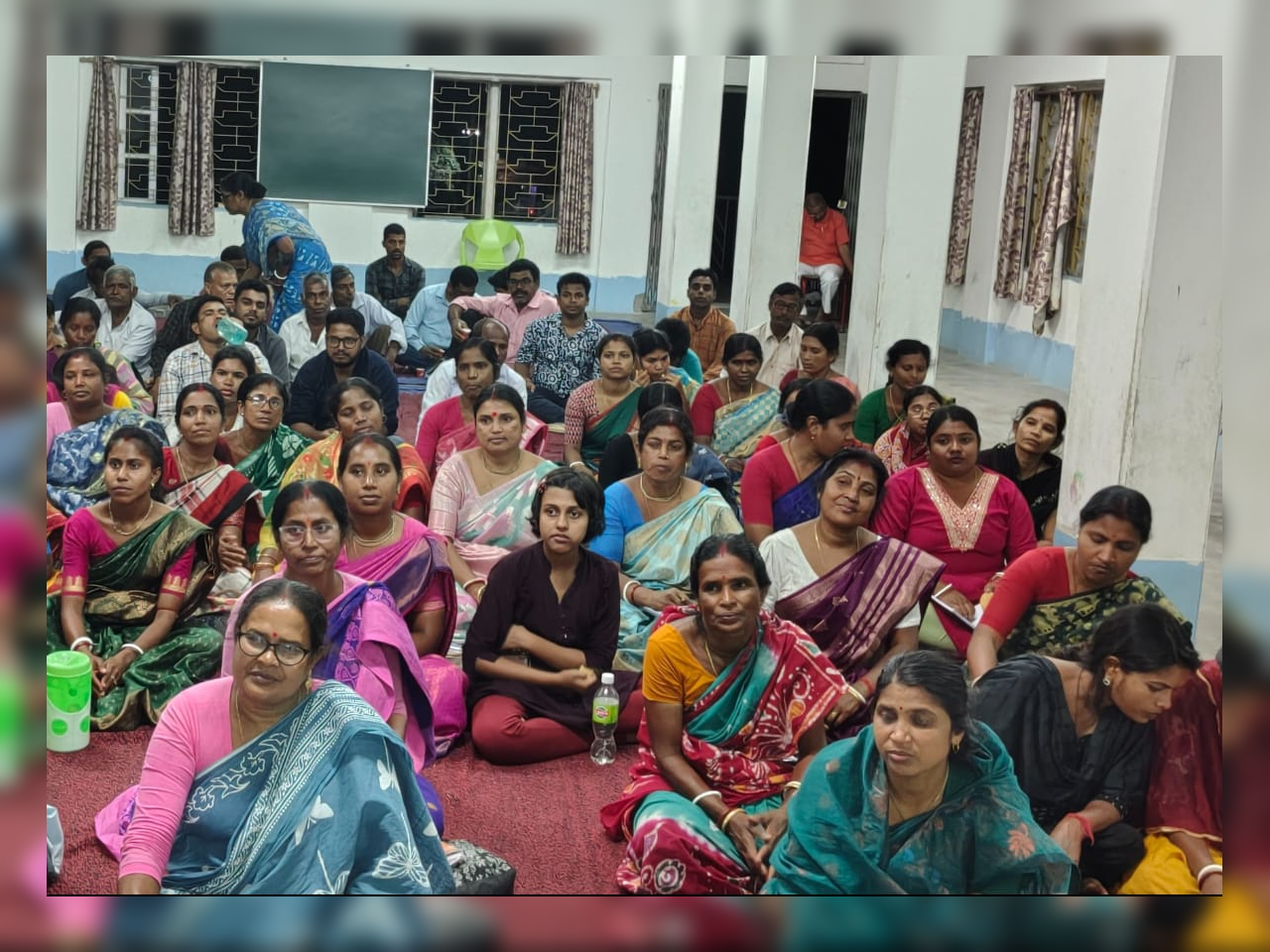

The sixth edition of the National Family Health Survey (NFHS-6) reveals wide gaps between urban and rural women in India across several parameters. On almost all counts, rural women are behind their urban counterparts.
NFHS is conducted on Indian households and is based on data on indicators such as health, education, marital and childbirth age and access to technology. The data is gender-segregated as well as divided along urban and rural sectors.
The fact-sheets provide data under 101 indicators about the country overall and each of its 36 states and union territories. NFHS-6 data was collected from 6.79 lakh Indian households during 2023-2024.The Plurals deepdives into the critical indicators showing the urban-rural divide among women.
Wide urban-rural gap in women’s education
Wide gaps between urban and rural girls and women show up in education.
One of the biggest gaps relates to school years. For the indicator “Women with 10 or more years of schooling” in the age group 15-49, the figure for urban women is 61.5%, and for rural, 39.7%. This gap of more than 20% at the primary education level between urban and rural women underlines the unequal progress in women’s education despite overall improvement evident from earlier survey results.
The indicator “female population aged six years and above who ever attended school” shows that 84.3% of urban women went to school, while the figure for rural women is 69%.
“The NFHS data projects an optimistic picture of women’s progress, but it presents some interesting insights,” says Anindita Majumdar, founder and managing trustee, EquiDiversity Foundation, which works towards gender equality in rural Bengal.
She feels that some figures may indicate women’s progress, but they measure formal inclusion far more than actual agency, even as the underlying disparities in society and the economy continue, reflected in the urban-rural divide.
Child marriage and teenage pregnancy high in rural India
A huge difference shows between urban and rural women on marriage age, the age being considerably low in the rural sector. A little less than half of the women in rural India were married before they were 18 years old.
The NFHS-6 data says, “women aged 20-24 who were married before age 18” make up 21.7% of the urban female population, the corresponding figure for rural women being 41.5%.
The gap is also concerning for India when it comes to teenage pregnancy. “Women age 15-19 years who were already mothers or pregnant at the time of the survey” amounted to 6.5% among the urban population and 20.3% in the rural, the rural figure being more than three times higher than the urban. This can be directly linked to the corresponding lower marriage age for rural women.
Significant progress has been recorded across many indicators relating to women over the past few years, says Subhendu Bhattacharjee, a director at CRY – Child Rights and You. “The divide is not merely about access to services; it reflects differences in the opportunities available to women and girls to make informed choices about their lives and health,” he says in the context of the urban-rural gap.
Difference in fertility rate and institutional delivery
“Total fertility rate (children per woman)” stands at 1.6% among urban Indian women and at 2.1% among rural women, the survey states. “Institutional births in public facility” was higher in rural India, 62.1%, showing the dependence on the public healthcare system, while the figure stood at 48.2% in urban India.
Childbirth through caesarean section was much higher in urban India at 40.5%, compared to the rural figure of 22.8%.Caesarean section births have seen a sharp rise in the country in the recent decades; public health experts often associate the increasingly commercial mindset of the private health sector.
Sharp divide on nutrition and hygiene
“Women whose Body Mass Index (BMI) is below normal” are counted at 13.2% among urban Indian women, compared to 22.5% of rural women. This is the trend among men as well. Clearly, our villages are undernourished. As a matter of fact, urban women are generally more overweight or obese (BMI ≥25.0), measuring at 42.8%, while such rural women stand at 25.5%. Given the lifestyle factors, the trend is on expected lines.
“Women aged 15-24 years who use hygienic methods of protection during their menstrual period” were recorded to be 90.7% among urban women and 75% among rural women in India.
“Even if urban culture and urbanisation are enveloping rural areas, and some indicators show development in these areas, our villages are lagging far behind cities,” says Bishakha Laskar, secretary, Durbar Mahila Samanyaya Committee, a Kolkata based organisation that works for the rights of sex-workers to be recognised as workers.
More rural women have bank accounts, work more
A few social and economic indicators paint a somewhat brighter picture.
“Currently married women 15-49 who usually participate in three household decisions” add up to 91.4% in urban India and 88.0% in rural India. These decisions, taken by a woman, include healthcare for herself, making major household purchases and visits to her family or relatives.
“Women with bank accounts or savings accounts that they themselves use”were more – percentage-wise – in rural India compared to urban women; 89.3% of rural women having it against 88.3% urban women.
“Women who worked in the last 12 months (at the time of the survey)” were also led by rural women — 31.2% against 29.8% of urban women.
Majumdar, however, cautions against reading these figures uncritically. “These surface improvements are too easily mistaken for transformative empowerment. Indicators such as ‘usually participate in three household decisions’ or ‘have a bank account they themselves use’ largely capture joint or nominal involvement, not independent control over marriage timing, fertility or freedom from domestic constraint,” she claims.
Both urban and rural women face domestic violence, later more
The incidence of domestic violence, however, remains high, and higher in rural areas. The indicator “Ever-married women age 18-49 years who have ever experienced spousal violence” shows 17.5% urban women experiencing it, even as the figure for rural women is 24.4%. Domestic violence is universal; ironically, it also bridges the urban-rural divide.
“The prevalence of domestic violence — not only in marital homes but also within natal families — and the everyday control exercised over women remain largely unacknowledged and therefore under-reported, a stark and continuing reality,” says Majumdar.
Over 75 per cent urban women have mobiles, less than 60 per cent within rural women
Mobile phones rule both urban and rural India, but are not owned equally. “Women who have a mobile phone that they themselves use” add up to 77.6% in urban India, but to 57.4% in rural India.
Overall the digital divide is significant in the country with “Women who have ever used the Internet” standing at 77.3% among urban women, even as only 58.6% of rural women belong to this category.
“The NFHS-6 data therefore underlines the need to address the rural-urban divide as a continuum – from girls’ education and digital access to delaying marriage, preventing adolescent pregnancy and ensuring quality maternal healthcare. Bridging these gaps will require adequate, long-term investments that reach women and girls where disparities are greatest, particularly in rural communities,” says Bhattacharjee of CRY.
Sapna Tripathi, treasurer, West Bengal Domestic Workers’ Union, views the urban-rural divide differently. Most of the union members come from outside Kolkata, she agrees. “But there is no urban-rural divide in a few things,” she says. “I find child marriage as prevalent among the urban poor, in a settlement in Dhakuria, Kolkata, as in a village. The same holds for domestic violence. I feel that the situation is similar across the country.”