
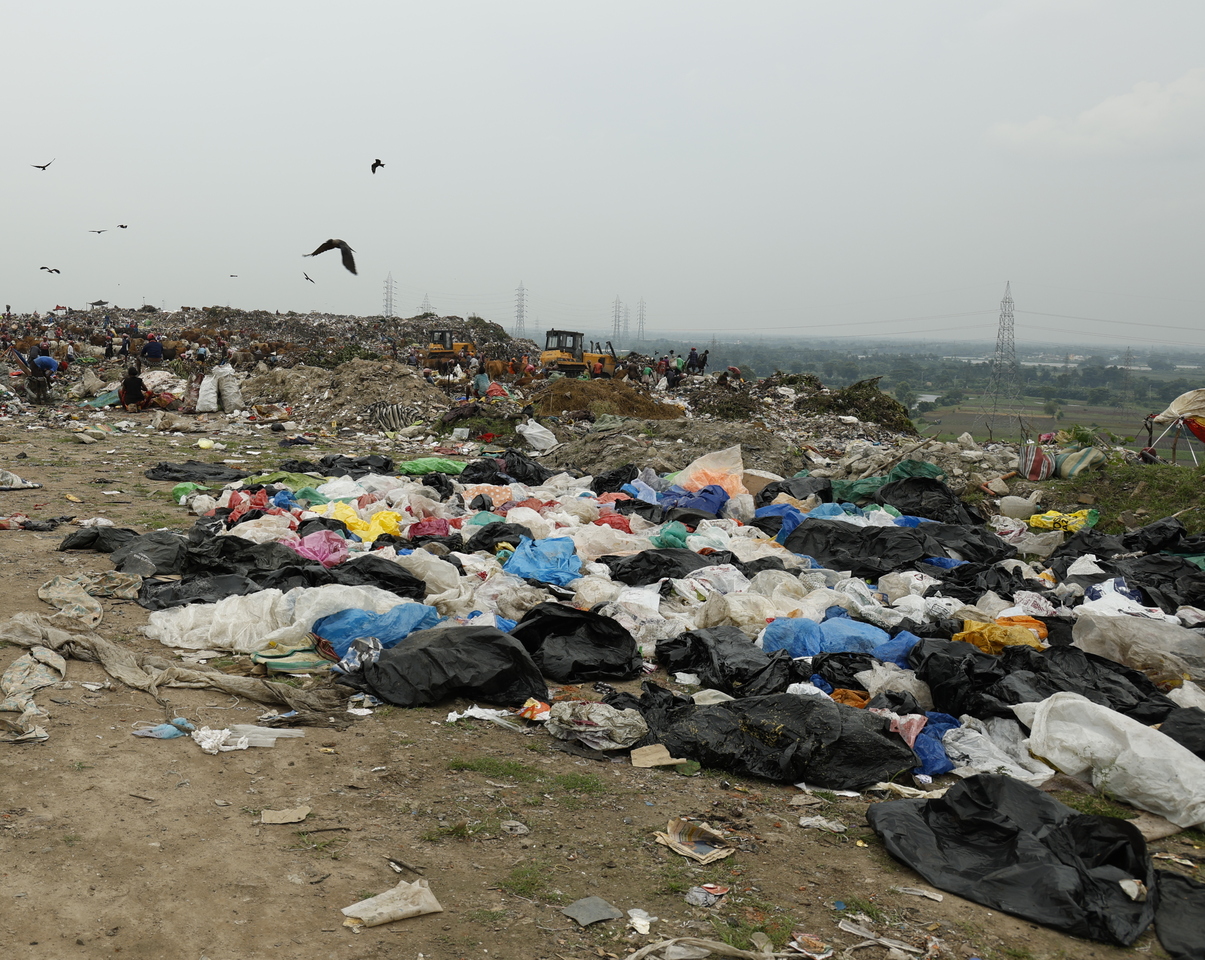

The outcome of the Global Plastic Treaty by the Intergovernmental Negotiating Committee (INC) on August 15, 2025, was a major disappointment regarding the world’s preparedness to combat plastic pollution. West Bengal is no exception where the use of plastic and other biodegradable materials has been rising exponentially in recent years, especially during the festive season which is to start soon this year.
The world produces over 450 million tons of plastic annually. Plastic is the worst contributor to global warming. Thermocol is another non-degradable material that takes 500 to 1 million years to degrade, causing the same nature of damage as plastic. Studies confirm that it can be carcinogenic.
Festive waste
Plastic pollution increases during big festivals such as Ganpati in Mumbai, Durga Puja in Kolkata, and Diwali, Chhath Puja, Christmas, and New Year across the country. These festivals bring massive spikes in single-use plastic pollution. The Brihanmumbai Municipal Corporation (BMC) collects over 1,200 to 1,500 metric tons of festival waste during the event, a considerable portion of which includes non-biodegradable single-use plastic wrappings, packaging and thermocol (polystyrene) decorations.
Festivals must be celebrated with caution keeping environmental concerns in mind, from noise and air pollution to water and plastic pollution. Firecrackers during Diwali and New Year cause extreme air pollution. Chhath Puja sparks debates on water pollution. The use of loud DJs during most festivals has even reportedly triggered instances of fatal cardiac arrests in the exposed population.
Puja boom to plastic peril linkage
Plastic pollution during Durga Puja in Kolkata remains a particular concern. The Kolkata Metropolitan Area, or Greater Kolkata in layman’s terms, has a population of nearly 16 million and represents one of the densest parts of the world. Durga Puja in Kolkata, a UNESCO-recognised Intangible Cultural Heritage, is a mega event with around 3,000 community pujas organised across Kolkata, and the average footfall during the festival exceeds 2 million in most of them. Incidentally the Durga Puja economy in 2025 was calculated at around INR 50,000 crore, creating employment opportunities for three lakh people. Incidentally, the festival contributes substantially to the GDP of West Bengal.
However, there is a flip side to it.
There is a massive accumulation of waste due to the rampant use of banned single-use plastic and Styrofoam plates and glasses during the celebrations.
Market embraced illegality
West Bengal banned the use of plastic bags thinner than 75 microns in 2021. But thermocol and styrofoam have become increasingly popular due to market acceptance particularly because of their light weight, low cost and convenience. Puja pandals, food chains and small eateries widely use thermocol plates and glasses for convenience. The unmindful littering of polystyrene foam plates, PET bottles, cutlery and single-use plastic packets during Durga Puja means a heavy environmental cost, often overlooked.
Plastic pollution during Durga Puja has created numerous challenges for the Kolkata Municipal Corporation (KMC). According to the KMC, the city generates an average of 4,000 metric tons of waste on a regular day, which doubles during the Durga Puja celebrations, around 70 per cent of which is plastic.
Another major source of pollution is the PVC banners displayed across the city during the puja.
Pujas preach green but grey in practice
The West Bengal Pollution Control Board (WBPCB) asks puja organisers to properly dispose of plastic waste through empanelled recyclers. However, very few puja organisers have shown sensitivity toward restricting plastic pollution or disposing waste responsibly. Although many big, crowd-pulling Puja pandals adopt themes centred on environmental and climate change concerns, these efforts are largely limited to spectacular decorations rather than actions on ground.
The KMC made notable strides in 2025 on solid waste management, with one 2 ton per day plastic waste processing plant, a thermocol plant and a material recovery facility plant were installed. The WBPCB instructed the police and district authorities to combat plastic pollution during the Durga Puja celebrations and maintain strict surveillance on the manufacturing, import, sale, distribution and disposal of banned single-use plastic items; but such orders mostly remained on paper.
An opportunity to drive home the messages
Durga Puja is an excellent opportunity to generate public opinion. A well-designed campaign with powerful public communication targeting all stakeholders in the supply chain — from production to consumption — could drive behavioural change in individuals and prompt institutionalised action by authorities. It is a vital opportunity for all Puja committees to take a proactive role.
Taking the opportunity, authorities can amplify message of compliances on provisions on extended producer responsibility (EPR) for manufacturers, brand owners and importers, accountable for collecting and recycling the plastic they generate.
Points of action to pursue a novel plastic waste management model
The following actions could be adopted:
* Institutional commitment: The KMC, other Urban Local Bodies and the WBPCB should collectively resolve to make the festival completely plastic- and thermocol-free.
* Ward-level engagement: Councillors across all city wards can run a campaign using messaging on garbage collection.
* Public announcements: Public address systems at pandals should be used to spread plastic awareness.
* Vendor outreach: All eatery- and eateries and stall-owners around the pandals should be made aware of the consequences of violating plastic use norms.
* Eco-friendly selfie corners: Pandals can set up attractive eco-friendly selfie corners.
* Media campaigns: The KMC and WBPCB should run media campaigns on plastic pollution.
*Biodegradable prasad packaging: Puja committees should strictly use biodegradable materials, such as leaf plates, for distributing khichdi and prasad. Leaf plates can be procured from rural tribal areas like Jhargram, Purulia, Bankura and West Medinipur, to support sustainable economic practices.
*Source segregation: Waste segregation at the source should be aggressively promoted to ease the process of recycling and converting waste into useful products.
Following the prescription, Kolkata will be able to showcase how to host a plastic waste free grand public festival with millions participating in it.
Ashok Kumar Nayak is a social development professional