
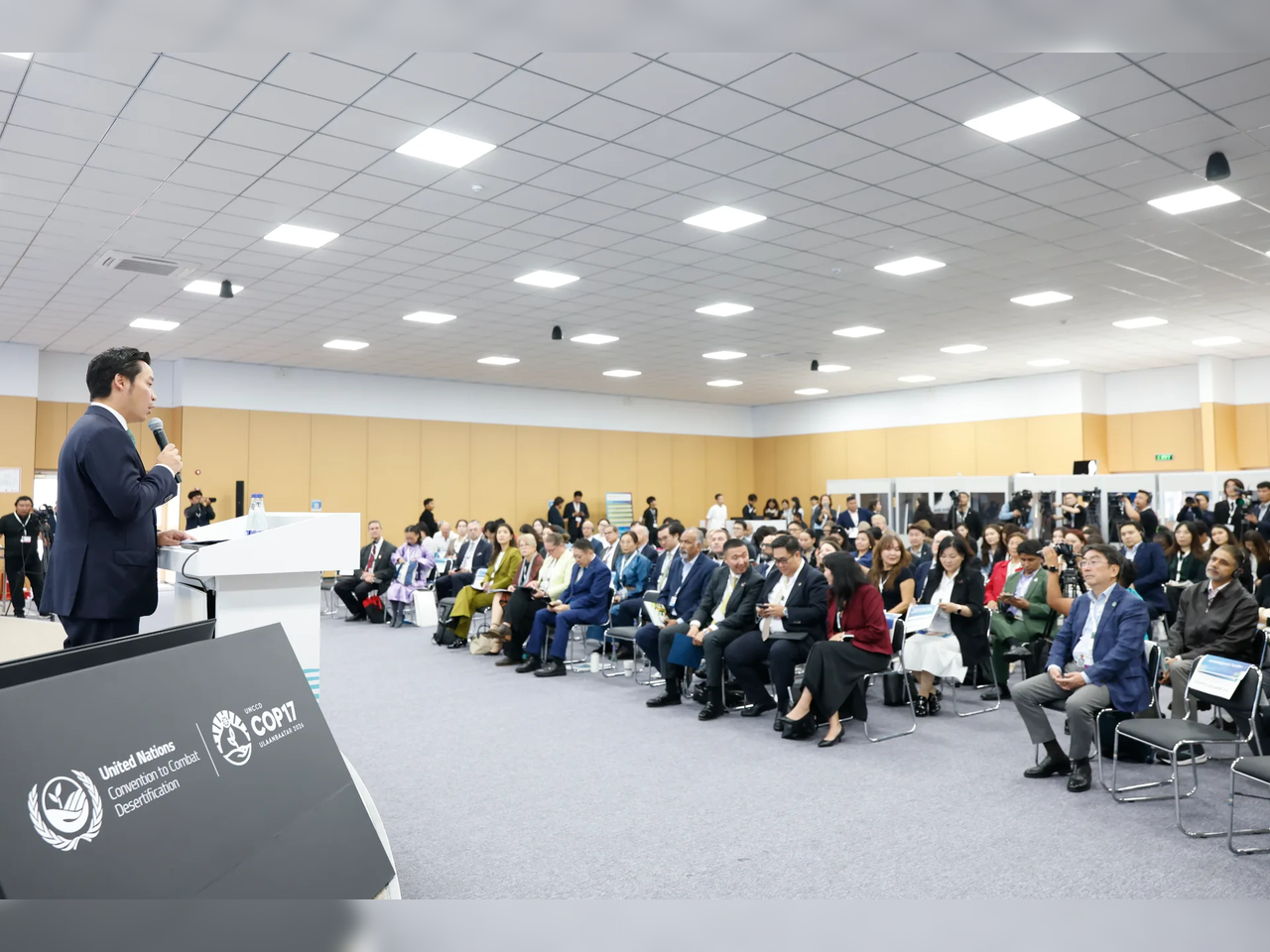
The 17th edition of the Conference of the Parties (COP17) to the United Nations Convention to Combat Desertification (UNCCD) opened in Mongolia on August 17, 2026, with one categorical message from the host country: the world has enough declarations on land degradation. What it lacks is finance and the institutional machinery to act on them. Delegates from 196 countries and the European Union gathered in Ulaanbaatar, Mongolia, for the meeting.
H.E. N. Uchral, prime minister of Mongolia, said, “The greatest change we want to see from COP17 is a shift from talk to action, from targets to implementation, and from commitments to measurable results. Mongolia, therefore, calls for tangible progress at this conference.”
Land degradation and drought are estimated to cost the global economy nearly USD 900 billion every year and already affect up to 40 percent of the world’s land and 3.2 billion people. Droughts have increased by almost one-third since 2000 and now generate at least USD 300 billion in annual losses.
Over the next two weeks, governments, financial institutions, businesses, scientists, and civil society will work to advance practical solutions, forge new partnerships, and mobilize investment for land restoration and drought resilience, while Parties negotiate decisions on drought, rangelands, agricultural lands and soils, resource mobilization, private-sector engagement, and the Convention’s future strategic direction.
On the sidelines of the meeting, India launched its first-ever guide to Open Natural Ecosystems, emphasizing science-based conservation for grasslands and deserts.
The host country sets priorities
The Mongolian prime minister rolled out a six-point action plan at the summit’s initiation.
“First, let us address land, climate, and biodiversity not as separate issues but as interconnected challenges; second, let us increase investment in land restoration and take cooperation between governments, international financial institutions, and the private sector to a new level … Third, let us make drought resilience not only an environmental policy issue but also a core part of development policy,” said the official.
“Fourth, let us place the knowledge and participation of rangeland users, herders, and local communities at the center of global land management policy … Fifth, let us turn science, technology, and innovation into practical solutions and real investment. Sixth, let us work together to create the enabling conditions to turn commitments into measurable results,” he concluded.
For host country Mongolia, these issues are critical as nearly 77 per cent of the country’s land is degraded, while pastoralism supports the livelihoods of one in three Mongolians.
Implementation COP urged.
UNCCD Executive Secretary Yasmine Fouad said: “Land degradation and drought are no longer distant environmental concerns. They are already affecting the food we produce, the water we depend on, the resilience of our economies, and the ability of communities to build secure futures.”
“COP17 must therefore be a COP of implementation. The world does not lack solutions; the challenge is taking them to scale. Ulaanbaatar must mobilize the political leadership, investment, and partnerships needed to move from commitments to measurable results on the ground. Restoring land is not simply an environmental obligation—it is an investment in people, stability, and resilience,” the official added.
“Hosting COP17 is both a responsibility and an opportunity to bring the experience of dryland countries and pastoral communities to the center of global discussions. Mongolia will work with all Parties to make Ulaanbaatar a place where countries come together around practical solutions for healthier land, more resilient rangelands, and a more secure future for the people who depend on them,” observed H.E. Battsetseg Batmunkh, Minister for Foreign Affairs of Mongolia and UNCCD COP17 president.
Key demands
The primary demand centers on tracking and implementing the previous $12 billion in public-sector pledges made toward drought resilience and mobilizing private-sector investments.
The Steppe Action Agenda is also on the table; it galvanizes global support for the incoming Mongolian presidency’s agenda to elevate land restoration, rangeland management, and food security.
“The outcomes of COP17 must go beyond negotiated decisions and translate into concrete action, greater investment and stronger partnerships to halt and reverse land degradation, safeguard rangelands and soils, restore degraded land and combat desertification. Achieving this will require the active engagement of governments, the private sector, international organizations and financial institutions,” points out an expert.