At seven in the morning, during the December 2015 Chennai floods, I stepped into the damp grey light with three dogs beside me. One was mine. The other two, an elderly German Shepherd and an elderly Labrador, belonged to friends whose homes were flooding. They were left to stay with me because no one was willing to evacuate their families with the animals.
Even as disaster unfolded, the dogs still needed their morning walk. The street was eerily silent. Chennai is never truly quiet at seven, especially near the beach, but that morning there was no one outside; not a person, not a car, not even a bird. The sky hung low and dark after days of relentless rain. It felt as if the city was holding its breath.
Then I saw flashing lights, and I stopped. The dogs stopped too, suddenly alert. A tow truck sped past carrying a rescue boat. Then another. And then a third. That was when I understood this was no longer just heavy rain. We were in real danger, and our city was in trouble.
Messages kept coming
Until then, most of what we knew came through our phones. Messages kept coming in about someone stuck on a roof, an older person needing medicine, a family waiting for rescuers, people asking if a road was safe to use. We kept track of rescue requests using spreadsheets, checked them, shared locations, and connected people who needed help with those who had vehicles or room in their homes. We matched rescued families with strangers willing to shelter them.
For the first two days, the internet was our emergency response system. There was no clear information from the government, no reliable helpline, and no obvious coordination. So, we organised ourselves.
Then the power went out across much of South Chennai, where I lived. Phones went dead. The internet disappeared, and with it the lifeline connecting us to the rest of the city was cut.
When would the rain stop?
Every time the rain slowed, we hoped it was finally over. Then it would begin again, and the fear returned immediately. How much more water could Chennai take? Who was still trapped? When would the rain stop?
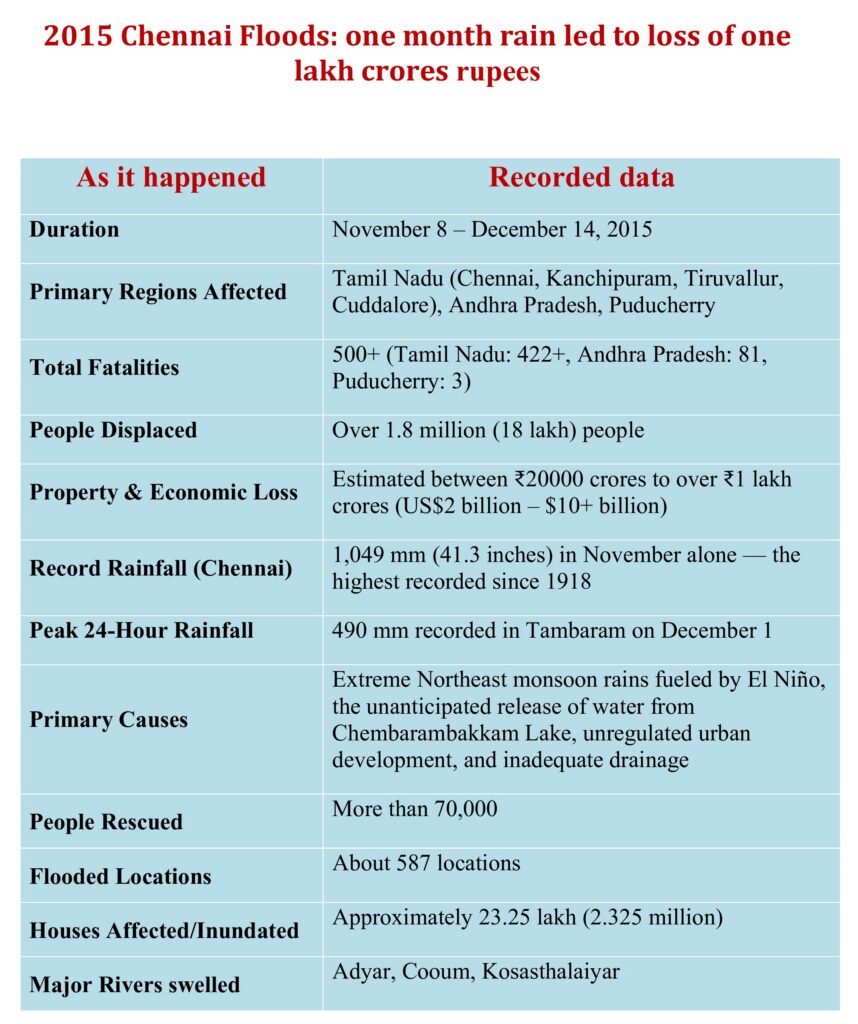
The rains, which started on November 8 and continued till December 14, had been caused by extreme north-east monsoon rains. The floods led to more than 500 deaths in Tamil Nadu, Andhra Pradesh and Puducherry, Tamil Nadu alone reporting 422 deaths. Over 1.8 million people were displaced.
The monthly rainfall in Chennai was recorded at 1049mm, the highest ever.
World turned local
With electricity and internet gone, our world became very local. People called out from balconies, sharing news from one building to another. Someone would shout that water was rising nearby. Another would ask for candles or drinking water. People checked on older neighbours, shared food, and figured out which routes were safe. In that small world, people came together with great kindness. Those who barely knew each other opened their homes, cooked for strangers, shared supplies, and helped carry pregnant women to safety.
I remember that solidarity with gratitude. But I also remember why it was necessary. Communities stepped in because the government and reliable public information were largely absent. We were helping one another but improvising in the dark. My partner was in Paris at that moment, attending the climate negotiations that would lead to the historic Paris Agreement. The irony was not lost on us: while global leaders discussed protecting vulnerable communities, Chennai was underwater.
Disasters hit the vulnerable most
Climate change was being debated in conference halls, while at home we were living through a disaster shaped not only by extreme rainfall but also by political choices, poor planning, and ecological destruction.
The 2015 floods taught me that disasters are never experienced equally. Some people could leave. They had cars, savings, relatives elsewhere and stronger homes. Others could not. Older people, people with disabilities, migrant workers, daily-wage earners, people in informal settlements and those dependent on regular medicines were far more likely to be left behind.
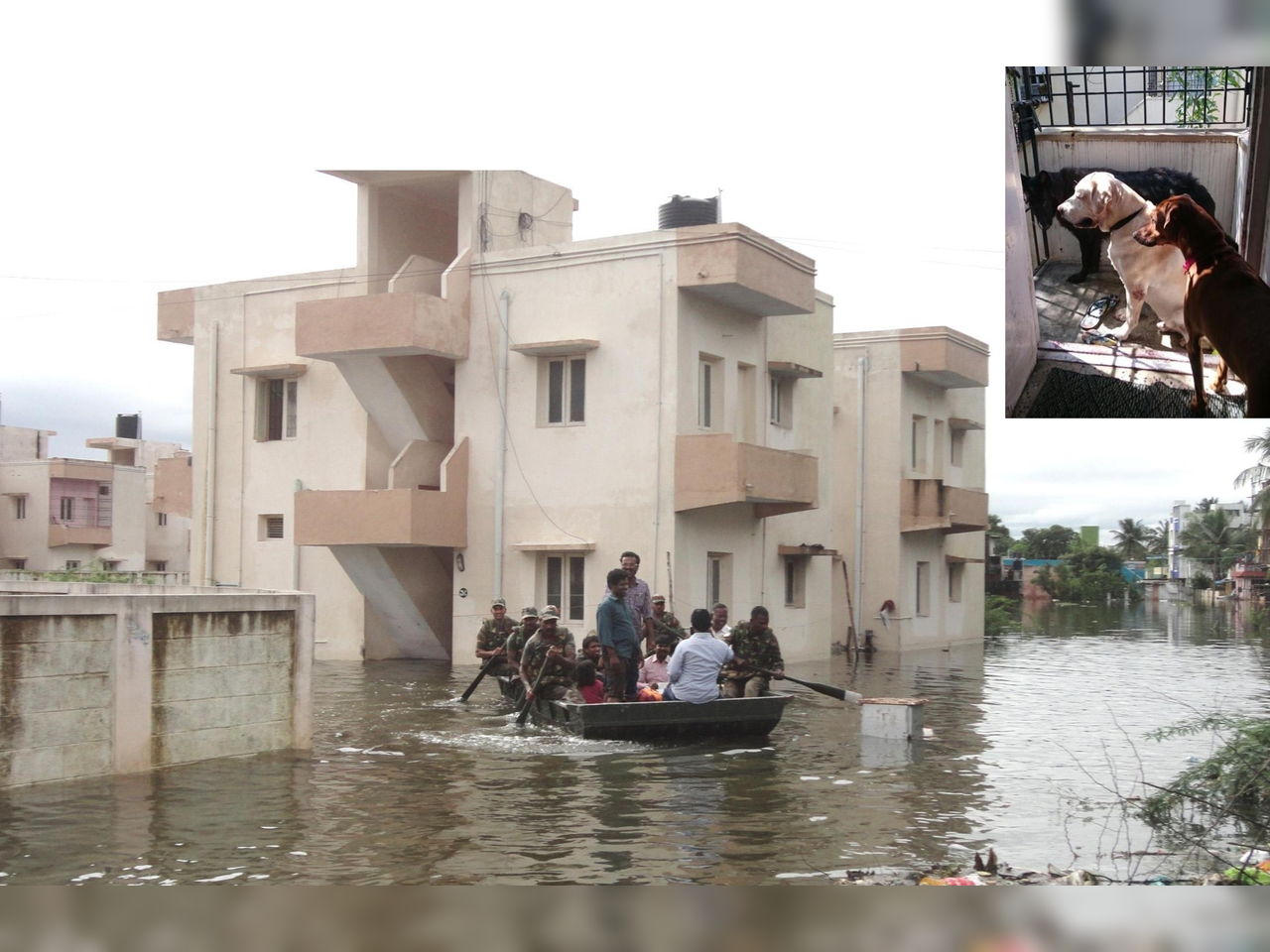
Animals were also left behind. Many rescuers and shelters would not take pets, as happened in case of my friend. Families were forced to choose between abandoning their animals in flooded homes and remaining in danger with them. That was how the German Shepherd and Labrador came to stay with me. Both were old and needed reassurance and familiarity. Leaving them behind was not an option.
Floods exposed development fault lines
The floods also exposed the ecological and social injustices on which Chennai has been built. The disaster was attributed to an extraordinary natural event, but rain alone did not cause the catastrophe.
Chennai was once shaped by lakes, marshes, wetlands, canals and floodplains that absorbed and carried water. Over decades, we encroached on them, filled them, narrowed them, polluted them and built over them. In the name of development; roads, hospitals, apartment buildings, world-class shopping malls and real estate projects occupied land through which water had always moved.
People said water had invaded the city. But in many places, it was simply returning to its old routes, reclaiming what we had taken from it.
The treatment of Chennai’s fisher folk revealed another injustice. Their communities have repeatedly been pushed away from the coast, their settlements threatened and their traditional spaces encroached upon in the name of development. Yet when official rescue systems were missing or overwhelmed, fisher folk brought their boats into submerged streets. Their knowledge, skill and courage saved countless lives. We depended on the very communities we had pushed to the margins.
Lessons learnt? No
For months afterwards, I was afraid of rain. I had always loved it as a child and looked forward to the rainy season; however, after the floods, even a drizzle unsettled me. I would look outside, check the street and listen carefully. The fear was not dramatic. It was quiet, persistent and lodged somewhere in the body. It took me a long time to enjoy the rain again, and even now I do so cautiously.
What troubles me most is the feeling that Chennai has still not learned the lesson of 2015. Wetlands continue to be erased. Coastal ecosystems continue to be damaged. Construction continues over lakes, floodplains and natural drainage systems. We speak about resilience while repeating the choices that made the disaster so devastating.
The floods showed me how brave and generous communities can be. But solidarity cannot excuse government failure. Citizens should not have to invent emergency systems every time it rains. Fisherfolk should not be dispossessed and celebrated only when the city needs rescuing. Vulnerable people and animals must not become afterthoughts.
The water will return. It always does. The question is whether Chennai will keep standing in its way or finally learn to respect where the water belongs.