
The West Asia crisis has prompted countries and companies to rethink their energy investments and consider greater diversity as a response to severe concerns over energy security and trade flows, says a according new report from International Energy Agency (IEA).
The document, the 2026 edition of the IEA’s annual World Energy Investment (WEI) report, stresses that the energy crisis resulting from the effective closure of the Strait of Hormuz is changing risk perceptions and bolstering moves towards greater diversification.
Following in the footsteps of the energy crisis that was generated by Russia’s invasion of Ukraine in 2022, the current crisis is expected to impact future investment priorities in the world, particularly in West Asia and other parts of Asia, which have been affected most by the disruptions to trade flows through the Strait of Hormuz.
‘70s parallel
“We are in the midst of the largest energy security crisis the world has ever faced – and I believe this will reshape investment strategies globally, with parallels to the major changes the energy world witnessed after the oil shocks of the 1970s,” said IEA executive director Fatih Birol. “We are already seeing intensified efforts by both producer and consumer countries to diversify trade routes and energy sources —such as advancing new pipelines and other supply infrastructure, on the one hand, and turning more to domestically available resources, on the other,” added Birol; “ … These range from renewables and nuclear to coal, oil and gas, in some cases — as well as broader measures to strengthen electricity systems, expand electrification and accelerate energy efficiency.”
The report says that global energy investment will reach US dollars 3.4 trillion in 2026, a slight increase from the previous year. Of that, around US dollars 2.2 trillion is expected to be invested in grids, storage, low-emissions fuels, nuclear, renewables, efficiency and electrification in 2026, and around US dollars 1.2 trillion is set to be invested in oil, natural gas and coal.
Investment in oil to drop
Though oil prices are shooting up, globally oil investment is set to decline for a third consecutive year in 2026, going below US dollar 500 billion. Uncertainty over the duration of the higher prices, long project lead times, supply chain constraints and tighter offshore rig markets are limiting near-term spending responses outside West Asia. However, at the same time, investment in natural gas is expected to rise to US dollars 330 billion, the highest in a decade, boosted by a slew of new LNG export projects, many of them in the US and Qatar.
Domestic sources
The WEI report points at the growing interest among countries importing fuels in energy sources available domestically, including renewables, nuclear power and, in some cases, also coal.
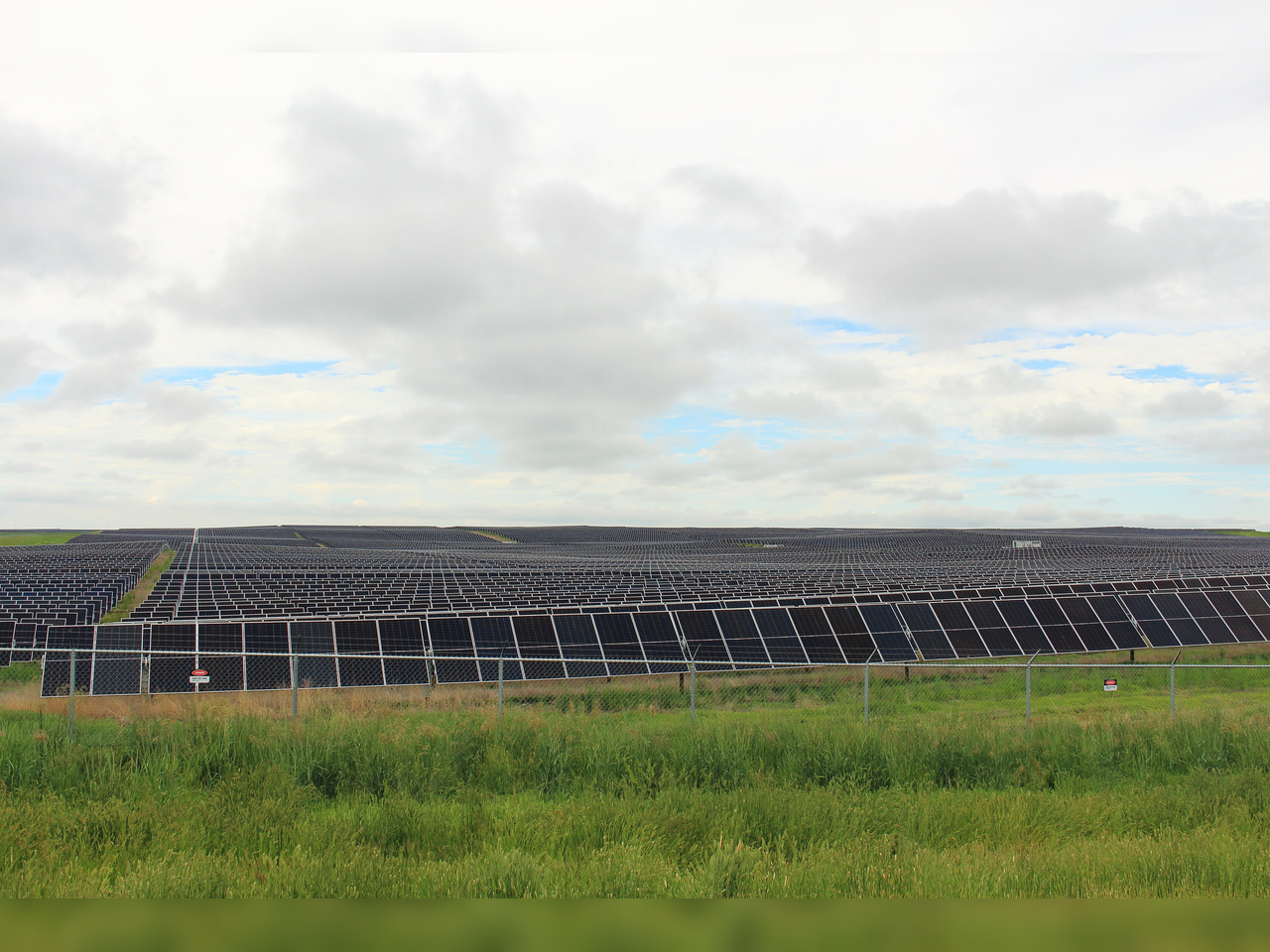
According to the report, about US dollars 665 billion is being invested in renewable power projects worldwide in 2026, with US dollars 365 billion – USD 1 billion every day – going into solar projects. Annual investment growth in renewables has slowed down after several years of rapid expansion, but low-emissions sources make up more than 70% of total power generation investment globally. Nuclear investment is showing robust growth, exceeding US dollars 80 billion annually, with almost 80 gigawatts of new nuclear capacity under construction in 15 countries.
Electricity focus
Investment in electricity supply and infrastructure is set to be about US dollars 1.6 trillion in 2026 and rise to US dollars 2 trillion when end-use electrification is included. Spending on electricity grids is projected to approach US dollar 550 billion, up nearly 20% year-on-year, while battery storage investment is set to exceed US dollar 100 billion.
The rapid expansion of data centres and AI are also becoming major driving factors in energy investment, particularly in the US. Orders for new gas-fired power plants reached a 25-year high in 2025, with data centre needs playing a significant role. The strong demand in the US and West Asia is limiting the availability of turbines for near-term deployment elsewhere in the world.
Coal concerns
Coal investment, however, is set to grow to US dollars 180 billion in 2026, the highest since 2012, with China responsible for almost 70% of global coal supply spending. For energy security, the report says that some Asian countries impacted by the Hormuz crisis may want to keep existing coal-fired power plants operating. Coal remains a major energy source for India, which is also prioritising coal and lignite gasification, responsible for less emissions than coal burning.
Gaps remain
Previous energy crises had led to policy changes. Energy efficiency policies have broadened over the recent years, and around US dollars 350 billion is invested worldwide each year in efficiency improvements, the report says. About 20 countries have already announced new policies to improve efficiency following the Hormuz crisis, IEA thinks.
Gaps remain, though. The West Asia conflict has complicated finance prospects for future energy projects. It has led to volatility in financial markets. This could disproportionately affect capital- intensive energy technologies, the report says, particularly in emerging and developing economies where financing costs are already significantly higher than in the developed world.