
Finally, some hope from US-China dialogue for Asia, including for India.
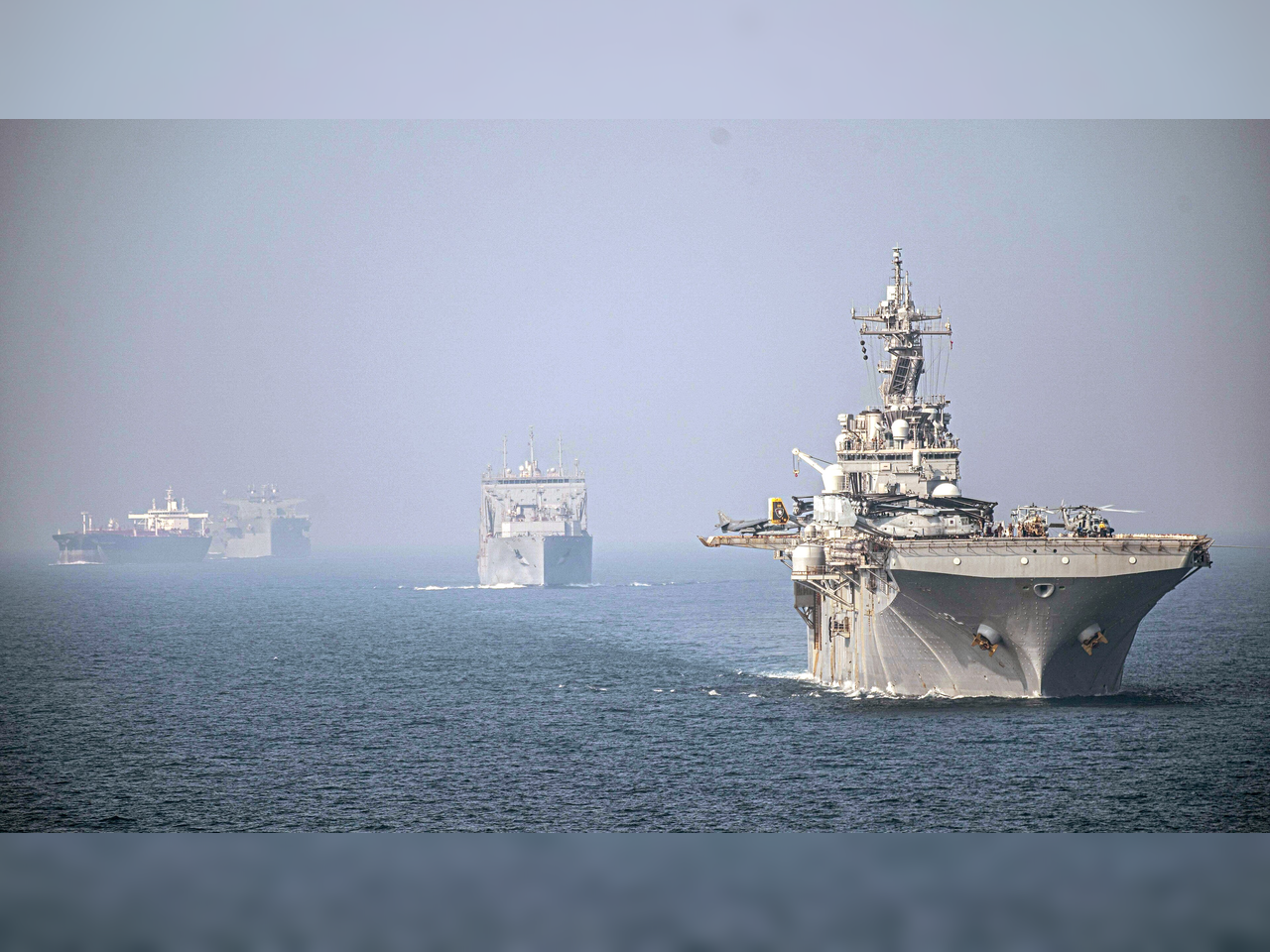
During the recent high-level talks in Beijing, US President Donald Trump and Chinese President Xi Jinping found a rare point of consensus by agreeing that the Strait of Hormuz must remain open.
A recent analysis from the Energy Transitions Commission, a London-based global think tank, has pointed out that around 84% of crude oil and more than 80% of LNG transiting Hormuz head for Asian markets. Asian benchmark oil prices rose from around $70 per barrel to $90–$120 per barrel in March, while LNG prices rose from around $10–$12/MMBtu (million metric British thermal units) before the crisis to above $25/MMBtu, the report finds.
Speeding up the clean energy transition is key to the permanent resolution of the Hormuz crisis, the think tank working on climate change and economics finds, as experts observe that a certain volume of clean energy can displace the equivalent of the fossil fuel flow through Hormuz over the next few years. The transition will also be the most sustainable route to economic resilience and energy security.
Ways to counter the Hormuz crisis
The think tank underlines the major routes to counter the Hormuz challenge with clean energy deployment.
“Fossil systems depend on continuous commodity flows through concentrated chokepoints and transmit disruptions instantly through global prices,” says a release from the Energy Transitions Commission, a copy of which is with The Plurals, which published the report “Lessons on Energy Security after the Hormuz Crisis” on Friday.
In contrast to fossil fuel, “70–90% of clean energy costs are upfront capital,” says the think tank’s statement. “Once built, solar, wind, batteries, and grids deliver energy for years, regardless of market disruption,” it claims.
It further says, “If the current situation prevails, the new, higher fossil fuel prices could add $1-2 trillion in annual gross oil and gas expenditure, which corresponds to the annual clean energy investment gap of $1.5 trillion.”
Secondly, the report says that “new oil and gas fields typically take 5–10 years to reach production. Rooftop solar and heat pumps can scale within months,” adding that electric vehicles are already reducing oil demand.
Scale of disruption
“The Hormuz closure has disrupted 18.4 million barrels per day of oil—the largest supply shock on record, exceeding the 1973 Arab oil embargo—alongside 20% of global LNG trade and one-third of all globally traded fertilizers,” the release says. The effects are felt most severely in emerging and import-dependent economies, particularly the Asian countries, with oil and gas prices shooting up directly affecting transport, food, household energy, and industrial costs and hitting lower-income households and small businesses most.
The Homuz crisis is costing Europe almost €500 million per day. Damage to Qatar’s Ras Laffan LNG facility, with its capacity down by 17% and repairs estimated to take about 3–5 years, indicates that the Hormuz crisis may structurally reshape global LNG markets.
Fossil fuel dependence is also an economic risk
“The current crisis shows that fossil fuel dependence is not only a climate risk but also an economic and strategic vulnerability. Clean energy systems are more distributed, more efficient, and less exposed to the price shocks created by continuous dependence on traded fuels,” said Adair Turner, co-chair, Energy Transitions Commission.
“For decades we have built an energy system that is wasteful, insecure, and volatile. Three quarters of the world’s population depend on fuels they do not control, priced in markets they do not influence, and vulnerable to shocks they cannot prevent,” said Jules Kortenhorst, co-chair, Energy Transitions Commission. “The defining question now is whether governments act to build a more resilient system or to sustain one that is already vulnerable to disruption,” added Kortenhorst.