
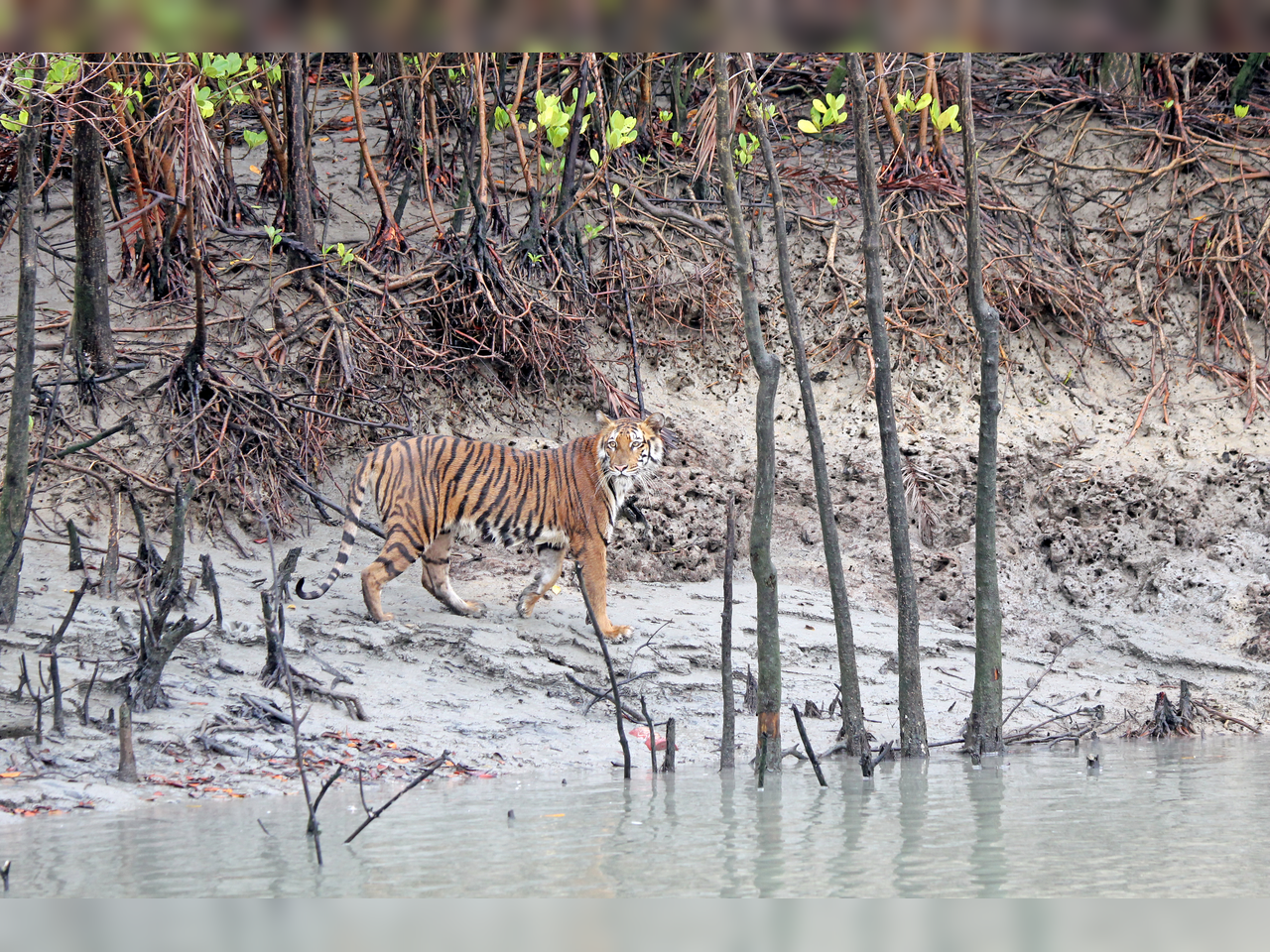
Union environment forest and climate change minister Bhupendra Yadav has appealed to the business fraternity to play an active role through corporate funding and partnerships to protect the world’s seven big cat species—tiger, lion, cheetah, leopard, snow leopard, jaguar, and puma—at the wake of the first International Big Cat Summit (IBCA), on June 1 and 2, to be held in New Delhi.
“Corporate funding is essential to support critical areas of big cat conservation such as habitat restoration, technology driven monitoring and surveillance, community based conservation, capacity building, and conservation awareness,” observed the minister while speaking at the Confederation of Indian Industry (CII) conference on ‘Future of Global Economy, Industry and Society and Vision of India@100′ on Monday at New Delhi.
“In saving their future …we are also saving our own because as apex predators and ‘umbrella species’, the big cats maintain ecological balance, protecting vast landscapes, biodiversity, and water resources”, he further said reminding that CII already has an MoU with IBCA. In this context, the minister further claimed that India has emerged as the world’s fastest-growing major economy and is helping drive global change through the expansion of renewable energy, digital mass infrastructure, growth of start-ups, and manufacturing.
“We welcome the suggestion; it is not possible for only the government to protect the wildlife; the industries definitely need to support the effort, as unless the wildlife survives, the forests, so key to our sustenance, will not survive. We are already supporting the wildlife conservation and will continue to do our bit,” said Sanjay Jain, managing director of Siddha Group, a major real estate company of India, based in Kolkata.
Delhi declaration on big cats in pipeline
According to union government sources, the IBCA summit will bring together 95 range countries spanning Asia, Africa, and the Americas, where these animals are naturally found, to foster global cooperation, share expertise, and adopt a “Delhi Declaration” for habitat conservation with the broad objective of “Save Big Cats, Save Humanity, Save Ecosystem.”
The IBCA is a treaty-based intergovernmental organization launched by India in 2023. India is home to five of the seven species, including 3,682 tigers, the world’s largest wild tiger population. The union government is investing Rs 150 crore over five years (2023–2028) in IBCA’s initiatives.
“The summit represents a historic and first-of-its-kind global gathering dedicated exclusively to addressing the conservation challenges being faced by the big cats across the continents,” claims the IBCA website, adding that the meeting places all major big cats at the center of global sustainability discourse by recognising their conservation as integral to biodiversity security, water security, climate mitigation, and community livelihoods.
The major targets of the summit include:
§ Strengthen global cooperation on big cat conservation
§ Showcase best practices and innovations in the management of big cats
§ Promote policy and institutional synergy in habitat conservation
§ Catalyse community engagement in Big Cat conservation
§ Mobilize resources and partnerships in wildlife conservation
§ Evolve strategies to promote human–wildlife co-existence
§ Biodiversity conservation and protection through big cat conservation.
Challenges remain in big cat conservation
Despite welcoming the initiative, wildlife experts—The Plurals has spoken to a range of specialists—have pointed out several challenges to big cat conservation in the country.
“Big cat conservation in India faces significant challenges, primarily through rapid loss of habitat and its fragmentation and increasing human-wildlife conflict due to expanding human footprint within or adjoining wildlife habitats and corridors,” said one.
“While tigers and leopards have increased in number, which is showcased by government as a conservational success, this growth also brings challenges regarding habitat capacity, poaching threats, and the need for connectivity between fragmented landscapes,” added another. “Nearly half of tigers in India now remain outside the tiger reserves and stand acutely vulnerable to poaching and others,” said an expert.
Urbanization, agriculture, and physical infrastructures like roads, railways, and power lines are threats as they encroach upon and break up vital habitats, creating isolated populations and reducing genetic diversity, pointed out experts.
As habitats shrink, big cats frequently venture into human landscapes, leading to livestock predation, human casualties, and retaliatory killings.