
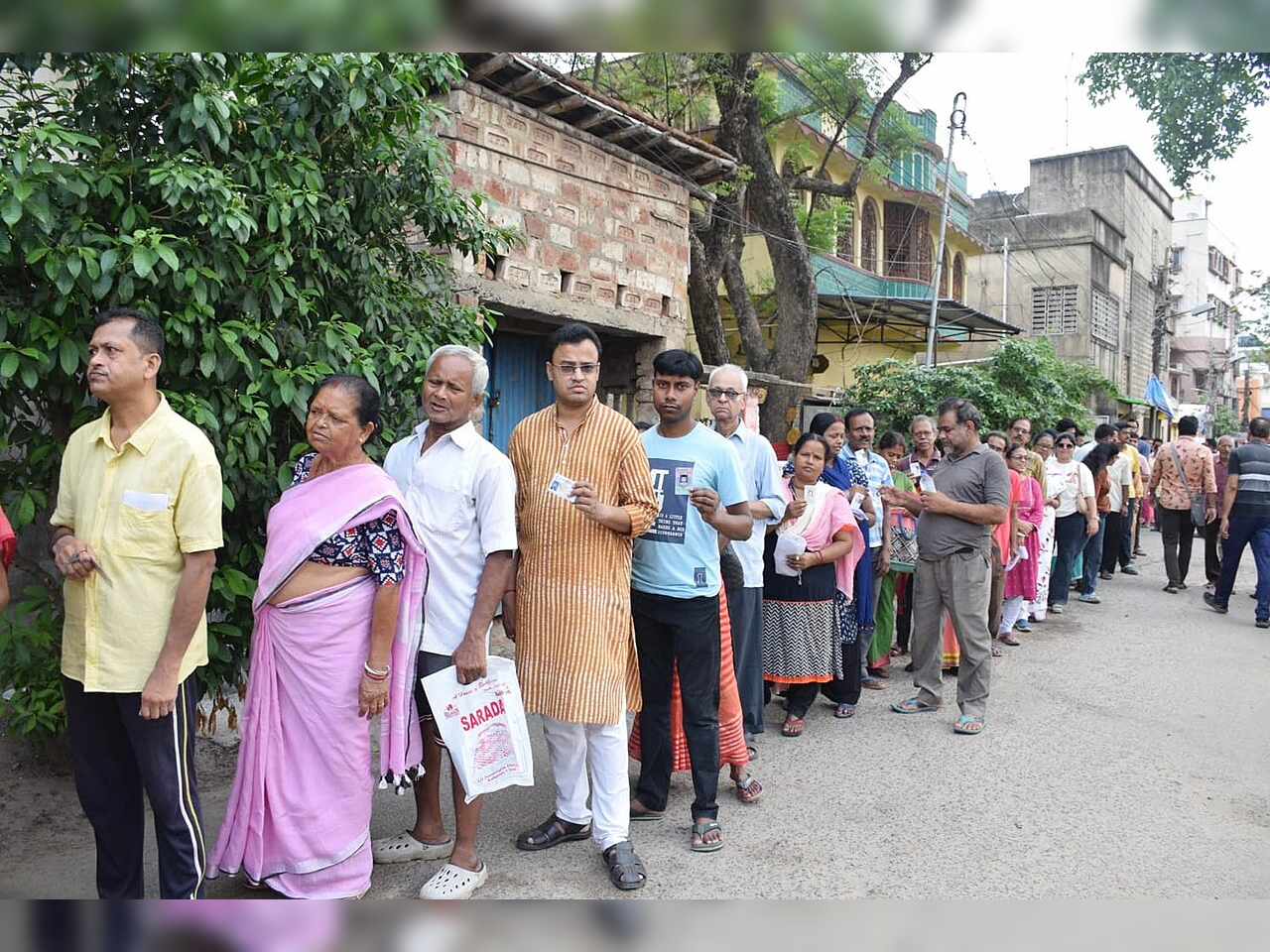
In the recently-held Bengal Assembly elections, in which the Bhartiya Janata Party (BJP) routed the ruling Trinamul Congress (TMC) to wrest West Bengal, deletion of voters that resulted from the Special Intensive Revision (SIR) played a crucial role in the final outcome, shows an analysis carried out by The Plurals based on the Election Commission of India (ECI) data.
According to the analysis carried out for 293 seats in which the elections were held, it was found that in 108 seats the percentage of deletions from SIR (excluding deaths) was more than or the same as the percentage of winning margins, a trend election observers feel is a proof of SIR’s impact on election results.
Alt News has recently reported that in 49 seats in Bengal, the number of under-adjudication voters — around 27 lakhs in total in West Bengal — exceeded victory margins.
Experts claim that the mass deletions of voters have played their part in the results of the elections, which the BJP won by securing 207 of the 293 seats, with re-election due in one. The TMC, which ran the outgoing government, won 80 seats. The highest deletions were observed from Muslim communities, which traditionally had been the TMC’s vote base. Women are also reported to be more affected due to the deletions.
Supreme Court scanner on deletion vs. margin
Justice Joymalya Bagchi on April 13 observed during a SIR hearing in the Supreme Court, obseved that “we would definitely have to apply our minds” if the winning margin in the West Bengal Assembly elections ends up being equal to or less than the number of voters excluded from the voter list due to SIR.
“If 10% of the electorate does not vote and the winning margin is more than 10%…what will happen? …we are not expressing any opinion, but we would definitely have to apply our minds. Please keep this in mind that the concern of a vigilant voter whose name correctly or incorrectly is not in the list is not in our minds,” Justice Bagchi told the ECI, as reported by LiveLaw.
“While the Supreme Court only made an observation in the matter, it can be considered as a guideline; it will be interesting to see how the apex court follows up the issue legally if any losing candidate, where the deleted number of electorates overshoots the winner’s margin, seeks the Supreme Court’s intervention,” said Biswajit Mukherjee, a retired chief law officer in a state government department.
Before the Assembly elections were conducted in the state in April, SIR was undertaken in West Bengal, due to which 90.82 lakh voters were deleted in several stages, out of which 24.2 lakhs were reportedly dead. Though there have been complaints that many living persons were counted as “dead” in SIR documentation, in the present analysis we have only considered voters counted as living in SIR. The total number of deleted voters thus arrived at, considering the first list on December 16 and the subsequent lists on February 28, is 66.62 lakhs, including the 27.13 lakh voters who were initially mapped — that is, their linkage to the 2002 benchmark voter rolls could be established either directly or through families — but later got deleted after being placed under the “logical discrepancy” category.
BJP gains 63 /108 seats under scanner
The Plurals analysed data from the ECI website to look at the percentage of deleted voters from each seat and found that the TMC has won in only 36 seats in 2026 out of 108 where the statistic, excluding deaths, is more than or the same as the winning percentage. In the previous 2021 Assembly elections, the TMC had won 102 of these 108 seats.
In 2026, the BJP won 70 of these 102 seats. In 2021, it had won seven of these. The BJP won 63 of the seats previously held by the TMC; the TMC could gain none from the BJP.
Tell-tale trend
In some seats the deletions are much higher than the winning margin. In Jorasanko in Kolkata, for example, the deletions, excluding the dead, amounted to 34.29% of the pre-SIR electorate, but the winning margin was 5.43%. The BJP, which won the seat, secured 49.48% of votes; the TMC, coming in second, secured 44.05%. In 2021, the winning margin for the TMC against the BJP had been 13%; hence, an 18.43% swing in favour of the BJP candidate occurred, nearly half of the percentage of deleted voters.
Samserganj in Murshidabad, where a large number of Muslim voters were deleted by SIR, shows a similar trend. Here, deletions excluding death amounted to 34.17% of the pre-SIR electorate, yet the TMC, the previous winner, won with 39.84% of the votes, and the BJP, coming in second, got 34.96% of the votes. The TMC only won by a margin of 4.88%, a far cry from the 14.2% with which they had won in 2021.
Bhavanipur in Calcutta, where outgoing chief minister from the TMC faced the present chief minister from the BJP Suvendu Adhikary, the extent of voters deleted due to SIR (excluding death) was 20.55%, while the winning margin in favour of the winning candidate was 10.83%. The vote share for the BJP was 53.02%, while TMC got 42.19% of the votes being cast; a U-turn from 2021 when TMC won by 22.8%.