
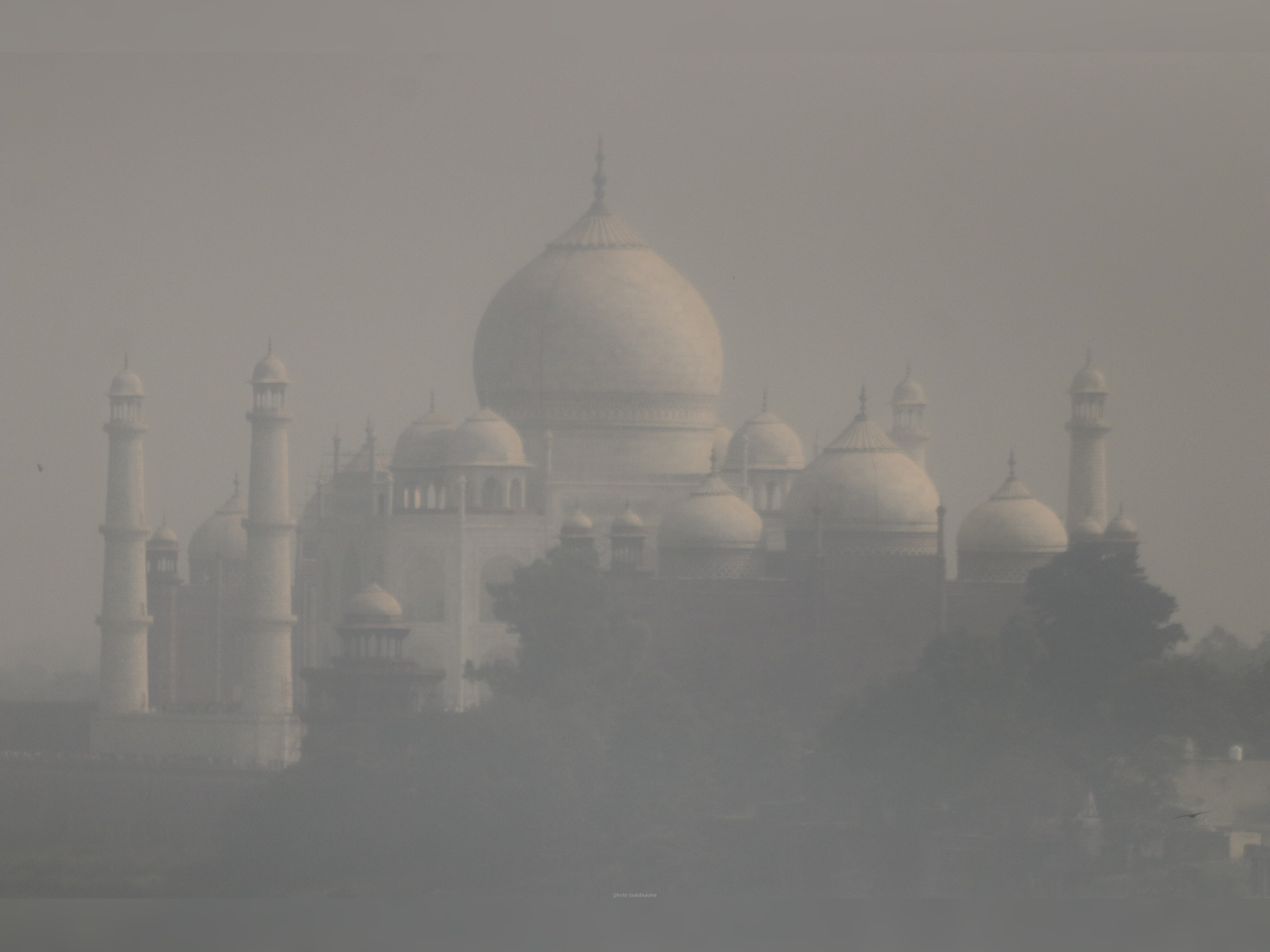
Prevailing meteorological conditions are capable of raising pollution levels by up to 40 per cent without emission levels changing, finds a new analysis by Climate Trends based on air quality data from Central Pollution Control Board (CPCB) during 2024–2025. The result means that the major onus of creating pollution still lies with government and people at large.
The findings highlight the need, the Delhi-based environment research organisation Climate Trends feels, for the next phase of the National Clean Air Programme (NCAP) to adopt season-specific and weather-adjusted action frameworks. The NCAP is India’s flagship, city-focused initiative launched in 2019 to reduce particulate matter (PM10 and PM2.5) concentrations by up to 40 per cent by 2026 in Indian cities having history of pollution over long time.
The analysis, conducted across the cities Delhi, Patna, Mumbai, Chennai, Bengaluru and Kolkata, claims that pollution is not merely an “emissions-only” problem. Rather, “the interaction between emissions and weather is the true governor of air quality, with atmospheric stagnation — characterised by low wind and high humidity — acting as the dominant amplifier of pollution severity”, says the analysis.
“This study shows that a 20–30 per cent reduction in annual PM2.5 does not translate into winter air-quality compliance in stagnation-prone cities like Delhi and Patna, where over 70 per cent of days fall under low-wind, high-humidity meteorological regimes,” says Aarti Khosla, founder and director, Climate Trends.
Kolkata is no better. The report says, “Kolkata’s pollution level becomes severe, peaking in winter, as a high concentration of secondary pollutants is impacted by stagnant air due to geographical and meteorological factors in the city by the Ganga”.
Wind conditions and humidity matter
Experts name the weather factors, such as low wind conditions and humidity, working alongside emissions to lead to pollution.
“The persistence of PM2.5 exceedances is strongly associated with sub-1 m/s (less than 1 meter per second) wind regimes and elevated relative humidity across northern cities, where stagnation episodes sustain disproportionately high exposure levels. Ventilation efficiency emerges as the dominant determinant of inter-city variability,” says Sagnik Dey, head, Centre for Atmospheric Sciences, IIT Delhi.
PM2.5 & air stagnation
Delhi experiences the severest pollution in the country, with both the highest annual average of PM2.5 levels and the longest stretches of “severe” or “emergency” category air days. These are the outcome of both local emissions and regional factors.
Patna is the second-most polluted city after Delhi, says the analysis, with a steadily high PM2.5 level impacted by strong atmospheric stagnation, which underlines a growing crisis in the eastern Indo-Gangetic plain, says Climate Trends.
An expert identified the anthropogenic sources of pollution in Kolkata. “Amongst several sources, at the current scenario, biomass and waste burning are the major concern in Kolkata especially in winter. The high load of PM2.5 exceeding national standards in winter is primarily due to these two sources which accumulate near the surface because of low dispersion and ventilation coefficients,” says Abhijit Chatterjee of the Bose Institute. “
South turning polluted
Historically less polluted than other cities, Bengaluru and Chennai are showing deteriorating air quality deterioration during winter, a recent trend.
But Bengaluru maintains the lowest and most stable air quality, says the analysis, showing a degree of “structural air-quality resilience” compared to other major cities. But coastal cities Mumbai and Chennai recorded an increase in their annual average pollution levels in 2025. This signals an increasing year-round phenomenon, “beyond just seasonal spikes”.
Policy needs to embrace meteorology
The report proposes changes in NCAP Phase-III, which include “separate winter targets, meteorology-adjusted metrics and dynamic weather-triggered action plans, alongside integrated airshed-based planning”. Shifting to well-ventilated atmospheric conditions alone could reduce PM 2.5 levels by 35–40 per cent, the report finds.
Dey points out that current pollution measurement frameworks do not significantly count the meteorological factors. “Current NCAP evaluation frameworks primarily assess observed concentration changes without explicitly accounting for meteorological modulation, potentially leading to distorted interpretations …,” Dey adds.
“Furthermore, identification of small pockets in the urban core area should be one of the main mitigation measures. Mitigation strategies and policies need to be framed based on prior knowledge of the local meteorology,” says Chatterjee.