
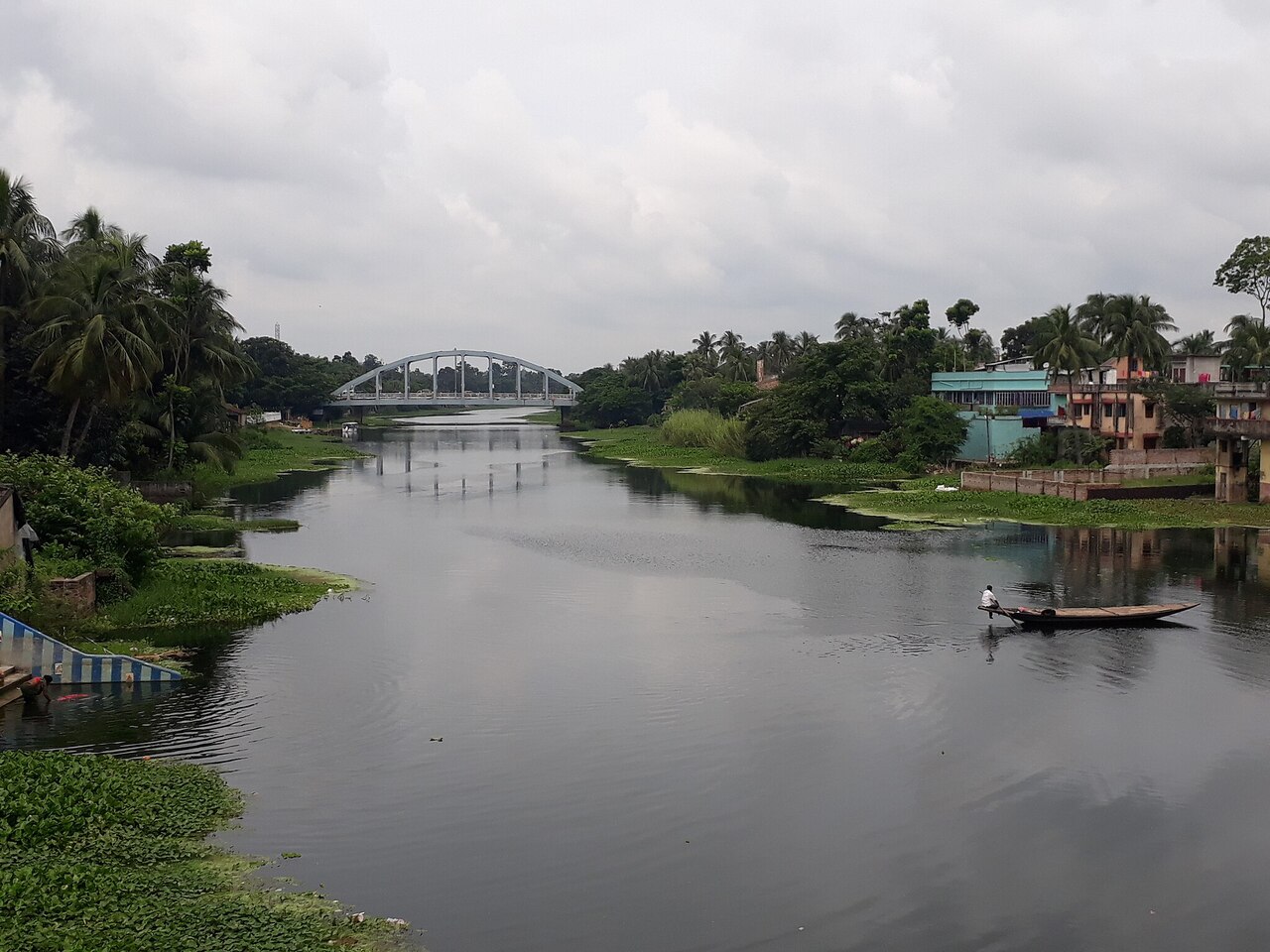

The Bengal government is all set to sign a memorandum of understanding (MoU) with GIZ, a German federal enterprise, and the State Mission for Clean Ganga (SMCG), to undertake the development of the Ichhamati and Jalangi river basins, two major rivers in the upper Ganga delta that are currently threatened due to several reasons.
While the German agency supports sustainable development worldwide with a focus on energy, environment, and economic development, SMCG, under the West Bengal urban development department, acts as the state-level implementing agency for the National Mission for Clean Ganga (NMCG), focusing on pollution control and river conservation.
Minister confirms masterplan decision
“In 2025-26 state budget, the government announced a project called ‘nodi bandhan’ with a budgetary provision of Rs 200 crore, which was mandated to develop the masterplan for the river basins in the state with an appropriate international expert agency. We have decided to start the work in Ichamati and Jalangi basins and will sign a memorandum of understanding (MoU) with GIZ soon,” said state irrigation and waterways department minister Manas Bhuniya recently to The Plurals.
Krishna Gupta, the secretary, pointed out that all necessary clearances have been obtained to sign the agreement for developing the masterplan. The agreement will be a tripartite one, involving state irrigation department, GIZ and SMCG, and is expected to be formalised in the last week of February as hurdles may crop up once the state election dates are announced and model code of conduct sets in.
The major scope of the master plan in Ichhamati and Jalangi will include ensuring more water flow in the rivers, with dredging, bringing surplus water from other basins, removing pollution and other environmental hazards, minimising erosion, ensuing ground water recharge, flood mitigation and supplying more irrigation water; said a senior official. “We will start the implementation work once the masterplan is prepared and gets cleared by relevant authorities,” added the official. The work is expected to be completed within a year after the initiation.
Out of the 39 river sub-basins in the state has, these two basins have been selected for work related to the masterplan.
Transboundary rivers at risk
The Ichhamati River is a 200km long, trans-boundary river flowing between West Bengal in India, and Bangladesh, and also serves as an international border. The river, a major source of silt flow to Sundarban delta, has got narrowed down, and also stagnated, over the years as it faces severe ecological decline due to intense siltation, rampant pollution, water hyacinth infestation, and bank erosion, threatening local livelihoods like fishery.
Nearby urban centres — Basirhat, Hasnabad, Taki — discharge untreated industrial, domestic and agricultural waste into the river. This includes high plastic waste and excessive nutrients causing eutrophication, which makes water, once suitable for drinking, unsafe even for bathing.
The Jalangi River, a major distributary in Bengal of the Padma, Jalangi flows through Murshidabad and Nadia districts to merge with the Bhagirathi-Hooghly and is also facing decline.
Severe pollution from municipal sewage and industrial effluents in Krishnanagar, heavy siltation causing reduced water flow, riverbank erosion, and the presence of toxic heavy metals such as nickel and iron; are considered to be severe concerns.
Experts pointed out that the river’s flow is decreasing due to the shifting of the Ganges-Padma channel, leading to rapid siltation, particularly at the point of offtake. The phenomenon has turned parts of the river into a shallow, slow-moving stream, making it almost non-functional except during the monsoon. Despite being a small river, it suffers from severe bank erosion, causing land loss in the neighbourhoods.
Some have also raised concerns about polluted water entering from Bangladesh, further deteriorating the already poor-quality water. “If the current degradation continues, the river risks becoming an abandoned, dead channel soon, disrupting the local ecosystem, agricultural irrigation and the livelihoods of fishermen,” said an expert.
Implementation is the challenge
“It’s an important but difficult work as the Ganga water is gradually receding in these two river systems. Under the Ganga upper delta project that the state government has undertaken, efforts are on to increase the flow in these rivers,” pointed out Kalyan Rudra, chairman of state pollution control board and a frontline river expert.
River activists, while welcoming the initiative, are sceptical about its implementation. “We are used to hearing about several projects but hardly the on-ground situation changes. The Jalangi river is severely affected for a range of reasons: most importantly the gradual receding of river water coupled with several encroachments, pollution and likewise. Many have turned parts of the river into private properties by fencing part them, ” said Debanjan Bagchi from Jalangi Nodi Samaj, a platform working towards the rejuvenation of the river.
“It’s a welcome decision if it gets implemented on ground,” said Bibartan Bhattacharya, who has been battling long for the revival of the Ichhamati river. “Ichhamati has been discontinued, almost dead, for about 2km near the Majdia bridge point in Nadia. Moreover, there are issues of encroachment, excessive hyacinth generation, pollution, dumping of waste and likewise,” pointed out the activist.
The activists demand that the state government should consult independent experts and local people before finalising the masterplan.