
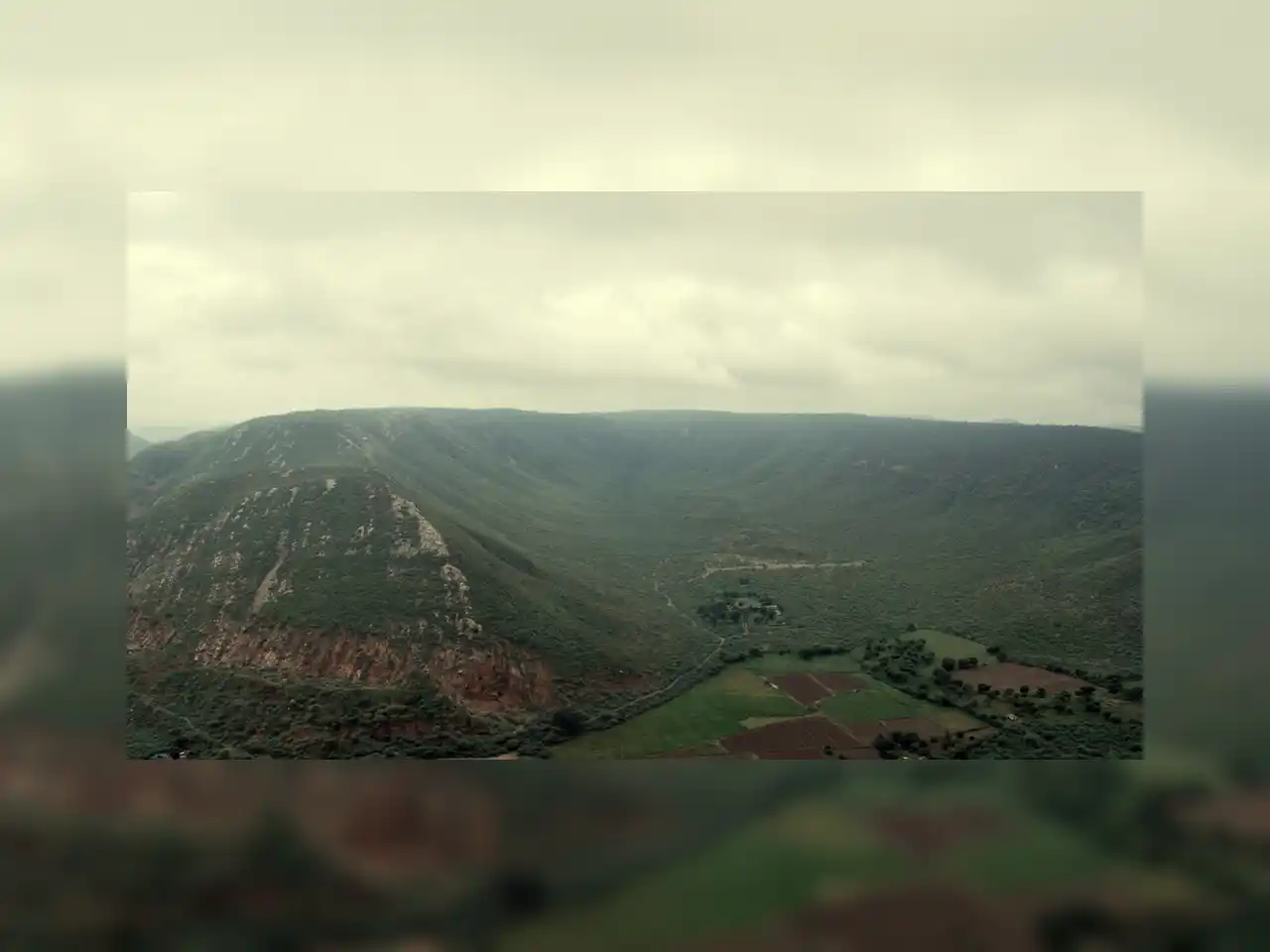

Facing nationwide protests against its November 20 order that would open up a major part of the Aravalli hills for mining across four north Indian states, the Supreme Court on Monday took up the case suo motu and directed that it is to keep its own earlier order in abeyance concerning the change in the definition of the hills.
The dispute over the Aravallis, a 670 km-long range and one of the oldest fold mountains of the world, which starts near Delhi and passes through Haryana, Rajasthan and Gujarat, took another turn and quickly turned into huge protests once the Centre recommended a new definition of the Aravalli hills as starting from 100m. This, activists and scientists felt, could open vast areas of the Aravallis below 100m critical ecosystem to illegal and unregulated mining and would prove devatsating for the ecosystem.
A bench consisting of Chief Justice of India Surya Kant, Justice JK Maheshwari and Justice AG Masih saidon Monday that further clarifications were required before the report or the apex court’s November 20 directions could be implemented, and mentioned January 21, 2026, as the next day of hearing. The bench also expressed concern that the expert committee report and the Court’s observations were being misconstrued.
Congress leader Jairam Ramesh welcomed the Supreme Court’s Monday decision to keep its earlier order on the Aravalli Hills in abeyance until January 21, terming it a setback for the Centre’s attempt to redefine the ecologically sensitive region.
Union environment minister Bhupender Singh has assured all help to the new committee proposed by the apex court on Monday.
Nov 20 court order
In the November 20 judgment, a Supreme Court bench led by the then Chief Justice of India BR Gavai accepted the operational definition recommended by a committee led by the ministry of environment, forest and climate change.
According to the recommendation accepted by apex court, “Aravalli Hills” refers to any landform in designated districts with a minimum elevation of 100m from the local relief, including supporting slopes and connected landforms. An “Aravalli Range” is formed when two or more such hills are located within 500 metres of each other.
While accepting the definition, the Court had also directed the Union government to prepare a comprehensive management plan for sustainable mining before permitting any new mining activity in the ecologically sensitive Aravalli region.
Fair, independent opinion required
“We deem it necessary to direct that the recommendations submitted by the committee, together with the findings and directions stipulated by this court in the judgment of November 20, 2025, be kept in abeyance … ,” the apex court bench on Monday stated.
The suo motu case was initiated following concerns that the change in the definition ofthe Aravalli Hills could result in severely negative impact on the Aravallis.
The Court said that prior to implementation, a fair, impartial and independent expert opinion must be considered to provide definitive guidance.
Supreme Court flagged concerns
The bench also flagged specific concerns, including whether regulated mining would be permitted in the 500-metre gaps between hills, and if so, what precise structural parameters would be used to ensure that ecological continuity of the region was not compromised. The court also addressed the core question of whether the claim that only 1,048 hills out of 12,081 meet the 100m elevation threshold was factually, and whether a geological enquiry was necessary.
The Chief Justice said the court proposed to constitute a high-powered expert committee to holistically assess the earlier report and examine these questions. The proposed exercise would also include a detailed identification of territories that would be excluded from the Aravalli area, and an assessment of whether such exclusion could risk degradation and compromise the ecological integrity of the Aravalli range.
The court issued a notice in the matter and requested the attorney general of India R Venkataramani and senior advocate PS Parmeswar to assist the court, including on the composition of the proposed committee.
During the hearing, the solicitor general also informed the court that notices had been issued to the concerned states directing that no further mining activity in the Aravallis be carried out.
“We feel that a fair, impartial and independent opinion of the issues involved is required… some clarifications have to come,” Kant observed during the hearing, which arose from proceedings initiated by the court on its own motion on December 27.