
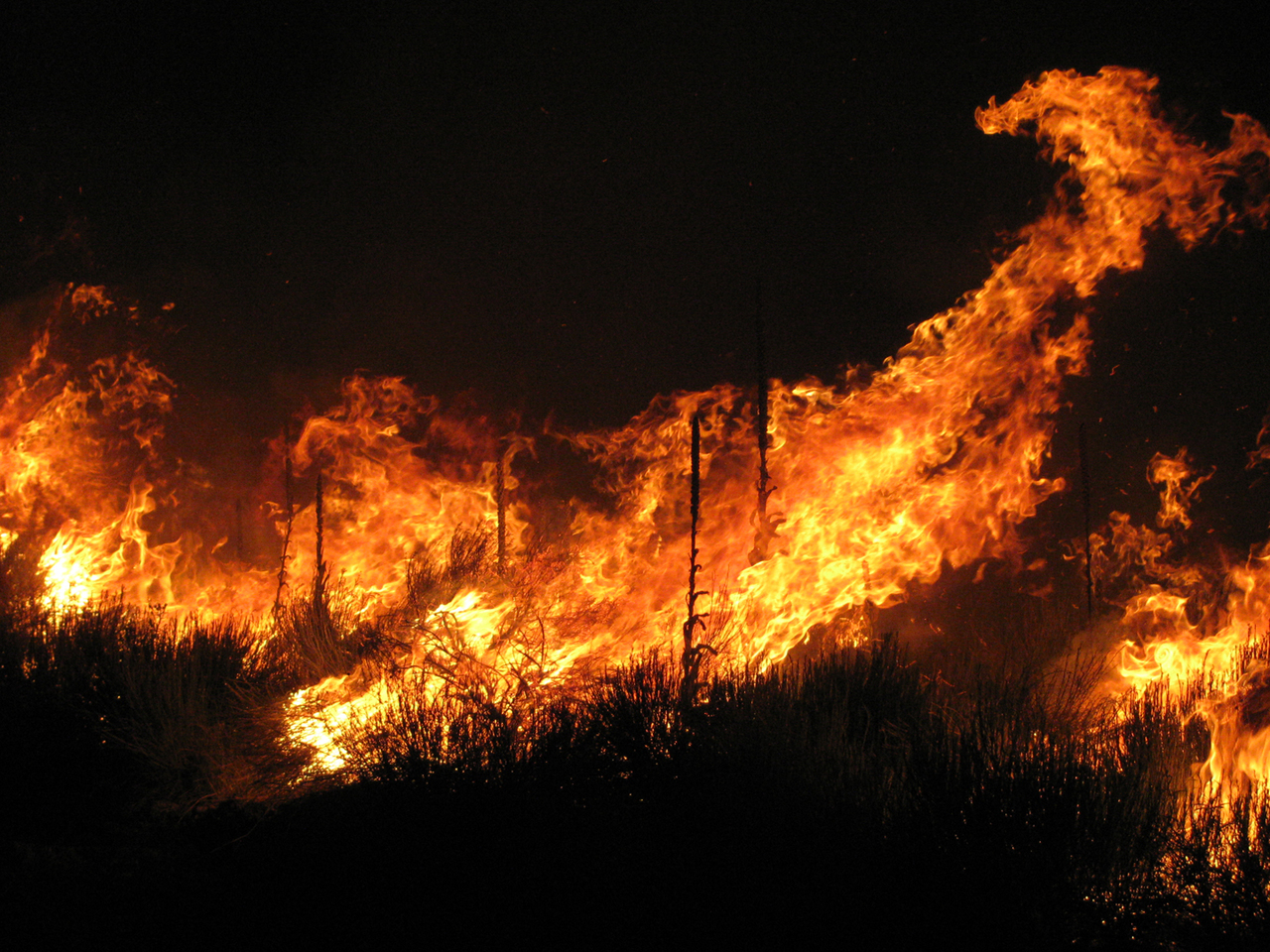
India, where incidents of wildfire are rising, has moved a resolution in a recent United Nations (UN) meeting suggesting ways to curb wildfire globally.
One-third of India’s forest area vulnerable to catching wildfire and the country experienced the highest number of wildfires in 2025 since 2021.
India successfully moved the resolution, ‘Strengthening the Global Management of Wildfires’, at the seventh session of the United Nations Environment Assembly (UNEA-7) in Nairobi, Kenya, to address the increasing global threat of wildfires. The resolution has received strong support from member nations, claimed the Union environment, forest and climate change ministry in a statement.
The resolution proposes to strengthen global cooperation and action in wildfire management, India claimed, in the face of the rising “number, scale and intensity of wildfires”. India’s statement further said that while the wildfires were seasonal occurrences earlier, they, like many other environmental disasters, “have now become frequent and prolonged, driven largely by climate change, rising temperatures, extended droughts, and human activities”.
Data accessed by The Plurals shows that the intensity of wildfires spiked in India during 2025 after a lull during 2023-24. Close to 95 % of the fires in the country are human-induced, either due to slash-and-burn agriculture or sheer negligence.
Multiple menaces
“Wildfires affect millions of hectares of land each year, damage forests, biodiversity, water resources, soil, air quality and lives and livelihoods and cause displacement. They (also) release a significant amount of greenhouse gases (GHG), affect carbon sinks…(and) negatively impact the lives of forest-dependent communities and the economy,” reads the statement issued by Union environment, forest and climate change ministry.
India’s resolution has further warned that “wildfires may rise by 14% by 2030, 30% by 2050 and 50% by 2100, if the current trends continue”. India said that these projections imply that “wildfires represent a long-term, climate-driven global risk requiring urgent coordinated international action”. India stressed on the need to have a shift from “a reactive response to proactive prevention, through better planning, early-warning and timely risk reduction measures”.
Pointing out that the world is now moving towards an Integrated Fire Management approach, “anchored in early warning systems, risk mapping, satellite-based monitoring through collective efforts of local communities and frontline personnel”, India underlined the critical role of United Nations Environment Programme (UNEP) in helping countries meet wildfire challenges, the statement said.
Resolution riders
The resolution, aiming to strengthen on-going global activities under the Global Fire Management Hub, asks for:
· Strengthening global cooperation through development of early warning systems, particularly promotion of community-based alert mechanisms, risk assessment tools, satellite- and ground-based ecosystem monitoring as well as restoration.
· Knowledge sharing, capacity building within the stakeholders, particularly community, for a more robust response.
· Seeking support for national and regional action plans through assistance to member nations in developing and implementing the Integrated Fire Management and wildfire resilience strategies.
· Facilitating access to global funds and support to member nations to prepare project proposals for accessing funding.
· Actions to address the fact that the surging fires led to tenfold losses over two decades, with the annual economic losses estimated at ₹1.74 lakh crore.
Human and climate responsible
Satellite data from the Forest Survey of India (FSI) shows that while there was a slight reduction in fire alerts between 2021 to 2024, the number has reached record proportions in 2025.
“India experienced a significant surge in wildfires during the 2024-2025 season (November-June), with over 2.38 lakhs reported incidents, a rise from the prior years, impacting millions, being mainly driven by heat waves, crop burning and dry conditions,” a senior Union government officer had recently admitted.
In 2021-22, about 2.23 wildfire hotspots were identified in the country. The figure was slightly reduced to 2.12 lakh next year; and further to 2 lakh in 2023-24, but jumped to 2.38 lakh this year.
While the government attributes the marginal decline to “improved management”, data showing close to 95 per cent of the fires were human-induced counters the claim.
“India faces recurring wildfires or forest fires, primarily human-induced (90–95%) and exacerbated by climate change, dry conditions, and flammable vegetation like chir pine,” says the official, also shifting the onus. “The management falls under state governments, supported by central initiatives like the National Action Plan on Forest Fires (NAPFF, 2018) and the Forest Fire Prevention and Management Scheme (FPM),” he added.