
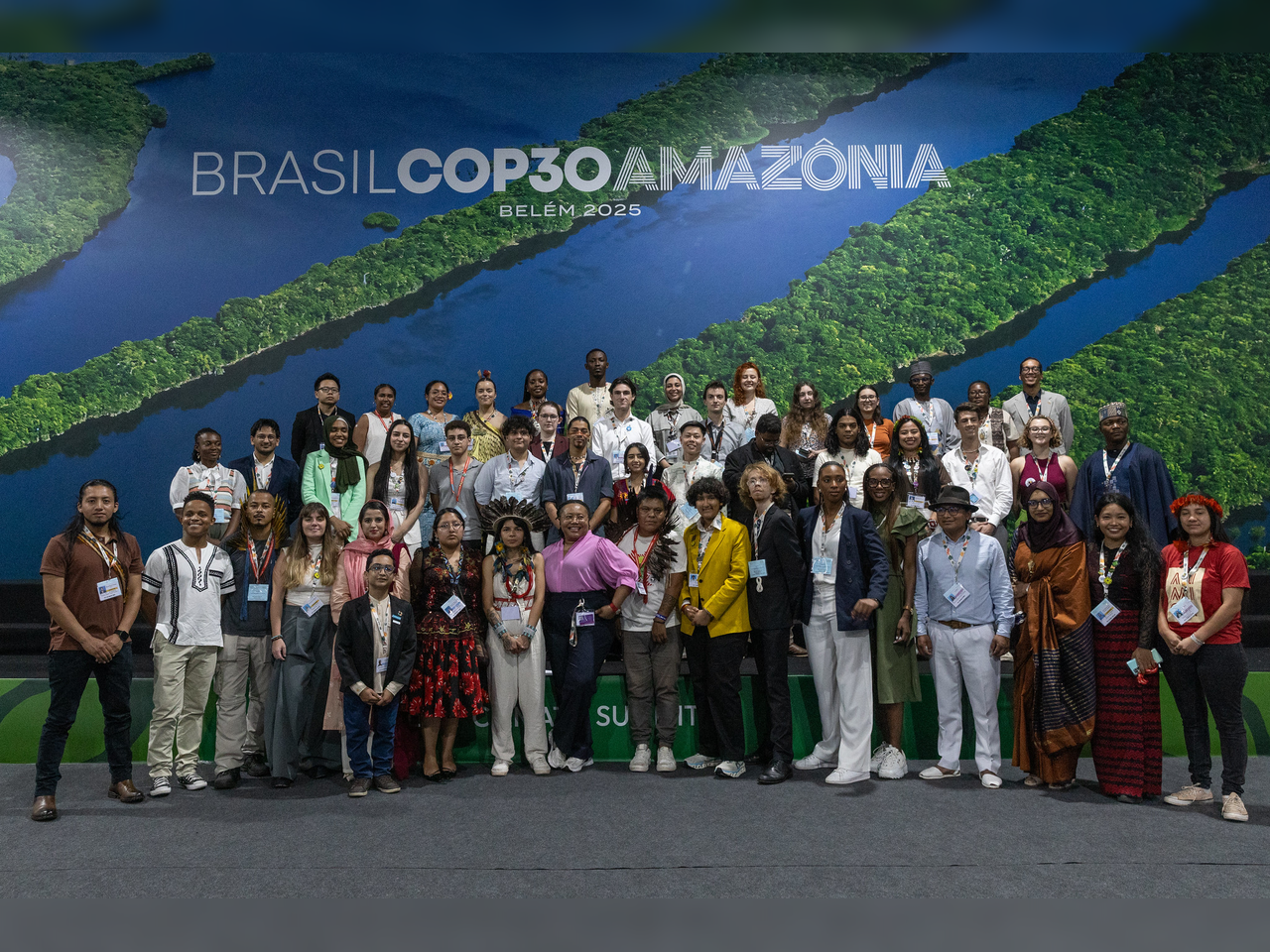

Global climate negotiations have entered the home stretch with several drafts starting to roll out on Friday morning, despite the sudden fire at the COP30 venue holding back the deliberation process for over 6 hours on Thursday.
While the drafts on COP30 outcome are in the deliberation stage and the final plenary session is yet to begin, discussions that The Plurals had with several negotiators, including representatives from India and observers, suggest that the agenda of accepting the global goal of adaptation (GGA) here at Belém as well as the linked adaptation finance promise to remain thorny issues. This, in spite of the COP presidency wanting Brazil to be remembered as the ‘Adaptation COP’.
On the other hand, a broad unity on just transition seems to be on the cards with most countries agreeing on a pathway to be set up here at Brazil. Setting up the roadmap for fossil fuel emissions cut, a major demand during the COP process both inside the venue and outside, is being considered a ‘dark horse’. The roadmap may finally find a space or at least a mention in the final text on the outcome of the negotiations, though originally it was not on the agenda.
As of now, there has been no reference to fossil fuel emissions cut plan, which has been criticised not only by the vulnerable countries and by activists, but also by several industries and other stakeholders.
A senior Indian negotiator pointed out that the acceptance of a template of climate finance support structure is key to the final outcome, and pointed out that while the just transition mechanism is expected to be accepted, there are discords with Global Goal of Adaptation (GGA). “Though we want to see GGA being rolled out here, the Africa group and Arab countries are pushing it to be deferred, stating that this will only add pressure on developing countries when adequate adaptation funds are still missing, and there is merit in their submission,” the official said.
“If the current draft text is accepted here in Belém, COP30 will go down in history as the deadliest talk show ever produced. We are witnessing a theatre of delay where negotiators spend days discussing what to discuss, inventing new dialogues and ministerials solely to avoid the actions that matter: committing to a just transition away from fossil fuels and putting money on the table. The hypocrisy of the Global North has been laid bare,” said Harjeet Singh, climate activist and founding director of Satat Sampada Climate Foundation.
New texts
The new set of documents that began to roll out on Friday morning at Belém highlight several key points on climate action requirements.
Finance
§ Scaling Up Finance: Developed country Parties have been urged to lead efforts to scale up financing for developing countries to at least USD 1.3 trillion per year by 2035, with a pathway to mobilise at least USD 300 billion annually from the kitty by 2035.
§ Public and Grant-Based Resources: An emphasis given on the urgent need for public and grant-based resources, particularly for adaptation in vulnerable developing countries, such as least developed countries and developing small island countries.
§ Reforming Financial Architecture: Efforts to reform the international financial architecture are welcomed, with a focus on reducing constraints, systemic inequities, and barriers to accessing climate finance.
§ Roundtable: High-level ministerial roundtable on NCQG (New Collective Quantified Goal) proposed on climate finances.
§ Adaptation Finance: Developed countries are urged to triple adaptation finance by 2030 compared to 2025 levels.
§ Loss and Damage Fund: The establishment of a replenishment cycle for the Loss and Damage Fund is welcomed, alongside replenishments for the Green Climate Fund and Global Environment Facility.
§ Financial Mechanism: Efforts to triple annual outflows from entities such as the Adaptation Fund and Least Developed Countries Fund by 2030 are encouraged.
§ Two-Year Work Programme: A two-year work programme on climate finance is established, including Article 9, paragraph 1, in the context of Article 9 as a whole, conceding to the demands of the developing country block, including India.
§ Trade and Finance: Parties are encouraged to promote an open international economic system to support sustainable growth and development.
Global Goal of Adaptation:
§ It calls on Parties to submit national adaptation plans by the end of 2025 and ensure progress in implementing them by 2030.
§ Developed countries are urged to triple adaptation finance by 2030 compared to 2025 levels to support developing countries.
§ Belém Mission to 1.5°Cproposed, to focus on enabling ambition and implementation of national adaptation plans, alongside nationally determined contributions, to accelerate climate action and international cooperation.
Just Transition:
§ Suggested to be included in Nationally Determined Contributions (NDCs).
§ It highlights the need for financial and technical support to developing countries to ensure a just transition, particularly in the context of adaptation and mitigation efforts.
§ The document stresses the active engagement of non-Party stakeholders, including civil society, businesses, and local communities, in supporting just transition efforts.
Texts criticised, need further deliberation
“At COP30, the Global South is not asking for favours — it is asking for the basic foundations needed to deliver a fair and effective global climate response. The new texts—at this stage—suggest more progress and deliberations will be needed in the coming hours to arrive at an outcome that, most importantly, protects the vulnerable,” observed Arunabha Ghosh, chief executive officer of Council of Energy, Environment and Water (CEEW) and an advisor of the COP30 presidency.
“The absence of a new adaptation finance goal within the GGA discussions, and the continued reliance on broad ‘all-actors’ language on finance, could limit the mobilisation of finance. Moreover, the two-year work programme on climate finance falls short of a focused, dedicated process on how developed countries would fulfil their obligations,” added Ghosh, while welcoming the proposed high-level ministerial roundtable on NCQG in climate finance and the recognition that adaptation must remain locally-determined and that there will be alternative pathways towards just transitions.
“While the new dialogues on trade mark a progress, they should ensure that developing economies are protected from climate-linked trade barriers,” said Ghosh.
Responding to the texts, Tracy Carty, Climate Politics Expert from Greenpeace International, said: “2035 emission targets are wildly off track and this Mutirão text…does so little to bridge the 1.5°C ambition gap or push countries to accelerate action.”
The Mutirão text is the second draft of COP30’s key agreement.
Other stakeholders agree. “The lack of reference to a fossil fuel roadmap in the Mutirão text calls into question whether COP30 can deliver a credible outcome. Countries, businesses and communities need a clear, negotiated pathway for phasing out fossil fuels and scaling up clean electrification — a promise made at COP28,” said Maria Mendiluce, CEO, We Mean Business Coalition.
Earlier this week more than 130 organisations signed a letter to the COP presidency urging governments to agree to start developing a roadmap to transition away from fossil fuels. The letter was signed by business groups representing more than 100,000 companies, the IIGCC investor group representing more than 400 members with over £50 trillion in assets under management, subnational and health organisations and other groups implementing the clean energy transition.
Responding to the lack of meaningful text on adaptation finance, Pooja Dave, Adaptation Lead, Climate Action Network (CAN) International, said: “The latest Mutirão text fails to recognise the needs of the most vulnerable people. At least USD 120 billion in annual grant-based, public and predictable finance is needed for ‘Adaptation by 2030’ from developed countries to developing countries but developed countries are shying away yet again from showing the money on adaptation and want to cheat vulnerable communities by agreeing to indicators, which, without grant-based, predictable, public finance, can make little inroad.”
Just transition on course but needs BAM
The latest just transition text seems to be on course of a broad acceptance, but multiple options have not been provided, a condition on which there is disagreement.
Anabella Rosemberg, Just Transition Lead, CAN International, said: “For COP30 to deliver on justice, equity and truth, Parties must not only stay the course on Just Transition, but actually establish Belem Action Mechanism (BAM) here in the Amazon.”
“BAM needs to be launched here at COP30, with Parties and civil society side by side, in support of the implementation of the Paris Agreement and the Global Stocktake,” added the expert.
The civil society network earlier called on the UK, Canada, Australia and the European Union to join the progress regarding the Belem Action Mechanism, otherwise they risk, CAN claims, not only shortchanging workers and impacted communities in other parts of the world, but also workers and families at home.
“While a unanimity on just transition pathway is welcome, it will have limited value and impact unless simultaneously the fossil fuel emissions cut roadmap gets agreed upon; as both are related,” said Sanjay Vashist, director of CAN South Asia director to The Plurals.