
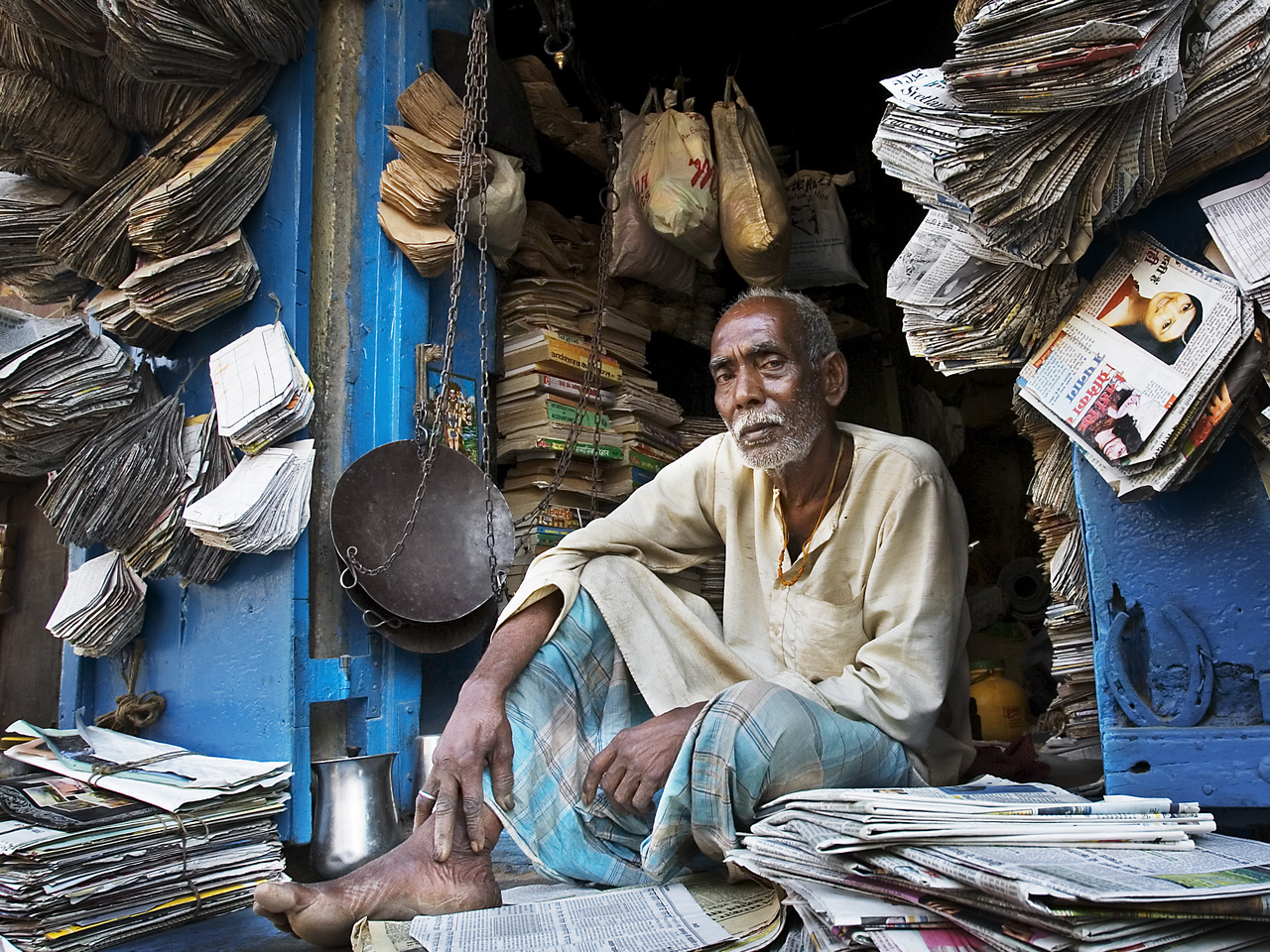

Indian media has evolved significantly since independence in 1947. Its previous contribution to freedom has a different history, marked by idealism and fighting with British law against the vernacular press which began as early as 1799. With the constitution in place in 1950, Indian media gained in status and turned into an instrument predominantly for development.
Till the 1980s, Indian media was print dominated. Newspapers like the Times of India, The Statesman, The Hindu & the Indian Express focused on nation building, politics and social issues. Regional language press – Ananda Bazar Patrika, Malayalam Manorama, Dainik Jagaran – catered to India’s various linguistic groups. Broadcasting was state controlled, the government monopolized radio, All India Radio (AIR) established in 1936 and national television Doordarshan in 1959 as tools for education, national integration and propaganda. Though the nature of Indian radio and television has changed today with numerous private channels, the public broadcasting system remains almost the same.
The challenge thrown up by the censorship of the Emergency (1975-77) led to widespread protests by journalists and a push for editorial freedom. The newspapers protested with blank editorials. The magazines were born writing ‘lighter’ stories and they quickly became popular, creating a new genre of journalism.
Liberalisation leads to erosion of media responsibility
Post emergency – till the country’s economic liberalisation in 1991- was possibly the golden age of India media. Credibility was high and the editors, with the newly earned ‘freedom’, enjoyed much respect. The movements of ‘JP’ (Jayprakash Narain) , revelations of Bofors, consequences of the Mandal Commission are events where media had a big role to play.
But liberalisation again changed the nature of the media. There was a media boom. The 1990s saw the advent of the private satellite TV channels like the Zee TV, Star Plus. The gulf war popularised the live coverage of CNN. The monopoly of the Doordarshan was broken and more variety in terms of entertainment, news and global content were introduced. Communication technologies too were changing very fast. FM radio diversified audio content. Print shifted from letter press to offset and introduced colour; and the quality and reach of the print media was rapidly expanding too.
The owners realized that in a free market they could make more money. Marketing dominated. An owner of a big media house was heard saying his company was a marketing outfit, not an editorial institution. The credibility which rested on the idea of media being ‘of’ the people started shifting to a reality of media belonging to big business. The inevitable happened: the responsibility entrusted on the media by the constitution started declining.
Internet penetration rose ninety times in twenty-five years
The digital revolution of the 2000 transformed the media again. The internet penetration which was less than 1% in 2000 (today it is 90%) changed the media scene completely. Everybody has a voice, everybody has an opinion and it is being recorded in social media, in the mobile phone. The main- stream media is often being questioned for being ‘compromised’ or ‘bought over’ (sometimes called ‘godi’ media). The political parties in power, both at the centre and the states, seem to vie among themselves in their attempts to ‘control’ the media by different means either by law or money or the police. The ‘big houses’ were bought over by friendly businessmen so that they no longer criticise the government. If they still dare to, the government advertisements cease to appear in the platforms. Since social media is the most disobedient, The Information Technology Rules, 2021 were quietly passed during the pandemic, when hardly anybody attended the parliament. It bypasses the fundamental right of freedom of speech by describing it as a ‘digital media ethics code’ (not a law, but a code that professedly helps ‘self-regulation’).
Environment coverage has risen but not enough
Despite the shifting focus of mainstream Indian media – from idealism and concern for the society to commercialism and propaganda, the coverage of environment related issues did gain some space from almost zero to becoming an alternative voice; though much more is required on ground if it needs to keep pace with ongoing environmental degradation. Initially, the editors had to be convinced that coverage of the diverse environment of India made sense. The importance given to serious issues become clear when one witnesses only four journalists to participate in the press conference in Mumbai of the chief minister on farmers’ suicide and four hundred of them to cover a sponsored fashion show on the same day in the same city.
Nevertheless, floods and calamities have been covered initially without linking them to deforestation or land mismanagement. Early environment laws like the Shore Nuisance Act of 1853 or Bengal Smoke Nuisance Act of 1905 did find mention. The Chipko Movement & Silent Valley Movement of the 1970s and Narmada Bachao Andolan of 1980s did find some coverage in the mainstream media.
Pioneers like Anil Agarwal set up an alternative platform the Centre for Science & Environment (CSE) in 1980 which today brings out the annual report of the state of India’s environment – first time a data driven approach to cover environment.
However, vital environmental issues like deforestation, air pollution, and groundwater depletion still suffer from government apathy, limited editorial priorities and systemic constraints.
Climate change, air pollution, judicial activism holds sway
Liberalisation in the 1990s did bring about the consciousness of globalisation and the need for coverage of issues like the Earth Summit of Rio in 1992. Ideas of air pollution and climate change started becoming familiar topics. Judicial activism was also witnessed by the formation of the Green Bench, Public Interest Litigation(PILs), and the rulings of Kuldip Singh.
The social media created platforms like Scroll, Mongabay India, The Bastion and recently The Plurals. Government programmes like Swachh Bharat Mission gained popularity because of social media.
India ranks 159 out of 180 in the 2025 World Press Freedom Index. But there are exceptions. There are a few handfuls who still believe that the media should remain an essential part of the ‘public sphere’, necessary for a living democracy and that the environment is an issue that is part of our everyday life.
In a media atmosphere which is highly commercialised, replete with misinformation (much of it generated through political propaganda) we do recognise green shoots that need nurturing. We have a ‘manthan’ happening in Indian society, generally believed to have gone corrupt, and the media has a vital role to play. The ‘black out’ of emergency could not kill it. Media needs a re-birth – from the ashes it has created by its own follies.
Buroshiva Dasgupta is both a media professional and a media educator for over four decades