

For decades, mental health in India meant this: a closed gate, a bell, a line of patients waiting for food or medicine, and the heavy air of resignation. One man who visited his aunt in the 1960s remembered: “She sat on the floor, her sari torn, eating from a tin plate with hundreds of others. We were not allowed to take her out. We were not allowed even to sit with her for long.” His helplessness mirrored that of families everywhere: shame mingled with resignation.
Yet beneath the surface, restlessness stirred.
Independent India never bothered about mental health
Around the world, psychiatry was being questioned, asylums dismantled, rights entering public debate. India, too, began experimenting. In 1982, the National Mental Health Programme was launched—one of the earliest in the Global South. On paper it promised to move care into villages through primary health centres; on the ground, it often shrank to a weekly visit by a psychiatrist at a district hospital, unsupported by resources or trained staff.
Budgets told the same story. Mental health came to less than 1 percent of the country’s total health spending for most of independent India’s history—and in recent years allocations have shrunk further in real terms. When money did come, it rarely reached the frontlines. A mother in Berhampore once said, “We go to the hospital because there is no other place. The doctor gives medicine, we give it to our sons or daughters, and we hope they sleep.”
Act improved, hardly the reality on ground
When the Mental Health Act of 1987 replaced the colonial-era Lunacy Act of 1912, it was hailed as progress. It set up licensing for private facilities and framed admissions in more legal terms. Yet inside hospitals seclusion cells—tiny, bare-brick enclosures—remained common. Only in the late 2000s did pressure from activists and courts push for their demolition. I will never forget standing in one such corridor when the last of the cells came down. A group of women, long accustomed to those spaces, stepped out into sunlight. One of them said, half in disbelief, half in laughter: “So we will not be shut in darkness again?” No statute could capture the relief of that moment.
In 2001, when a fire in Erwadi, Tamil Nadu, killed 28 people chained to their beds in a faith-based asylum, the image of shackled bodies forced a reckoning. Governments promised regulation, the media briefly looked inward. But as often happens, outrage ebbed, and neglect resumed.
Meanwhile, the world was shifting. In 2006, the United Nations adopted the Convention on the Rights of Persons with Disabilities. India ratified it in 2007, committing to dignity, autonomy, and inclusion. A decade later, the Mental Healthcare Act of 2017 came into force. It outlawed chaining, guaranteed access to care as a right, introduced advance directives, and—crucially—decriminalized suicide. Section 309 of the Indian Penal Code had for decades treated suicide attempt as a crime. Its repeal was a recognition that despair is not deviance.
I remember a young man in Kolkata who had once been arrested after a failed attempt at suicide telling me quietly: “Now at least they will not treat me like a thief for wanting to die.” The law promised compassion where earlier there had only been punishment.
Still judgemental about mental health
The same year, the National Health Policy of 2017 declared mental health a national priority for the first time. But it came with no serious implementation plan, no money, and mental health remained largely absent in how the state built its primary care systems.
Around that time, the National Mental Health Survey (2015–16) had produced numbers that policy-makers applauded. It mapped prevalence and treatment gaps, drawing attention to the scale of “illness” in the country. But the survey itself carried the weight of the biomedical lens. It defined the crisis as a “treatment gap”—too few psychiatrists, too few pills.
What we see in the field is different: the gap is not just in treatment, it is in psychosocial care—support systems, safe homes, livelihoods, community spaces where people can live with dignity. The language of “treatment gap” allowed governments to call for more psychiatrists, more hospitals, more pills, while leaving untouched the actual loneliness of care.
The same systemic neglect that starved mental health of resources now defines our response to a growing climate emergency. As climate impacts intensify and harvests fail, the psychological toll — eco-anxiety, despair, trauma — adds a new, invisible layer of suffering. For a farmer watching his fields wither, the crisis is both economic and existential, yet the support systems for either remain equally fragile. A community worker from Murshidabad put it to me plainly: “Pehle hum beemari se lad rahe the. Ab beemari aur baarish dono ke saath ladna padh raha hai. Mann ka bojh aur zyada ho gaya hai.” (First we were fighting illness. Now we are having to fight both illness and the rains. The burden on the mind has become even heavier)
Access improved, but stigma lingers
The last decade saw new experiments. In 2022, the government launched Tele-MANAS, a 24/7 mental health helpline linked to Ayushman Bharat Health and Wellness Centres. It promised to democratize access, bringing care into every mobile phone. Yet on the ground, the system is untested. Calls are routed to volunteers with little supervision, no monitoring of quality, and no guarantee of follow-up. For a villager with suicidal thoughts, what does a hurried phone call mean if no local support exists?
And then, in 2025, the Supreme Court affirmed mental health as integral to the Right to Life under Article 21, after a string of student suicides forced the issue into the national conscience. It was a landmark ruling. The court acknowledged that to live with dignity includes the right to accessible, quality mental health care. Whether authorities will act on this is another question.
But law and policy are never the same as lived lives. A youth in Purulia asked me, after I explained the 2017 Act: “So I can tell the doctor what medicine I will take?” When I said yes, he shook his head. “They will laugh at me if I say that.” Rights on paper often dissolve into hierarchy in practice. Outside clinics, stigma presses down harder still. A farmer in Nadia told bluntly: “If they know my wife hears voices, who will marry my daughter?” Stigma is a quiet violence; it leaves people more isolated than symptoms ever could.
Free but not free
In that silence, civil society stepped in when the state would not. The Banyan and SCARF, Chennai, The Centre for Mental Health Law and Policy, Pune, Sangath in Goa, Iswar Sankalpa in Kolkata and Anjali in West Bengal and many other smaller collectives had carved new models of care – community homes, assisted living facilities, peer groups, community mental health workers, and listening circles. They trained community mental health workers stood with families and showed that care could live outside hospitals, that dignity was not an abstraction but a practice.
I think of six women leaf collectors in Purulia forest, sitting under a tree, speaking of violence, sleepless nights, fears for their children. None had ever seen a psychiatrist. Yet one said: “When we are together, and we speak, it is lighter here.” That one sentence carries more truth about recovery than many official reports.
Milestones are milestones. But the real story lies in women laughing as they walk past demolished seclusion cells, in mothers carrying busloads of medicine home each month, in activists battling courts, in workers creating circles of safety under trees and in tea shops.
Today, the language of progress is slicker. We speak of universal health coverage, helplines, apps, digital dashboards. There is a shift to more person-centred language—“persons with psychosocial disabilities” instead of “lunatics” or “patients.” But even as the words soften, the structures remain brittle. For most, the choice is the same as decades ago: a long ride to a distant hospital, or silence at home.
And so, the question of freedom returns. A woman in Berhampore once put it bluntly: “I want to be free. Not free like your flag—free like going to the market, free like cooking for my children, free like walking in the fields.” Eight decades after independence, that demand for ordinary freedom remains unmet for too many people with psychosocial disabilities.
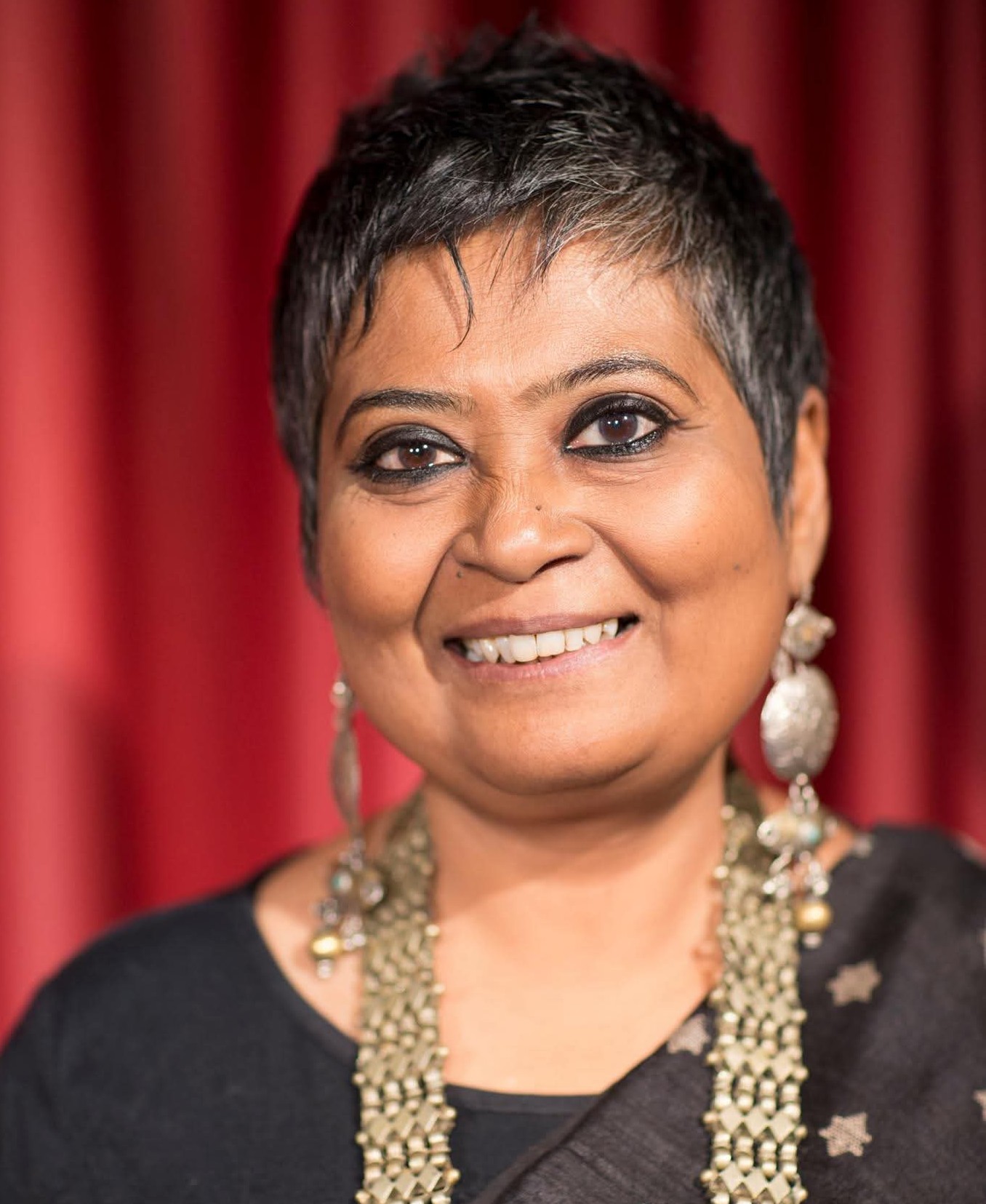
Ratnaboli Ray is founder, Anjali, a mental health rights organisation based in Kolkata