
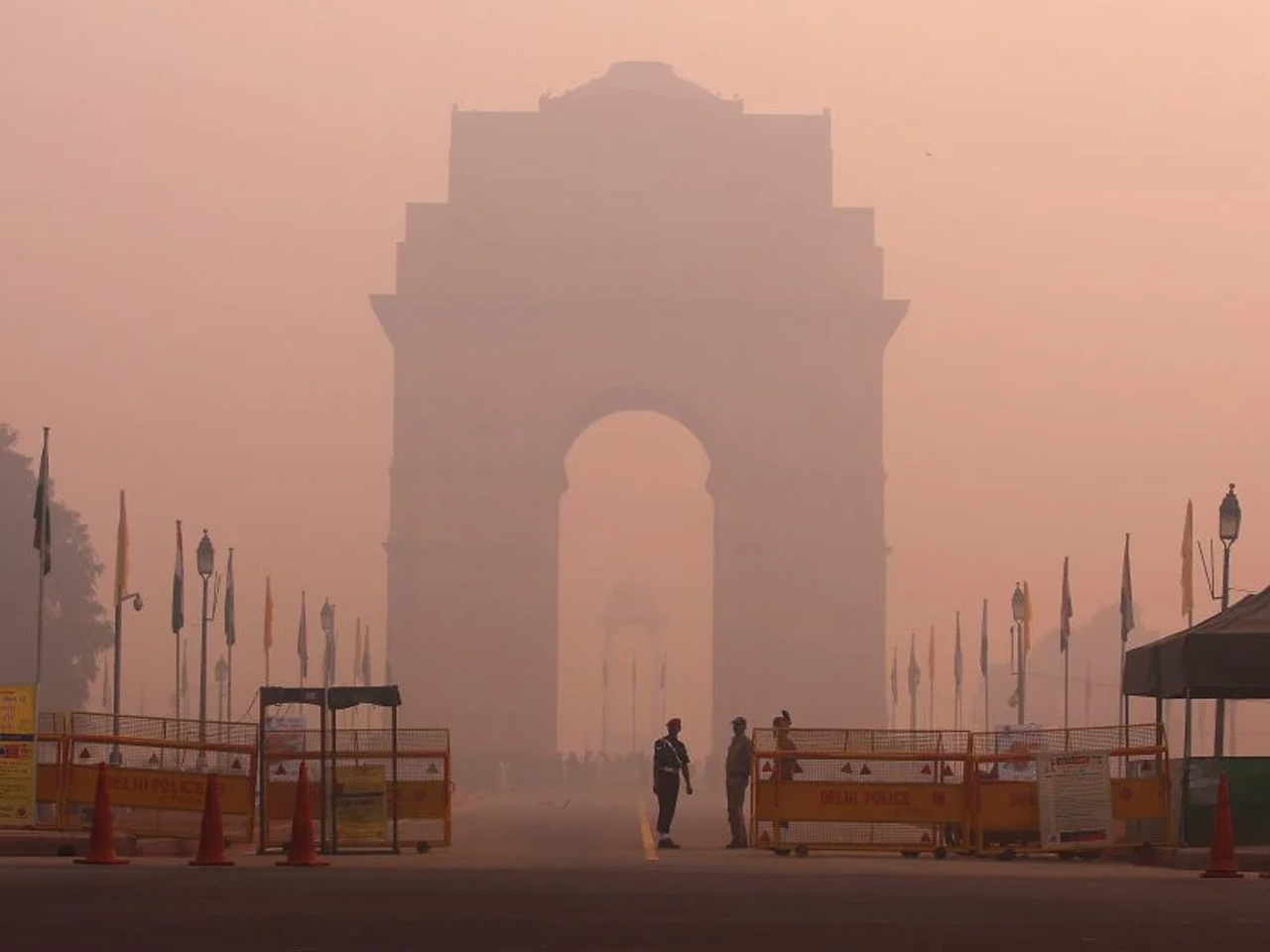
Air pollution is a public health crisis. Out of the 8.1 million deaths triggered by air pollution worldwide annually, about 2.1 million deaths – a quarter – are reported in India. This imposes an enormous health and development burden. While policies and programmes are evolving to upscale planning and technology solutions, these fall short of reducing the toxic risks and exposures equitably for all sections of the society.
While everyone breathes the same air, it is the vulnerable groups, — the children, elderly, poor and socially marginalised, and poor women, — who face higher exposure and disease burden. Yet the patterns of inequitable exposures are not well understood or considered in planning to reduce health burden for all. The health risk is not uniform for everyone. Air pollution does not discriminate, but social inequities do.
It is not adequate to look at health impacts at an undifferentiated population scale. Consider the factors like age, gender, socio-economic status, socially disadvantaged communities, and nutritional status of income groups – that determine vulnerability to toxic air and health outcomes.
Air pollution can push households to below poverty line
Growing body of evidence reviewed by the Centre for Science and Environment underlines a massive disease burden for a range of vulnerable groups. These include,infants, children and especially children of poorer households; poor women without access to clean cooking energy; older people due to their underlying health conditions including hypertension, diabetes, and heart disease, and slower metabolic rates; and socially disadvantaged poor households with low nutritional status, weak coping capacity, and high exposure including occupational exposure.
The World Health Organization (WHO) observes that although all populations are affected by air pollution, the distribution of burden of consequent ill-health is inequitable. The poor people living near roads, industrial sites, in close proximity to pollution sources like industries, waste dumps, heavily trafficked highways, are hugely vulnerable. Low-income households particularly face an order of magnitude higher mortality risks due to lack of access to clean energy in India.
This disproportionate exposure increases health cost and ‘out-of-pocket’ expenses in poorer households. There are evidence to show that the unaffordable costsassociated with air pollution-related non-communicable diseases, can even push households to below the poverty line. Informal-sector workers and outdoor workers, including waste pickers, municipal sweepers, security guards, construction workers among others, are at serious health risk.
Middle class environmentalism often hits the poor hard
While air pollution exposures are huge for the poorer households, they may also get adversely impacted by the clean air solutions as well. This is because mitigation measures do not integrate the environmental justice principles to reduce adverse impacts of these measures on vulnerable groups.
Some pollution control measures including relocation of polluting industries, bans on old vehicles, removal of para transit from city centres, temporary ban on construction and truck movement and more, – that are implemented without adequate safeguards and systemic solutions, – can lead to job losses, livelihood disruptions and high exposures. The ‘middle-class environmentalism’ in cities that are obsessed with the ‘not-in-my-backyard’ syndrome pushes problems to urban peripheries without structural solutions increasing exposures for the poor. The vulnerable groups often cannot negotiate solutions for themselves.
Enough laws but is there enough justice?
India may not have specific environmental justice laws like those in the US and other countries, but there are legal instruments with legal provisions, policies and judicial decisions that have taken on board the environmental justice principles and protection of environmental rights. The public interest litigation related to air pollution has consistently upheld and aimed at ensuring environmental protection and the right to life. These include Article 48A, Article 21 and Article 51A(g) of the Indian Constitution. Article 21 provides the right to life and personal liberty, which courts have construed to include the right to a clean and healthy environment. This approach has resulted in numerous historic decisions in which courts intervened to protect the environment and promote environmental justice.
But questions remain.
There are environmental legislations like the Environment (Protection) Act, 1986, and the Air (Prevention and Control of Pollution) Act, 1981, which have a few provisions to reduce air pollution exposure of the inequitably impacted population. These have provided for public participation provisions, compliance monitoring and legal remedies that contribute to ensuring environmental justice indirectly by enabling pollution-exposure assessment and participation of the vulnerable population and penalizing violators. However, due to a lack of proper guidelines and mandates, the application of these provisions, concerning justice principles, is left at the discretion of the enforcer and the polluters.
Globally, air pollution mitigation measures are integrating environmental justice programmes to reduce disproportionate exposure among disadvantaged communities to provide equitable protection. This requires a strategic plan to deepen environmental justice practice to improve health and environment of the vulnerable communities.
Equity central in clean air policy
The National Air Quality Programme (NCAP) – the overarching air quality programme in India, and the related programmes and schemes need to integrate environmental justice principles and adopt targeted monitoring and mitigation strategies to protect the full range of vulnerable groups in high-risk areas.
It is necessary to innovate and strengthen air-quality monitoring to map out exposure patterns of communities for remedial action. Generate data on local sources of pollution and exposure risks to increase community awareness and participation. Strengthen hyper local hotspot action across cities and regions for systemic changes to address unique disadvantages of the vulnerable groups.
Assess the impact of all sectoral policy measures for pollution control to reduce exposures for all vulnerable groups.
At the same time, ensure there are adequate safeguards built into the clean air action to protect jobs and livelihood of the vulnerable communities.
Similarly, health care systems and infrastructure need to be expanded and supported to meet the additional health care needs of the vulnerable groups.
Integration of the equity benchmarks in infrastructure projects can enable sustainable choices for the larger population. For instance, zero-emission travel modes like walking and cycling can be mainstreamed for all. Mixed income housing with improved accessibilityto transit can be a game changer.
It is necessary to secure good health for everyone and provide equitable protection to reduce the overall disease burden in the country.
Anumita Roy chowdhury is a frontline air pollution expert in India and an Executive Director at the Centre for Science and Environment, Delhi