
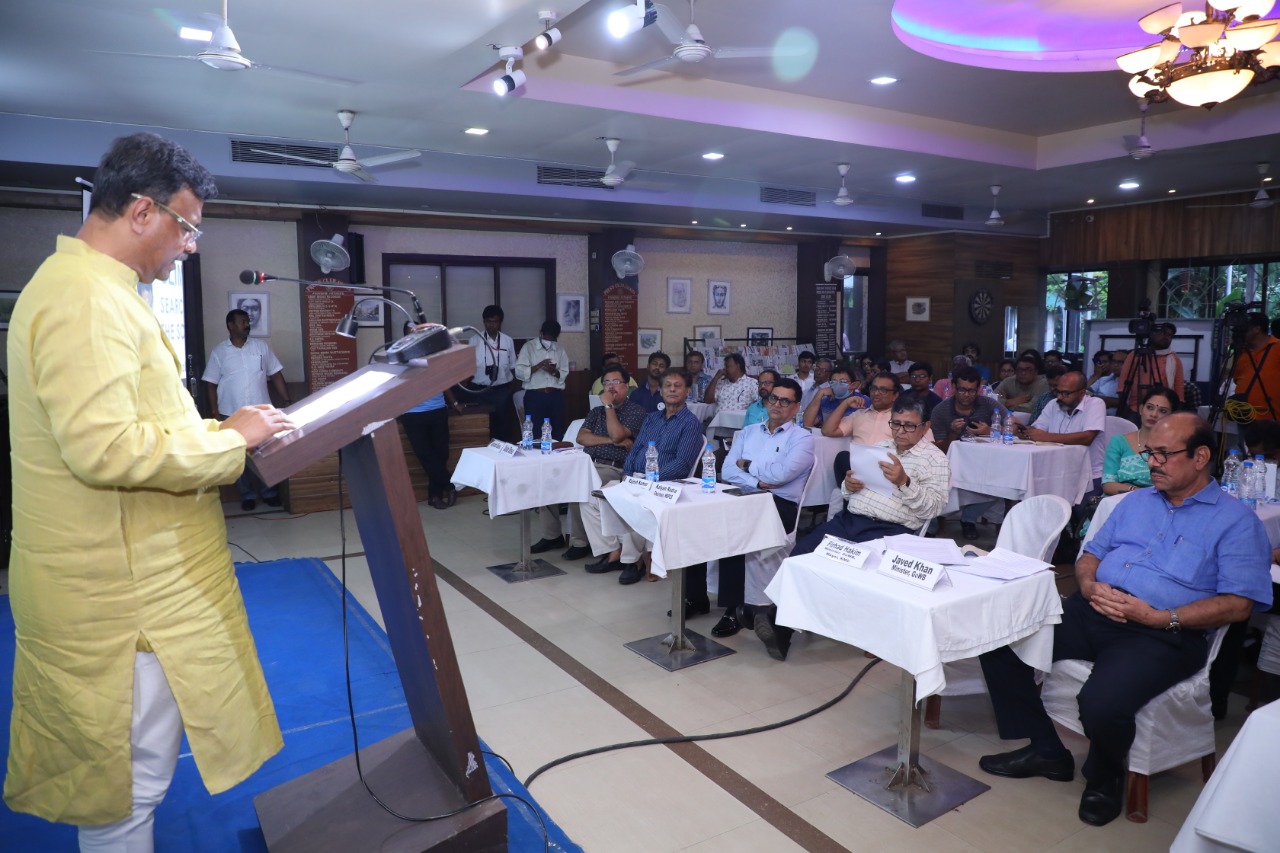
On world environment day, June 5, close to hundred citizens including Kolkata’s mayor; key ministers of West Bengal government; senior officials; independent experts, academics and environmentalists sat over three hours to deliberate Kolkata’s climate future and possible solution modes that can be adopted to make the city secure.
The meeting, called at the wake of a series of recent UN reports that have underlined high climate risk of Kolkata, was organised by non-profit Environment Governed Integrated Organisation (EnGIO) in association with Prabha Khaitan Foundation and being powered by The Telegraph Online My Kolkata.
The Plurals has summarised the main discussion points and suggestions shared by executives and experts, regarding solar to drainage to greeneries, in the following list.
Firhad Hakim, Mayor of KMC; minister of urban development and transport
· A plan has been afoot to make the city’s commercial vehicles run on non-fossil sources from 2030.
· Planning to set up an expert committee to help in the preparation of the city’s climate action plan
· Undertaking an aggressive electrical vehicle program to reduce both carbon footprint and air pollution; announced exemption of registration fees, and other taxes for electric vehicles; urged citizens to join.
· Shared plan to create pockets of urban forest within the city to reduce its load of greenhouse gas, and compensate low greenery count; further impacted by Amphan cyclone.
Javed Khan, Minister, disaster management
· Need to stop illegal constructions and encroachments, particularly at East Kolkata Wetlands, to stop drainage and water logging problems
· Working in tandem with KMC to upgrade the city’s disaster management set up.
Andalib Elias, Bangladesh deputy high commissioner, Kolkata
· In Dhaka, 40 per cent greening and setting of solar panels in any new building is mandatory to reduce carbon stress; a cue that may be picked up by Kolkata
Debashish Kumar, member, mayor in council, KMC
· Needs funds to continue city’s solar programme, especially in parks and other public places
· More FAR (floor area ratio) to buildings with substantial greeneries within premises
Dulal Bose, Physician and former sheriff
· Clubs during the next puja can promote climate awareness and action.
Kalyan Rudra, chairman of West Bengal Pollution Control Board
· Dust is the major problem; which influences urban heat islands in city pockets.
Rajeev Singh, director general of Indian Chamber of Commerce; Subhodip Ghosh, director general of Bengal National Chamber of Commerce & Industry
· Most industries comply with green norms; and we are ready to help in implementing any plan that the government will propose.
Arunabha Majumdar, environment expert
· Originally the drainage of the city was designed considering maximum rainfall of 6 mm per hour ; but now, in view of changing climatic conditions and episodes of intense rainfall within a short duration, we need to plan drainage considering even 12 to 18 mm rainfall per hour.
S P Gon Choudhury, solar expert
· Kolkata has the potential to generate over 500 MW power through rooftop power, if there is policy push; KMC bylaws need to accommodate the solar policy for the city.
Bhargav Moitra, transport expert, IIT Kharagpur
· Hailed that the electrical buses are being promoted and 15 years old commercial vehicles are being scrapped; but city needs more promotion of water transport and rejuvenation of tramways in the city.
Snehasish Sur, journalist and president Press Club
· Media, in general, needs more orientation on climate change and related issues
Naba Dutta, activist
· Administration needs to fulfill their commitments and laws should be properly applied to combat environmental violations, which are still rampant.
Arup Haldar, air pollution expert and pulmonologist
· With changing climate and acute air pollution working in tandem; it is expected that asthma, heat strokes, cholera related diseases, vector borne diseases will be on the rise; and our health care infrastructure should be planned accordingly.
Aniruddha Mukherjee, professor in environment science, Calcutta university
· Kolkata should use its inherent ecological subsidy and try to become a green city in real terms, within a fixed time frame.
Anurag Danda, WWF India
· Pumping is important, but may not prove adequate to drain out additional water during intense rainfall; and hence public places like parks etc may be redesigned to hold runoff.
· To save from heat stress, city needs more tree shades and air-conditioned options in public places like markets etc.
Ramakant Burman, waste entrepreneur, Greentech
· Kolkata immediately needs a waste to energy plant where 12 MW power can be generated every day using waste of single use plastic, multi-layered plastic, fabric, rubber, wood etc as input materials; which broadly constitutes 30 per cent of the total waste.
Buroshib Dasgupta , communication expert
· Cleaning of the outfall canals and stopping encroachment should be a priority
· All stakeholders; from government to media to political parties, should mainstream environment and climate change issues in their discourses
EnGIO outlined Kolkata’s climate threats and recommendations
Threats
* Increase of multiple kind of climate risks beyond 2040, often in tandem
* Inadequate resilience plan in place
* One out of 8 global megacities most vulnerable to disaster mortality
* High drought risk
* One of the 20 large coastal cities to be impacted by high floods; also subsidence risk
· * High financial damage expected from storm surge by 2050; without adaptation
· * Extremely severe even super cyclones are likely to increase in Sundarbans region, affecting Kolkata as well.
* Sea level rise in Sundarbans region likely to impact Kolkata; already with an old and stressed drainage system
* In last 6 decades, the temperature rise in Kolkata region was highest in the world; majority of it within the city itself, and the trend is to continue ; already heat islands formed due to local climatic factors;
* A temperature of 35°C or more in 150 days of an year
· * A short-duration extreme rainfall to increase substantially (50 %).
Recommendations
* Setting up Expert Climate Committee / Task Force in KMC to assess sector wise short term & long term vulnerability; to assess loss and damages incurred so far and proposing short term, mid-term and long term Climate Action Plan
* Engage all key stakeholders in the process and fix respective carbon emission cut targets
* Appropriate policy interventions including fiscal plan to promote electric vehicle, solar , green spread and likewise.
* Reduce emission and carbon footprint in vehicle sector, constructions, and industries with strict monitoring; encourage trams and waterways
* Wider Kolkata model –Kolkata city as core but Kolkata Metropolitan Area overall – may be pursued to make climate combat plan
* Promote, save, manage existing greenery and water bodies
* Undertake intense awareness and climate communication with all sectors of community