
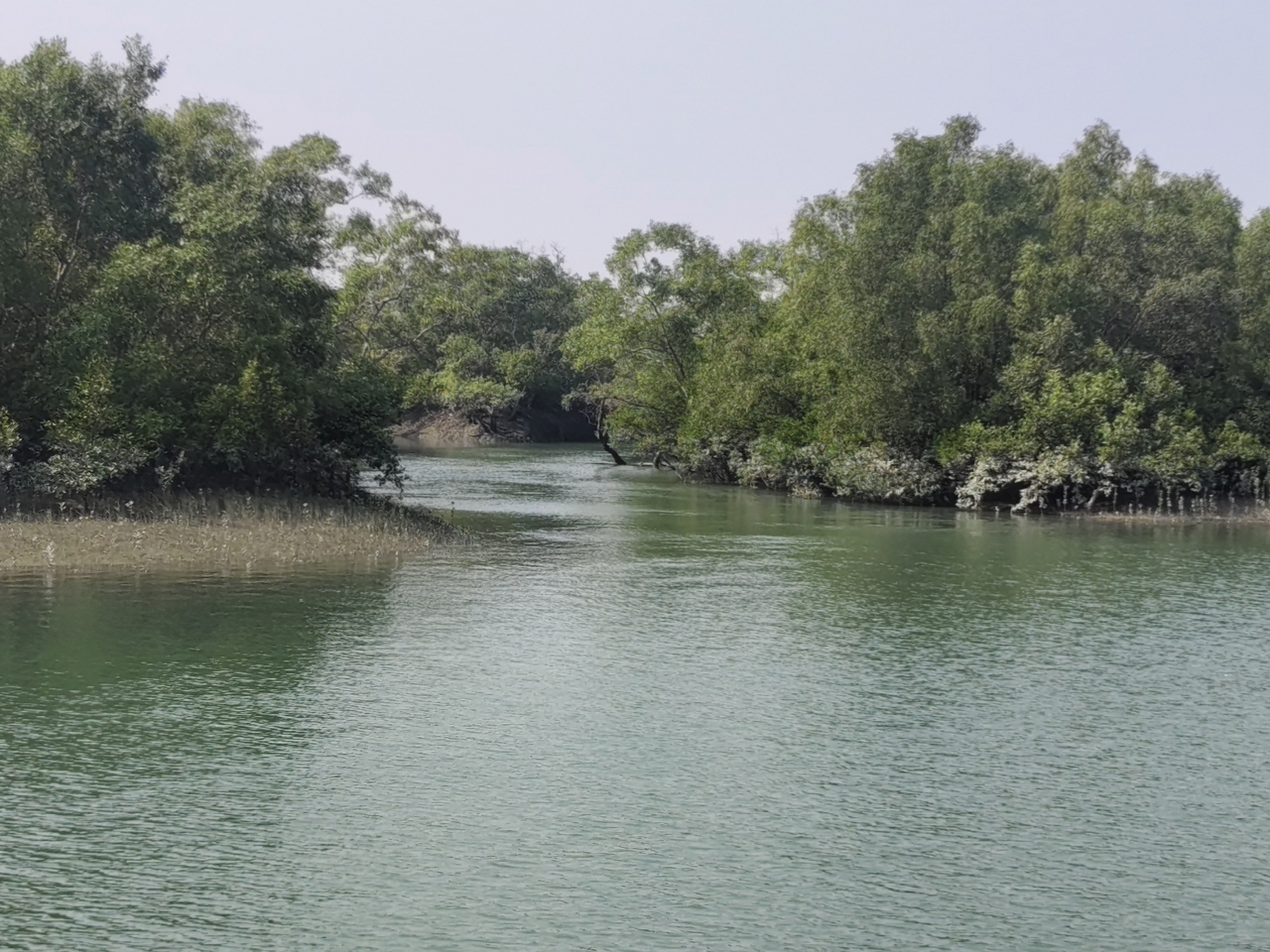
Climate change-battered Sundarban finds itself at the centre of a development debate with several frontline ministers of West Bengal government countering the Union environment, forest and climate change minister’s recent claim that the state government has mismanaged the development process in the UNESCO-recognised World Heritage Site.
Union minister Bhupender Yadav, on the sidelines of a national level meeting in Sundarban on Sunday on tigers and elephants, criticised the state government for not being able to use the tourism potential of Sundarban, the home of the Royal Bengal tiger, as well as faltering on development plans.
Experts, while accepting that there is definitely a scope for more development, including in tourism in the region, sought to remind that Sundarban cannot be compared to other forests in the country as it has a unique landscape.
Call for more tourism
“Sundarban should expand its tourism. On an average 9 to 9.5 lakh tourists visit Sundarban every year, while the figure is almost 19 lakh in Ranathambore,” said the Union minister to The Plurals.“Mismanagement from the state government side is slowing down the development,” said Yadav.
The minister also alleged that the state has, so far, underutilised the Rs 112 crore central funds approved for Sundarban development. Yadav, the election in-charge of the BJP in the upcoming 2026 West Bengal Assembly elections, added a political spin to the debate, stating that “politically honest efforts” are required to maintain a balance in the unique ecosystem area.
Union government to blame
“Before throwing allegations at us, the Union minister should ask his own government to release the funds for Sundarban, which have been lying with them for long despite being cleared by the World Bank. Just a nod from the Union ministry can initiate the progress which is so critical for the development of Sundarbans,” stated senior minister Manas Bhuniya.
Bhuniya’s irrigation and waterways department is the nodal department for implementation of the Rs 4100-crore proposed lower delta project, to be shared in a 7:3 ratio by the World Bank and the state government. The funds are meant to be used for embankment development, livelihood support and biodiversity conservation in Sundarban over the next few years.
Sundarban affairs minister Bankim Hazra complained that the Union government is not doing anything to support the region with a population of nearly 5 million, despite being repeatedly impacted by climate change-triggered extreme weather events, particularly cyclones. “Why does the Union government not support the climate-battered people of Sundarban with the huge coal cess funds lying with them,” asked Hazra.
Before its removal in September 2025, the cess was part of the GST compensation framework. The Comptroller and Auditor General (CAG) had earlier flagged significant shortfalls in transferring various cess collections to their intended reserve funds over the years, with a total of Rs 3.69 lakh crore in untransferred cess funds reported at the end of the 2023-24 fiscal year.
A senior forest department officer claimed that the recent Union government-cleared expansion of the Sundarban forest into the second biggest tiger reserve in the country is testimony of its success in managing the forest area.
Responsible tourism is the key
“Sundarban cannot be compared to Ranthambore as its landscape, and challenges, are different. While tourism is key to local livelihood, we also need to think about the scale and nature of tourism to be allowed in such a delicate ecological zone that already has a 5 million-population; we need responsible tourism in the zone,” observed Sundarbans expert Tuhin Ghosh, professor in Jadavpur University. He added L that no carrying capacity assessment has done for the area so far.
Biswajit Roy Choudhury, a member of the state wildlife board, pointed out that the difficulty to access Sundarban forest and primarily river-based forest tourism reducing the possibility of locating wildlife, often makes it less attractive to tourists compared to the likes of Ranthambore or Kanha”.
“Being the world’s only mangrove forest stretch with tigers, there is definitely more tourism potential in Sundarban compared to what is exploited now. We need to showcase its tourism potential more aggressively, particularly high-end tourism, while not compromising on protecting its delicate ecosystem,” said ecological economist Nilanjan Ghosh, head of think-tank Observer Research Foundation (ORF) Kolkata.
Hope it will not go Araballi way
“I just hope that the Union government is not planning to commercialise Sundarban, in the name of expanding tourism, like it is doing in Aravalli or Andaman,” said an activist. “We have to keep in mind that already a lot of illegal tourism is happening in Sundarban defying coastal zone management norms and national green tribunal orders, and both the Union and state governments are responsible for that,” said the activist.