

The latest global Environmental Performance Index (EPI) ranking released by Yale University recently, has put India in 176th position; second lowest after Laos among 177 countries assessed in the analysis. India scored 22.46 percent in EPI while Estonia with 74.79 percent topped the global list.
The chronology of the comprehensive ranking, that was initiated in 2000 and considered 47 indicators linked to 12 issues for the 2026 EPI assessment – The Plurals has a copy – has shown that India’s performance had gradually deteriorated over the last decade; from 141st in 2016 to 177th in 2018 to 168th in 2020 to 180th – lowest within all countries– in 2022; and 176th in both 2024 and 2026. In last ranking, India stood 7th among the eight south Asian countries.
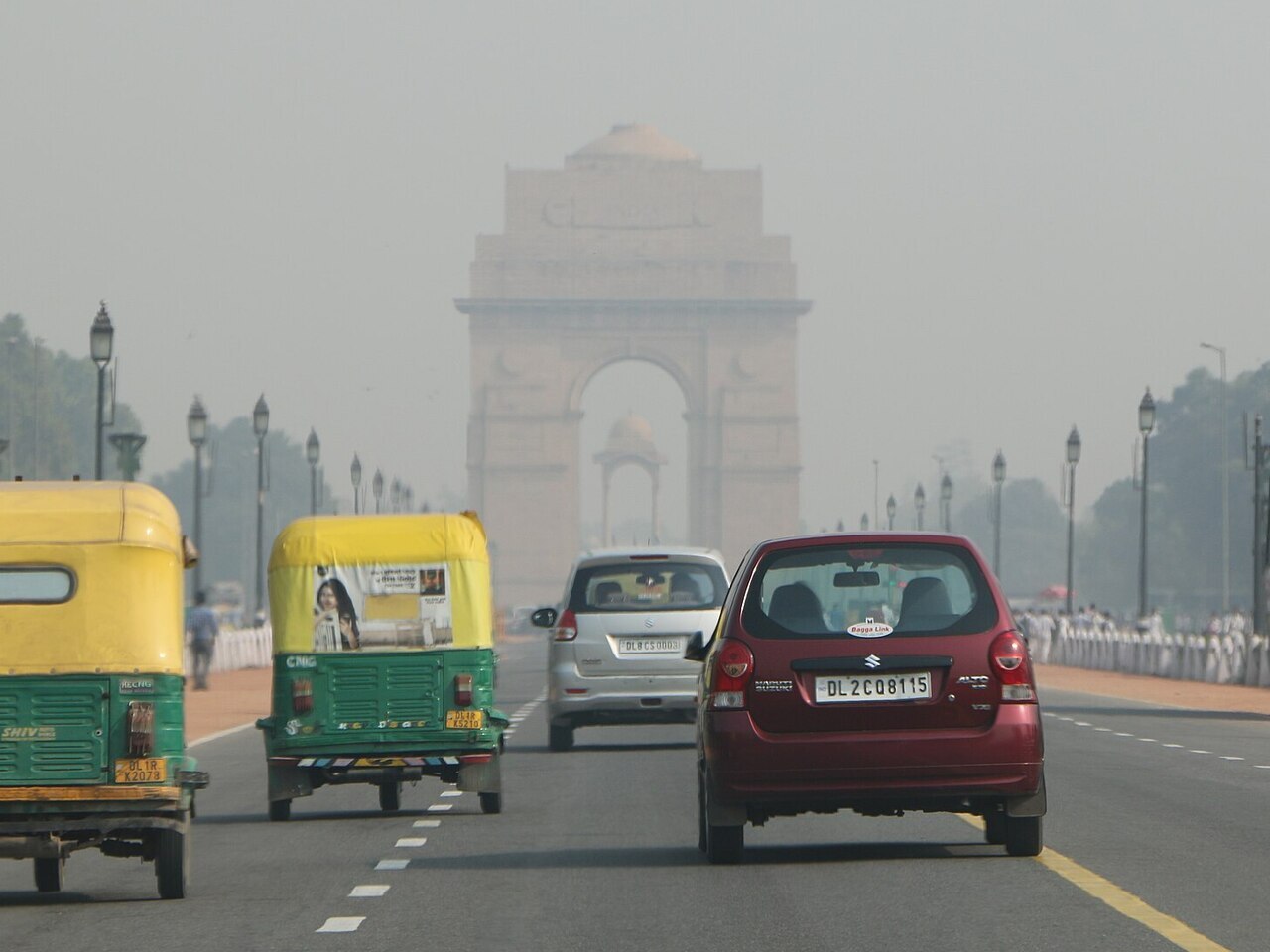
“India, whose per-capita emissions remain relatively low but are growing rapidly, faces an acute development-versus-pollution tension as hundreds of millions of people gain access to modern energy services but at the price of serious urban air pollution and spiking GHG emissions,” claims the report.
“I have nothing more to add to what being stated in 2022 when India was given the lowest ranking,” said a union environment department official, while asked about this year’s ranking. In 2022, Indian ministry of environment, forest and climate change refused to accept the findings claiming that the conclusion had been drawn “based on surmises and unscientific methods”.
Experts, with whom The Plurals spoke over the latest ranking, also expressed apprehensions on some parts of the methodology of ranking countries, but admitted that consistent poor performance over the years is a point of concern that no longer can be ignored.
India has more misses than hits
In the latest assessment, India was found to have performed poorly in environment health particularly air quality and biodiversity – 174th in both – while it has done better comparatively in climate change (130th) and waste management as well as sanitation (both being 141th). Climate change is incidentally one of the most improved sectors with 13.98 points rise over the last ten years.
Closer look reveals how it has been slipping on key indicators over a decade.
In air quality, India actually slipped 0.15 points during the last decade despite spending Rs 16423 crores to contain air pollution under country’s signature air pollution control programme, National Clean Air Programme, that was initiated in 2019.
The country’s performance has also declined in fishery, tree cover and pesticide pollution over the last decade. “The findings vindicate our criticisms about all these three issues. You cannot cut the trees at Araballi, Nicobar; or, pollute the rivers; and allow the unregulated use of pesticides in agriculture in the name of development; and expect to get good ranking in environmental performance,” said a green activist.
Scanner on methodology
“India’s low EPI rank is real but incomplete (and) a warning signal” pointed out Anjal Prakash, a professor in FLAME University, Pune and the lead author for the ongoing UN special report on climate change and cities.
“The ranking does capture real problems like air pollution, biodiversity loss, and fossil fuel dependence, but it also compares a very large, diverse, and low-income country into a single cross-national score, which can overstate the comparison with richer country that may have very different historical emission development pathways. So, I do not agree with the methodology,” he explained.
“India’s ranking in the Yale Environmental Performance Index (EPI) should be viewed with caution” also opined ecological economist Nilanjan Ghosh, who leads development studies at the Observer Research Foundation (ORF) and also the head of ORF’s Kolkata Centre.
“While the Index provides a useful snapshot of environmental outcomes, it does not fully capture the developmental realities and structural constraints faced by a country of India’s scale, population density and stage of economic transformation,” pointed out Ghosh; while admitting “ …That said, India’s ranking should not be dismissed outright”; “It is a reminder that critical challenges remain, particularly in air quality, urban environmental management, wastewater treatment and biodiversity conservation. These are areas that demand sustained policy attention and investment”.
Green activists are more vocal. “India’s abysmal ranking in the 2026 Environmental Performance Index is a stark wake-up call that we can no longer ignore. While the methodology of certain Western indices is often debated, the underlying reality on the ground is undeniable: our current development paradigm treats ecological degradation and rampant pollution as acceptable casualties of economic growth,” observed Harjeet Singh climate activist and founding director of Satat Sampada Climate Foundation.
Government dismisses, researchers stand their ground
While no official response to the current ranking has been put forward by the Indian environment, forest and climate change ministry, but they strongly refuted the ranking ascribed to India by the Yale researchers in 2022, when India got the lowest position.
On June 8, 2022 , a release was issued by the ministry where it was categorically told that “ …The Ministry of Environment does not accept its analysis and conclusions” and listed a range of reasons behind its position. “The Environmental Performance index 2022 released recently has many indicators based on unfounded assumptions. Some of these indicators used for assessing performance are extrapolated and based on surmises and unscientific methods,” it further pointed out.
The Yale university researchers responded to the allegations in an email reply to this correspondent. “The (Indian) Ministry would prefer analyses like the EPI rank countries on their policy intentions rather than on the current state of environmental conditions. The Environmental Performance Index has always based our rankings on country performance today; not on what a country promises to accomplish years or decades from now,” pointed out Martin Wolf, Principal Investigator of Environmental Performance Index carried out by Yale Center for Environmental Law & Policy.