
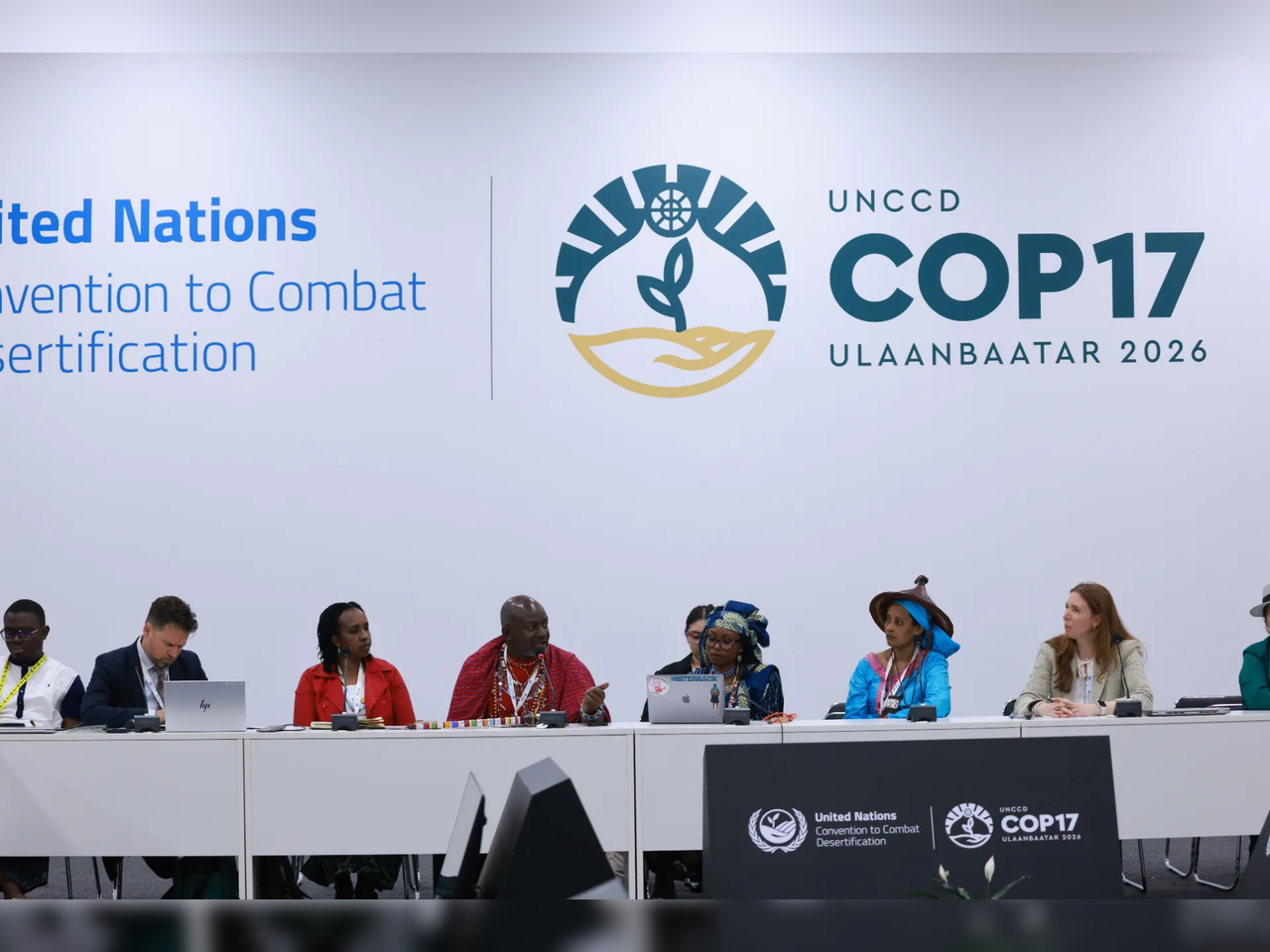
Cities and regions are being asked to play a more significant part in drought management during UNCCD COP 17 summit.
Attending the ongoing UNCCD COP17 Mayors’ Forum in Ulaanbaatar, Mongolia, about 30 mayors, governors and other local and regional leaders adopted the Ulaanbaatar Declaration, which is a commitment to advance local action on sustainable land management and drought resilience. The forum called for a stronger role for cities and regions to participate in the United Nations Convention to Combat Desertification (UNCCD) process.
The Mayor’s Forum, being held from August 20 to August 22, is being hosted by the Governor’s Office of the Capital City of Ulaanbaatar, and the UNCCD Secretariat, the United Nations Human Settlements Programme (UN-Habitat) along with organisations working on cities across the world.
Over 200 people from more than 30 countries, including local and regional leaders, international organisations, city networks, financial institutions, academic and research bodies and private sector representatives are attending the summit.
Five-point city agenda
The Ulaanbaatar Initiative, placed at the forum, will test a practical way for cities to measure and report on land degradation, building on the commitments made by governments at UNCCD COP16 in Riyadh, Saudi Arabia.
The declaration, titled ‘Local Leadership for Land Resilience: Advancing Implementation across the Rio Conventions’, has a five-point agenda:
· Advancement of integrated local action on sustainable land management, drought resilience, biodiversity, and strengthening urban-rural linkages, demanding integrated, locally led solutions.
· Strengthening the role of local and regional governments within the UNCCD process itself, stressing interactions between sessions of the Conference of the Parties (COP).
· Strengthen coherence across the three Rio Conventions, which address global environmental challenges and sustainability.
· Support implementation through partnerships and finance, and enable access to finance for local and regional governments.
· Promote knowledge, innovation and cooperation, with emphasis on nature-based solutions.
Land resilience is crucial
“Land resilience is not an abstract global agenda. It is about whether our cities can provide safe water, clean air, green spaces, secure livelihoods and a healthy future for our children and our communities,” said B. Purevdagva, governor of the Capital City and Mayor of Ulaanbaatar. “Through the Ulaanbaatar Declaration and the Ulaanbaatar Initiative, we are advancing a people-centred, gender-sensitive and child-friendly approach to sustainable urban development, aligned with the Sustainable Development Goals,” added the governor.
Executive secretary of the UNCCD Yasmine Fouad pointed at why local and regional governments need to participate in the sustainability process. “National commitments set the direction, but implementation ultimately happens in cities, regions and communities. Local and regional governments make many decisions that shape how land and water are managed, how communities prepare for drought, extreme heat and other climate-related risks,” said the UNCCD official. Deputy mayor of Bonn, Germany, Ursula Sautter said: “This process started in Bonn in 1999, and it means a great deal to see it reach this point almost thirty years later, with mayors from every region adopting a shared declaration. Bonn will continue to stand behind this work, as a founding partner of this dialogue and as home to the UNCCD Secretariat.”