
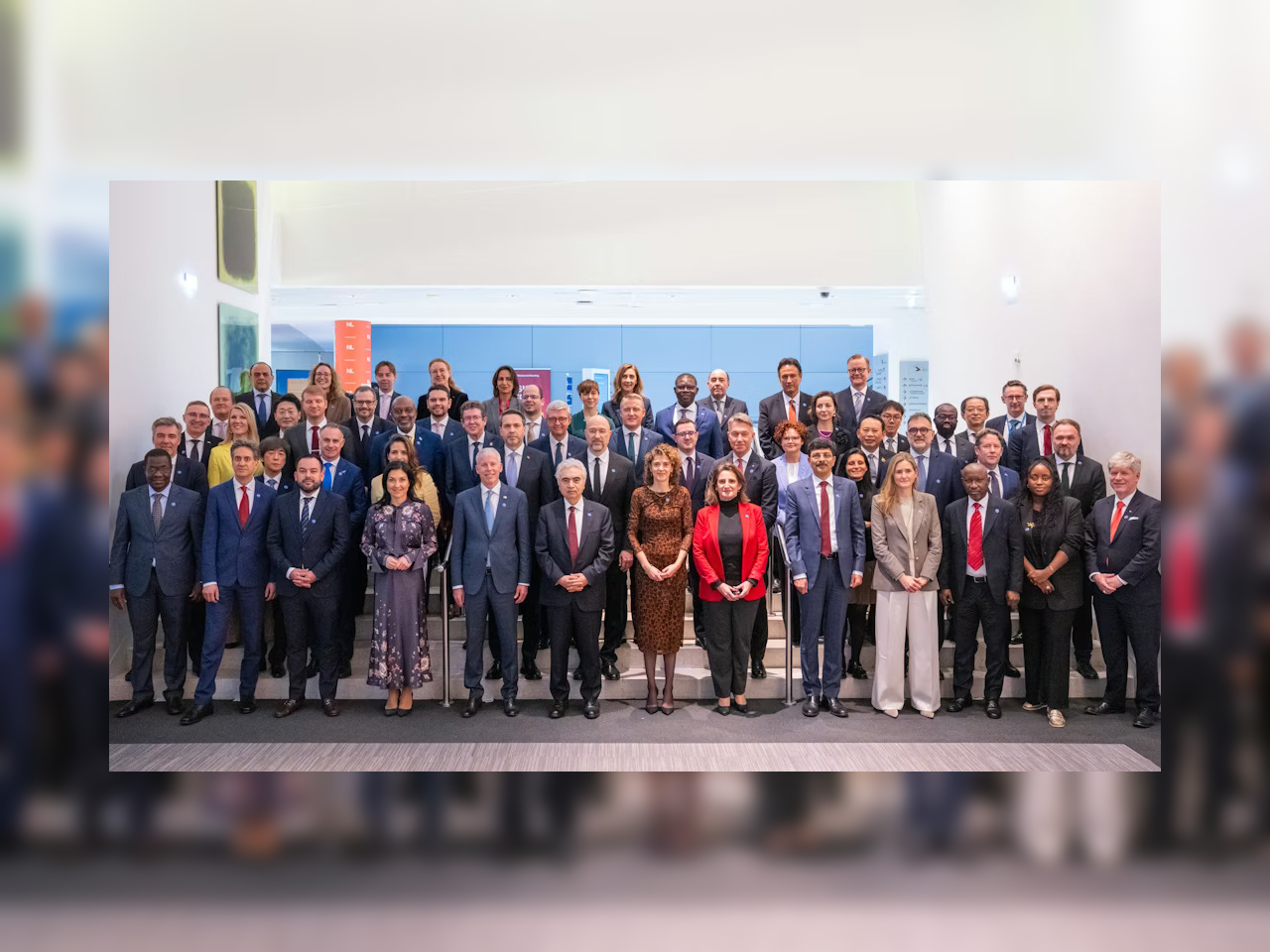
Energy leaders from across the world met in Paris on February 18-19 at the ministerial meeting of the International Energy Agency (IEA), to affirm the key role that the agency has to play to address with global co-operation the major energy challenges and opportunities the world faces now.
Top government officials from a record 54 countries, with 40-odd minister-level individuals, attended the event. Participants also included top executives from 55 companies that had combined market capitalisation of US dollars 14 trillion and leaders from several intergovernmental organisations.
Emmanuel Macron, President of France, had said in a video address at the opening of the ministerial: “Through its in-depth analyses, and the technical expertise of its team, the IEA, under the leadership of its executive director Fatih Birol, plays an essential role. It enlightens us to help us guarantee our energy security and steer the energy transition.”
Co-operation is key
“At the ministerial, IEA member governments unanimously agreed to move ahead on building deeper institutional ties with Brazil, Colombia, India and Vietnam – and to expanded co-operation on critical minerals through the IEA’s Critical Minerals Security Programme,” said an IEA statement.
“These two days in Paris have reaffirmed how essential energy is to our daily lives – it is the invisible driving force behind everything we do. Under the umbrella of knowledge of the International Energy Agency, we have once again seen that international co-operation is key,” said Sophie Hermans, deputy prime minister of the Netherlands, who chaired the ministerial. “Our priority is clear: secure, affordable and sustainable energy – and resilient systems that can endure in an uncertain world.”
“This ministerial meeting, our largest ever, affirmed the immense value of the IEA at a moment when global energy demand is rising and the challenges facing the energy system are intensifying. In this context, our wide range of objective data and analysis is more important than ever,” said IEA executive director Fatih Birol. “In a strong step forward for global energy governance, key countries such as Brazil, Colombia, India and Vietnam are strengthening their ties with the IEA,” said Birol.
IEA share of global energy shoots up
This, the IEA official added, puts the IEA family’s share of global energy use at more than 80 per cent, up from less than 40 per cent 10 years ago. “With major energy issues high on the international agenda, we stand ready to support governments with the insights they need to plan for the future, helping leaders deliver on their goals of ensuring greater energy security, affordability and sustainability.”
Experts in the meeting commented on the IEA’s strong ability to adapt and expand the energy sector. It also the agency’s leading data and analysis as a credible source of information for decision makers globally as countries work together to ensure energy security, affordability and sustainability.
Growing family
Ministers from IEA member countries in a special declaration endorsed expanding co-operation under the IEA Critical Minerals Security Programme to address “rising risks to global critical mineral supply chains”, the IEA statement said. “In addition, IEA ministers approved new phases of institutional ties with several key countries around the world that are increasingly shaping energy trends. They unanimously invited Colombia to become the agency’s 33rd member,” the statement said.
Responding to the Brazilian government’s request, IEA members agreed to invite Brazil to begin the process of becoming a full member. “They also all welcomed recent developments in discussions with India following the Indian government’s request to become a full IEA member. And Vietnam was announced as the newest member of the IEA family, joining as an association country,” the statement added.
Member countries also approved the integration of the Clean Cooking Alliance into the agency. This establishes the IEA as the principal multilateral forum for expanding clean cooking solutions, helping countries and industry speed up efforts to extend access to the more than 2 billion people who still lack it, the IEA said.
Two major dialogues featured discussions on safeguarding energy security in the age of electricity and on investing in Ukraine’s future energy security, with the participation of Ukrainian first deputy prime minister and minister of energy Denys Shmyhal.