

A late February high-level meeting between India and Bhutan governments, on trans-boundary water issues, has decided that henceforth adequate volume of real time rainfall and river discharge data will be provided by Bhutan to West Bengal government so that the later can forecast flood early, and act timely to counter floods triggered by high intensity rain in upstream areas of Bhutan. The meeting minutes are with The Plurals.
An 11-member Indian delegation, led by the union secretary V.L.Kantha Rao in the department of Water Resources, river development & Ganga rejuvenation under ministry of Jal Shakti, included a senior official from West Bengal irrigation department.
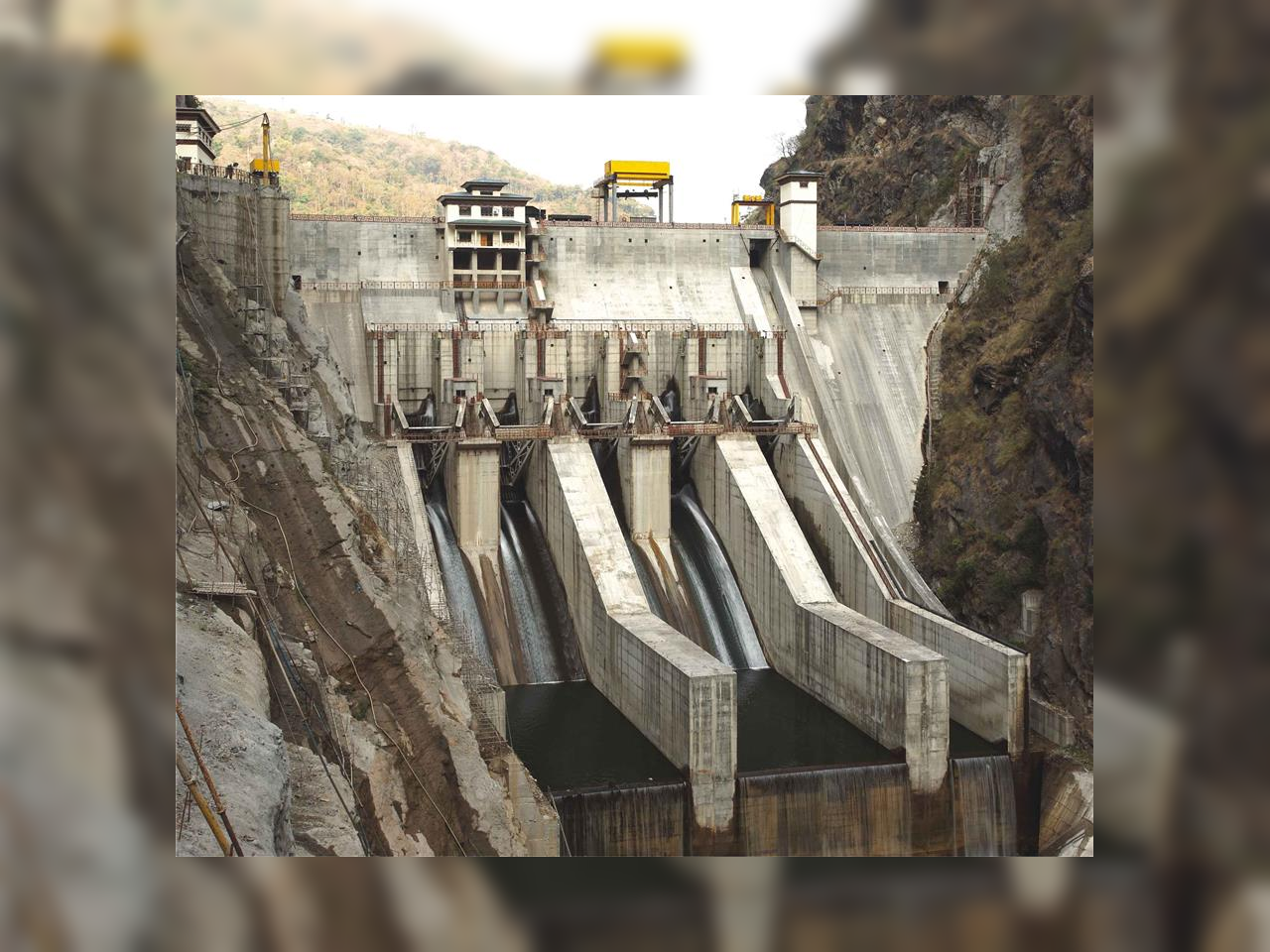
The Bengal government has been demanding such information for a long time, particularly since a devastating flood in North Bengal, in October 2025, was triggered by the overtopping of Tala Dam in western Bhutan due to a sudden surge in the rivers of Bhutan as a fallout of extremely intense rainfall. While more than 70 rivers, apart from innumerable rivulets, are shared by Bhutan and north West Bengal, the major ones are Jaldhaka, Torsa, Raidak and Sankosh.
Range of decisions
“Recently an Indian delegation, that consisted a senior official from state irrigation department, held a secretary level meeting with their counterparts from Bhutan, and took several decisions which are expected to help us taking timely steps in future to counter situations triggered by the sudden intense rainfall in upstream areas of Bhutan,” confirmed Manas Bhuniya, state irrigation minister to this correspondent recently.
“This is a result of our constant persuasion with the union government that enhanced and real time rainfall data from Bhutan should be made available to us”, claimed the minister.
“Both sides (India and Bhutan) agreed to enhance cooperation on the sharing of hydrological and meteorological data to address recent water related challenges and to promote resilience against such challenges and for the well-being of the communities on both sides of the border,” reads the minutes of the meeting that was held on February 25 in Thimpu.
“Deliberations focused on strengthening and modernising the existing hydro-meteorological observation network in Bhutan on trans-border rivers, improving data-sharing mechanisms for hydro-meteorological and flood forecasting data relating to trans-border rivers, enhancing collaboration in capacity building and technical exchanges, and addressing emerging challenges arising from climate change, glacial lake outburst floods (GLOFs), and extreme weather events,” said a statement from Jal Shakti ministry post meeting.
Bengal’s benefits
According to the West Bengal government, the decisions include installation of an adequate number of automatic rain gauge, river gauge and river discharge observation stations in Bhutan and sharing the data with India on a real time basis to facilitate flood forecast in West Bengal.
“At present rainfall data are received during monsoon only from 4 stations that too in a 3- hour interval; which is of limited use. As per our earlier assessment the optimum requirement is 56 stations. However, as per decision in the joint meeting, the requirement is now being freshly reviewed considering the cost factor and internet connectivity issues in Bhutan and we expect to drag down the number to around 40 stations,” said Bengal government sources.
The meeting also considered sharing of data by Bhutan regarding the sediment coming to West Bengal rivers from upstream, as well as rainfall and other data from Bhutan’s mereological stations. The meeting also decided to track pollution in Indian rivers which can be sourced to Bhutan. Dolomite mining in Bhutan has been a long-standing environmental concern for north Bengal. The runoff from these mining activities, particularly during the monsoon, carries dolomite waste into rivers flowing into India, affecting tea gardens, agriculture, and river ecosystems.
“Apart from above issues the constitution of India Bhutan Joint River Commission was flagged by West Bengal. Though the same was not discussed in the bilateral Secretary level meeting, the secretary, union ministry of Jal Shakti, told that the issue will be dealt with internally,” added the minister.
India Bhutan not on same page
According to minutes, the Indian government delegation pointed out that all three existing bilateral groups working between India and Bhutan – Joint Expert Team (JET), Joint Group of Experts (JGE) and Joint Technical Team (JTT) – work in the same broad area of flood management; and need to be merged as a Joint Expert Group (JEG).
However, the Bhutanese delegation “emphasized that JET and JGE operate under distinct terms of reference.” However, both sides agreed that the name of JGE would be changed to Joint Working Group (JWG). Both sides identified GLOF, Glacial Lake Outburst Flood, as a major threat, especially after 2023 GLOF events, and decided to have stronger integrated actions together.