
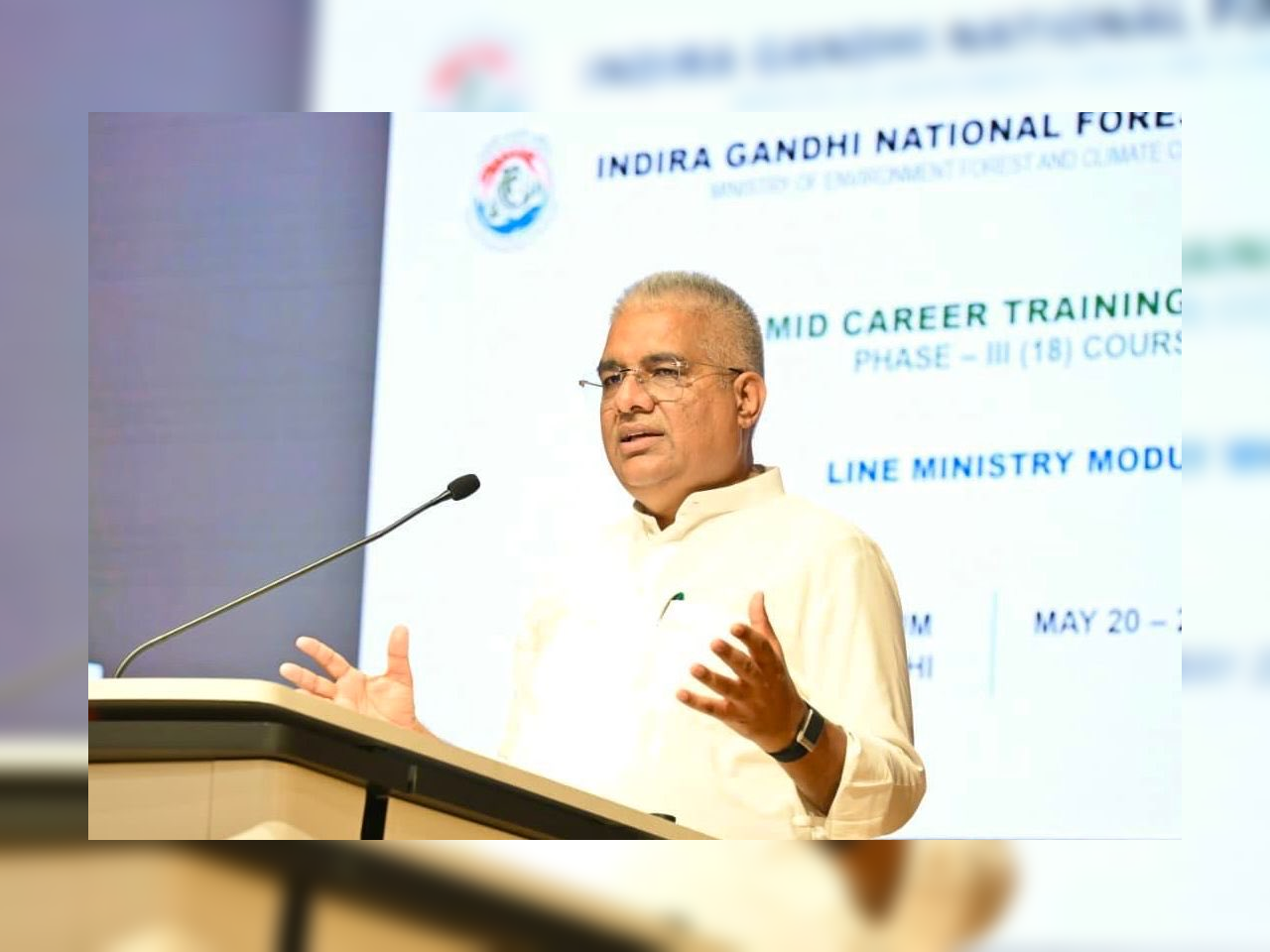

Union environment minister Bhupender Yadav speaks to The Plurals at length as India gears up to host the first International Big Cat Alliance Summit. The event, to be held on June 1–2 in New Delhi, plans to bring together around 95 countries on the conservation of the world’s major big cats; Sundarban is a priority
The Plurals (TP): What are your expectations from the International Big Cat Alliance (IBCA) Summit? How many countries will be participating?
Bhupender Yadav (BY): The IBCA Summit, being organised under the leadership of Prime Minister Narendra Modi, is envisioned as a first-of-its-kind global gathering dedicated exclusively to the conservation of the world’s seven major big cats and the ecosystems they inhabit. Our expectation is that the summit will elevate big cat conservation from a sectoral wildlife issue to a global sustainability and ecological security agenda.
We have extended invitations to all big cat range countries, and we are encouraged by the response received so far. We expect participation from heads of state or government and ministers from IBCA member and observer countries, and senior officials, scientists, conservation practitioners, multilateral agencies and corporates. Major international conservation organisations such as UNDP, IUCN, CITES, Ramsar Convention, WWF, UNEP, CMS, GSLEP, to name a few, are participating in this event.
TP: What are the major outcomes expected?
BY: One of the major expected outcomes is the adoption of the first-ever ‘Delhi Declaration on Big Cat Conservation’, which will provide a unified global framework for habitat protection, ecological connectivity, transboundary cooperation, community stewardship and sustainable financing.
The summit will also facilitate international partnerships through MoUs, technology collaboration, capacity building initiatives, centres of excellence and launch of transnational projects. Equally important, it will strengthen IBCA as a global platform for coordinated conservation action, knowledge exchange and resource mobilisation for the future.
TP: Do you think a major alliance such as the International Solar Alliance, which India has led, can emerge from the IBCA summit as well?
BY: The IBCA is, in many ways, already emerging as a major global alliance for conservation cooperation, similar in spirit to how the International Solar Alliance created a global platform for climate action. The important distinction is that IBCA has already been launched in 2023 and has evolved into a treaty-based intergovernmental international organisation.
The upcoming IBCA summit will significantly strengthen the strategic importance and global visibility of the alliance. The summit and the proposed Delhi Declaration will further consolidate IBCA’s role as a global coordinating platform for conservation diplomacy, South-South cooperation and sustainable ecological development.
TP: How do you see Sundarban, a climate hotspot harbouring unique biodiversity, including the iconic Royal Bengal tiger, and home to nearly 5 million people, benefit from the summit?
BY: Sundarban represents one of the world’s most unique and climate-sensitive ecosystems and its future is closely linked to the success of global conservation and climate action. As the largest mangrove ecosystem on earth and an important tiger landscape shared by India and Bangladesh, the Sundarban region faces serious challenges from sea-level rise, cyclones, salinity intrusion, habitat degradation and changing ecological conditions caused by climate change. These impacts affect not only biodiversity, including the tiger, but also the livelihoods and resilience of millions of people dependent on the ecosystem.
TP: (interrupting) Do you expect global attention on landscapes such as Sundarban?
BY: Definitely, the IBCA summit will bring global attention to such climate-vulnerable big cat landscapes and reinforce the understanding that big cat conservation and climate resilience are deeply interconnected. The proposed Delhi Declaration is expected to emphasise landscape-level conservation, ecosystem restoration, climate-resilient habitat management, ecological connectivity and community stewardship. It will also encourage countries to integrate big cat conservation into broader climate and sustainable development strategies.
Discussions during the summit on sustainable finance, transboundary cooperation and nature-based solutions will help mobilise international support for vulnerable ecosystems such as Sundarban. In many ways, protecting the Sundarban region is not only about conserving tigers; it is about safeguarding biodiversity, climate resilience, water security and the livelihoods of coastal communities for future generations.
TP: What are your plans on conserving Sundarban wildlife and protecting it from intense climatic impact simultaneously with expanding livelihood options?
BY: Our approach towards Sundarban is holistic and landscape-based. The government of India is strengthening mangrove conservation, ecological restoration, climate resilience and sustainable livelihood opportunities through multiple initiatives. Programmes such as MISHTI — Mangrove Initiative for Shoreline Habitats & Tangible Incomes — and the National Coastal Mission are supporting mangrove restoration, community-based adaptation, shoreline protection and sustainable livelihood generation in coastal ecosystems.
TP: (interrupting) Tourism? You mentioned earlier that earlier Bengal government failed to explore tourism adequately …
BY: We see significant potential for responsible ecotourism in Sundarban. Our focus is to promote eco-friendly tourism models that generate local employment through community-led enterprises while ensuring ecological safeguards. You have to keep in mind that the Sundarban region is not only a wildlife habitat, but also a natural climate shield and a major blue carbon ecosystem. Going forward, India’s emphasis will remain on balancing biodiversity conservation, climate adaptation, disaster resilience and livelihood security in a sustainable and inclusive manner.
TP: Let’s shift to West Bengal in general, where you have just won a crucial election. West Bengal faces several environmental and climatic challenges. Do you have any specific plans about improving West Bengal’s environmental and climate situation?
BY: West Bengal occupies a very important place on India’s environmental and climate agenda because of its unique geography and ecological diversity — from the Himalayas and forests of north Bengal to the dry deciduous forests in the western part of Bengal to the Sundarban delta and extensive coastal ecosystems. At the same time, the state faces serious environmental and climatic challenges and increasing climate vulnerability in the Sundarban region.
The government of India is addressing these challenges through an integrated and cooperative approach involving climate adaptation, ecosystem restoration, disaster resilience and sustainable development. Initiatives such as the Green India Mission, National Coastal Mission, Compensatory Afforestation Fund Management and Planning Authority (CAMPA)-supported afforestation programmes and the MISHTI scheme are contributing towards mangrove restoration, coastal protection, biodiversity conservation and livelihood support in West Bengal.
We are also promoting nature-based solutions, wetland conservation, urban greening, sustainable tourism, pollution abatement and climate-resilient infrastructure. The Sundarban region and other ecosystems of West Bengal are not only ecological assets, but also natural climate shields and carbon sinks.
TP: It is felt that the state needs a lot of funds to address the challenges you just mentioned. Are any special funds under consideration?
BY: As far as financial support is concerned, the government of India continues to provide assistance through centrally sponsored schemes as I mentioned earlier. Going forward, our emphasis will remain on strengthening cooperation with the state government and mobilising innovative financing and partnerships for long-term environmental sustainability and climate resilience in West Bengal.