
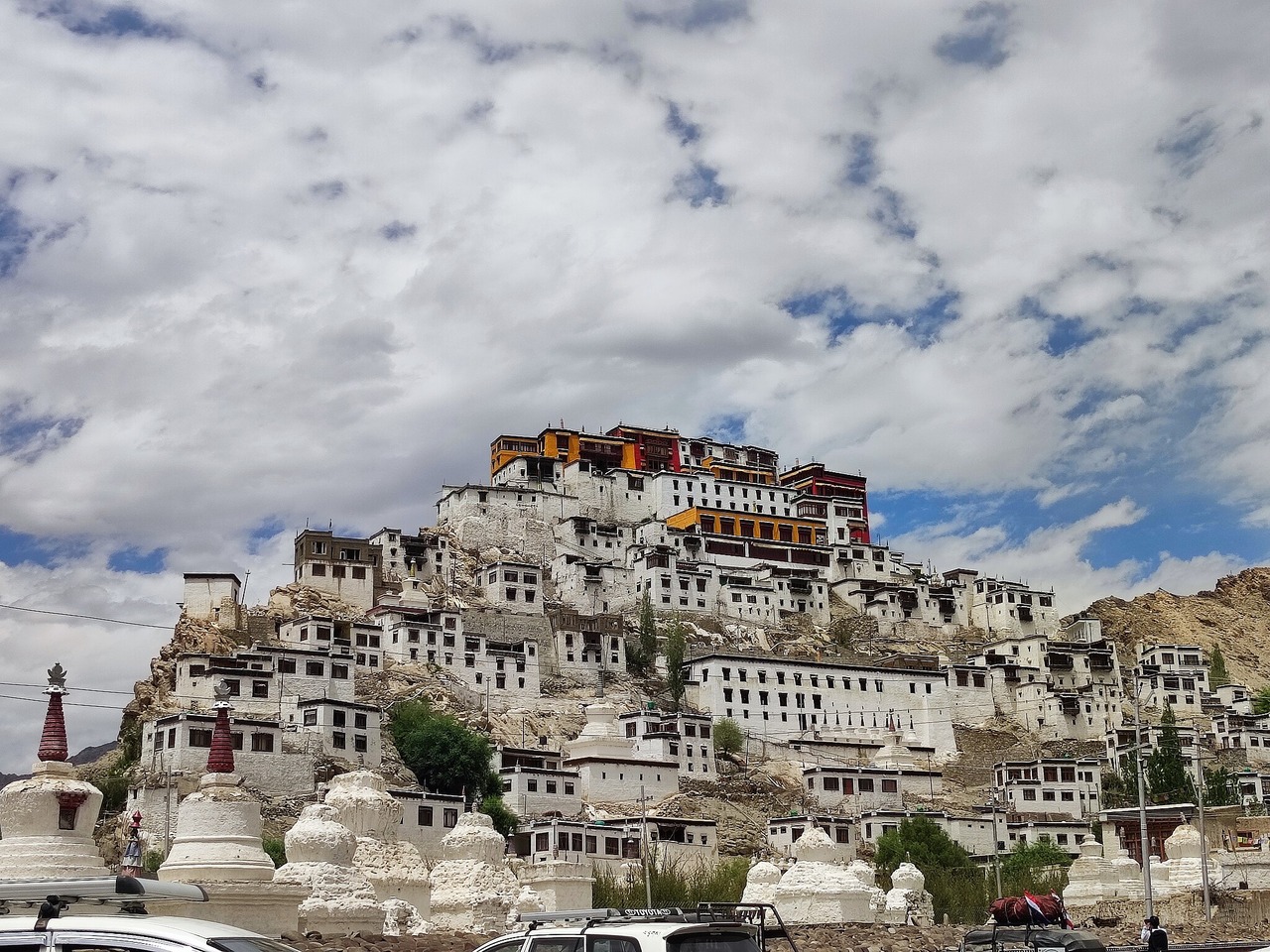
A key regional meeting held at Thimpu, Bhutan, with six countries from the Hindu Kush Himalaya (HKH) region, has agreed on the ‘Bhutan Roadmap’, a framework that focuses on a regenerative, climate-resilient strategy for settlements in the region.
The region spreads across eight nations — Afghanistan, Bangladesh, Bhutan, China, India, Myanmar, Nepal, and Pakistan — and 3500km, and affects the lives of more than 2.7 billion people. It is rich in biodiversity. The region encompasses high-altitude mountain ranges, medium-altitude hills and plains, and is vital for the food, water and energy security. It is currently critically vulnerable to climate change, pollution and biodiversity loss.
The latest meeting was attended by representatives from India, China, Bangladesh, Bhutan, Nepal and Pakistan.
The ‘Bhutan Roadmap’, also being called the ‘Thimphu Outcome’, urged to “promote building practices that actively restore the environment, offering a critical blueprint for the future of mountain settlements”, according to a concluding statement released by the meeting.
The plan was described as being centred in “Bhutan’s philosophy of regenerative development” and gained “regional consensus”.
The event was jointly convened by Bhutan’s Department of Human Settlement, ICIMOD (International Centre for Integrated Mountain Development), and India’s National Institute of Urban Affairs (NIUA).
Stop concrete construction
The two-day conference was attended by senior government officials, researchers and urban planners to discuss the urgent challenges faced by the HKH region, becoming increasingly vulnerable to climate change and unplanned development. The event deliberated on practical policies for low-carbon construction, scaling Nature-based Solutions (NbS) and getting the funding needed for resilient infrastructure and services.
The conference felt the urgent need to shift from “concrete-heavy construction and unplanned urban growth”, identified as key threats. These lead to land degradation, heat islands and water scarcity. “The conference underscored the centuries-old sustainable practices, embodied in vernacular architecture – a style of local or regional construction using traditional methods, locally sourced materials and reflecting cultural traditions – which must be innovatively adapted, not replaced,” said the release.
Follow traditional architecture
“Our traditional architecture reflects centuries of climate-responsive, low-carbon design knowledge,” said Chandra Bahadur Gurung of Bhutan’s ministry of infrastructure and transport. “As hazards accelerate, we must innovate and scale solutions that honour our past but prepare us for the future. True resilience encompasses communities, governance and the wise use of our natural resources.”
“We need to blend the old with the new by integrating modern amenities into vernacular design and architecture, rather than replacing it,” said Pema Gyamtsho, director-general of ICIMOD.
Regional co-operation was the need of the hour. “Regional cooperation is no longer optional; it is the only pathway to safeguard the future of the Hindu Kush Himalaya,” said Debolina Kundu, director of India’s National Institute of Urban Affairs (NIUA).
The conference launched three knowledge products: a roadmap for Bhutan’s regenerative built environment, a collection of 20 proven NbS from across HKH and case studies on innovative sanitation systems from Indian hill cities.